Israel accelerates settlement policy to undermine the two-state solution
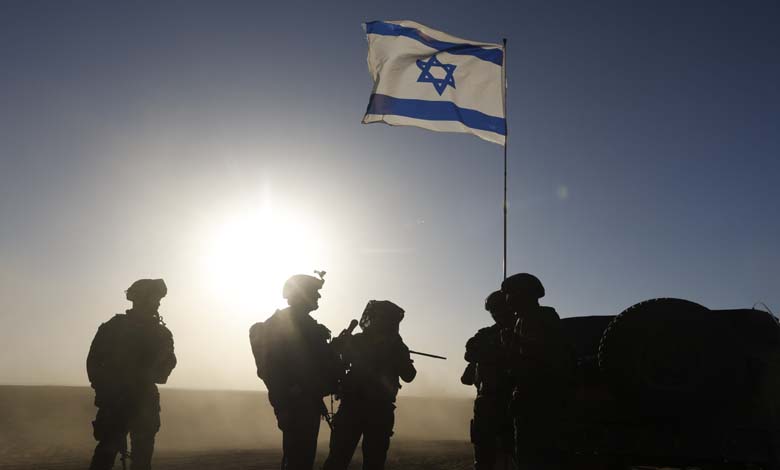
Israeli decisions are speeding up settlers’ land purchases by making West Bank land records accessible, after they were previously confidential, and by repealing a Jordanian law regulating such acquisitions.
Israel is taking steps to facilitate land purchases by settlers in the occupied West Bank and to expand its authority in certain areas where Palestinians exercise limited self-rule. Palestinians say these measures are intended to undermine the two-state solution.
-
Israel kills four Palestinian militants in Gaza
-
Emerging from underground: Israeli manhunt for five gunmen in southern Gaza
This marks the latest blow to the idea of a Palestinian state living peacefully alongside Israel on territories Israel captured in the 1967 war. That vision has long been supported by major global powers and formed the basis of the US-backed peace process launched with the Oslo Accords in 1993.
Over time, however, obstacles have multiplied, including the acceleration of Jewish settlement expansion in the occupied territories and hardened positions on core issues such as borders, the fate of Palestinian refugees, and the status of Jerusalem.
-
US Apache deal with Egypt deepens Israel’s concerns
-
Israeli female unit spying deep inside Syria… Secrets of Site 720
These decisions are expected to accelerate settlers’ land acquisitions by opening West Bank land registries that were previously confidential and by repealing a Jordanian law governing land purchases in the territory, which was under Jordanian control from 1948 to 1967.
In addition, a joint statement by Israel’s finance and defense ministers said Israel would expand “monitoring and enforcement procedures” to parts of the West Bank known as Areas “A” and “B,” particularly regarding “water-related violations, damage to archaeological sites, and environmental risks affecting the entire region.”
-
US pressure pushes Israel to bring debris-removal equipment into Gaza
-
Raids and arrests: Israeli operation in the northern West Bank
Under the Oslo Accords, the West Bank was divided into Areas “A,” “B,” and “C.” The Palestinian Authority exercises full administrative and security control in Area “A,” which accounts for 18 percent of the territory. In Area “B,” covering about 22 percent, the Palestinian Authority manages civil affairs while Israel retains security control. Most West Bank Palestinians live in Areas “A” and “B.”
Israel exercises full control over the remaining 60 percent, designated Area “C,” including the border with Jordan.
-
Neutralization of Attackers: One Israeli Killed and Three Injured in Vehicle and Stabbing Attack in the West Bank
-
CIA Information on Israel’s Alleged Use of Gazans as Human Shields
Palestinian President Mahmoud Abbas said the measures violate international law and aim to weaken Palestinian institutions and the future prospect of a two-state solution.
Israeli Finance Minister Bezalel Smotrich, a far-right nationalist, described the decision as a “true revolution,” stating, “We will continue to eliminate the idea of a Palestinian state.”
The conflict in Palestine began during the British Mandate, between Arabs and Jews who migrated to the region seeking a national homeland after fleeing persecution in Europe, citing biblical ties to the land.
-
Israel before the UN: Intense questioning over the torture of Palestinians
-
Israel Ends Emergency Draft Orders, Keeps Reserve Bonuses Until 2026
In 1947, the United Nations approved a plan to partition Palestine into two states, one Arab and one Jewish, with Jerusalem under international administration. Jewish leaders accepted the plan, which allocated them 56 percent of the land, while the Arab League rejected it.
The State of Israel was declared on May 14, 1948. One day later, five Arab states attacked. The war ended with Israel controlling 77 percent of the territory.
Around 700,000 Palestinians fled or were expelled from their homes, ending up in Jordan, Lebanon, Syria, as well as Gaza, the West Bank, and East Jerusalem.
-
The Israeli army silences him after he shuts down his station over political programming
-
War fatigue and internal pressure: Israel begins reducing its reserve forces
In the 1967 war, Israel captured the West Bank and East Jerusalem from Jordan and Gaza from Egypt.
Although 157 of the 193 UN member states recognize Palestine as a state, it is not a member of the organization, meaning that the UN does not recognize most Palestinians as citizens of any state.
Approximately nine million Palestinians live as refugees in Syria, Lebanon, Jordan, and in the territories occupied in 1967. Another two million live in Israel as Israeli citizens.
-
Israeli Defense Minister Orders Destruction of Gaza Tunnels: There Will Be No Hamas
-
Secret U.S. Report: Hundreds of Israeli Violations in Gaza Under Investigation
The two-state solution was the cornerstone of the US-backed peace process launched by the 1993 Oslo Accords, signed by the late Palestinian leader Yasser Arafat and Israeli Prime Minister Yitzhak Rabin. The accords led the Palestine Liberation Organization to recognize Israel’s right to exist, renounce violence, and establish the Palestinian Authority.
Palestinians hoped this would lead to the creation of an independent state with East Jerusalem as its capital, but the process faced setbacks on both sides.
The Israeli government says the Palestinian Islamist movement Hamas killed 330 Israelis in suicide attacks between 1994 and 2005. In 2007, Hamas seized control of Gaza from the Palestinian Authority after a brief internal conflict. Its 1988 charter called for Israel’s destruction, although in recent years it has said it would accept a Palestinian state within the 1967 borders. Israel says such statements are deceptive.
-
Washington warns of potential Israeli unilateral action if Hezbollah is not disarmed
-
Serious truce violation: Israel strikes Rafah after vehicle targeted in Gaza
In 1995, Yitzhak Rabin was assassinated by a Jewish extremist opposed to any land-for-peace agreement with the Palestinians. In 2000, then US President Bill Clinton brought together Yasser Arafat and Israeli Prime Minister Ehud Barak at Camp David, but the effort failed, with the status of Jerusalem—described by Israel as its “eternal and indivisible” capital—remaining the main obstacle.
The conflict intensified with the outbreak of the second Intifada between 2000 and 2005. Successive US administrations attempted to revive the peace process without success, and the last round of talks collapsed in 2014.
After Israel withdrew settlers and soldiers from Gaza in 2005, Jewish settlements expanded in the West Bank and East Jerusalem. The Israeli organization Peace Now says the settler population grew from 250,000 in 1993 to 700,000 three decades later, which Palestinians argue undermines the viability of a future state.
-
Hostage with confirmed identity: the tenth body returned to Israel
-
The War Winds Down in Gaza as Israel Begins Gradual Withdrawal
Settlement expansion has accelerated sharply since the start of the war in Gaza.
During the second Intifada, Israel also built a separation barrier, which it says was intended to prevent attacks, while Palestinians describe it as a land grab.
The Palestinian Authority, led by Mahmoud Abbas, administers isolated enclaves in the West Bank surrounded by Israeli-controlled areas comprising 60 percent of the territory, including the border with Jordan and the settlements, as stipulated in the Oslo Accords.
Benjamin Netanyahu’s government is the most right-wing in Israel’s history and includes religious nationalists backed by settlers. Finance Minister Bezalel Smotrich has said there is no such thing as a Palestinian people. Since then, Hamas and Israel have fought several wars, culminating in the October 7, 2023 attacks in southern Israel that triggered the Gaza war.
-
The Israeli army equals 26 years of funerals in just two years: 1,152 dead
-
Two years into the Gaza war, Israel has gone from international sympathy to global isolation