Israel plans to build a new separation wall in the northern West Bank
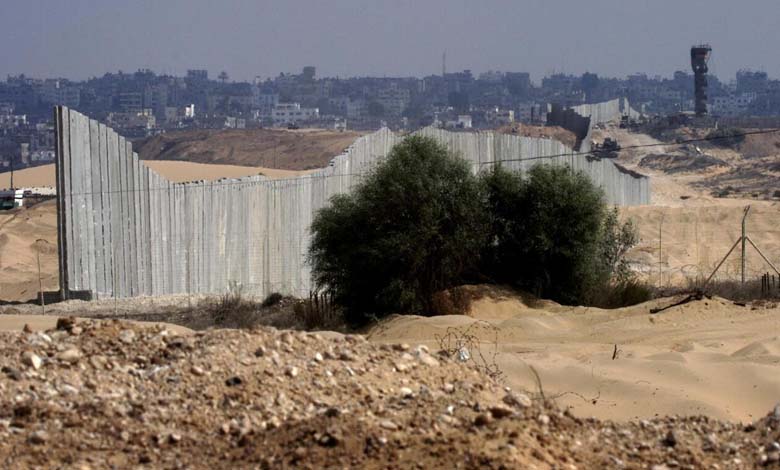
The project includes the demolition of structures located along its route, including homes, livestock shelters, greenhouses, warehouses, as well as water networks, wells, and agricultural land.
Palestinian concerns are mounting over a plan that Hebrew-language media report Tel Aviv intends to implement, involving the construction of a new separation wall in the northern Jordan Valley, northeast of the West Bank, aimed at isolating Palestinian communities from their agricultural lands amid escalating Israeli actions in the occupied West Bank.
-
The Israeli army silences him after he shuts down his station over political programming
-
The Israeli army equals 26 years of funerals in just two years: 1,152 dead
Palestinians believe that the proposed wall would cut them off from their farmland under the pretext of security justifications advanced by Tel Aviv.
The existing separation wall was built by Israel under security claims to separate the West Bank from Israel. Construction began in 2002, while in 2004 the International Court of Justice issued an advisory opinion condemning the wall and declaring it illegal.
The ruling called on Israel to dismantle the wall in the occupied Palestinian territories and compensate those affected, and urged other states not to recognize the illegal situation resulting from its construction.
-
Israeli army announces elimination of two Hezbollah commanders
-
Israeli Army Faces Fierce Resistance in Gaza Outskirts
According to the left-leaning Israeli newspaper Haaretz, the Israeli army plans to build a new separation wall deep inside the northern Jordan Valley, known as the “Crimson Thread,” extending approximately 22 kilometers in length and 50 meters in width, similar to the West Bank separation barrier, with the aim of isolating Palestinian communities from agricultural land and grazing areas. The project involves the demolition of structures along its path, including homes, livestock shelters, greenhouses, warehouses, water networks, wells, and agricultural land.
The newspaper notes that the project is part of a broader plan to construct a wall along the length of the Jordan Valley to isolate residents, although no comprehensive route has yet been officially presented.
-
Israeli army approves guidelines for Gaza offensive
-
Israeli Army Preparing to Occupy Gaza City with a Quarter Million Soldiers
According to an Israeli military document issued last August, the wall will include a military road, earthen embankments, and channels, in addition to a 20-meter-wide “security zone” on both sides, allegedly to protect settlers and prevent weapons smuggling, while classifying nearby Palestinian structures as “vulnerabilities” that must be removed.
The document was issued by Avi Blout, commander of the Israeli army’s Central Command, and was published by Israeli media, including Haaretz.
Palestinian farmer Khairallah Bani Ouda stands at the edge of the plain in the village of Atouf in the northern Jordan Valley, leaning on his cane and watching his land stretch before him with growing anxiety over the Israeli plan. In a worried tone, he says, “This road will not be just a street, but the beginning of a wall that will isolate people from their land.”
-
The Rafah Brigade Remains a Military Challenge for the Israeli Army in Gaza
-
Gunmen launch attacks on Israeli army in southern Syria
He adds, “I have lived here since 2017. This is my land. I own about 80 dunams, my family consists of 27 people, and we all depend on the produce of this land.”
Explaining the consequences of the plan, he says, “If they build the wall, half of the plain will be confiscated, and I will end up outside the wall,” asking with deep sadness, “Where will I go? Is there another planet I can go to?”
Describing his attachment to the land, the Palestinian farmer says it is “like honor itself,” noting that his grandfather and father raised him to love it, and that “if the Israeli occupation builds this wall, it means pushing us away from our land. This is a clear annexation.”
-
“Including Syria and Lebanon”: How the Israeli Army Prepares for “Operation Winter”
-
Israeli Army and Mossad Agree on Plans to Strike Iran
He further asks, “How will we reach our families or our farms? This is not a security project, but expansion, because they want the land without its people.”
A few hundred meters away, Jamal Bani Ouda watches the same plain and tells Anadolu Agency that what is happening “is not a military road as the Israeli army claims, but an initial line of a silent annexation process expanding in the Jordan Valley through two paths: military orders and pastoral settlement outposts.”
He adds, “In front of us is a settler with sheep who has fenced off more than 10,000 dunams of land in the area. Every day there are racist Israeli practices and attacks.”
-
Biden Administration prepares to impose sanctions on Israeli Army Officers
-
A report reveals the scale of American aid to the Israeli army since the start of the war… Get to know it
Expressing his attachment to the land, he continues, “These are our lands, an extension of our lives and history. If this plan succeeds, the consequences will be catastrophic, including land loss, unemployment, and the destruction of the livelihoods of hundreds of Palestinian families.”
Farmers in Atouf alone estimate that more than 30,000 dunams are threatened by the Israeli project, while indicating that the plan affects approximately 190,000 dunams across the northern Jordan Valley, all of which are agricultural areas.
Officially, Moataz Bisharat, head of the Jordan Valley file in the Tubas governorate, states that “the legal assessment showed that the road is not military as the Israeli army announced, but rather the route of a wall separating the northern Jordan Valley from the rest of the West Bank.”
-
After the Israeli Army Raid… What is the Fate of Those Detained in Al-Shifa Hospital?
-
The Israeli army is preparing for surprise Hamas weapons in the event of a ground invasion
He explains that the wall “extends from Ain Shibli, where a new military site is being established that will become a permanent crossing, passing through the Al-Baqi’a plain and the lands of Tamoun and Tubas to east of Tayasir, with a length of 22 kilometers and a width exceeding one kilometer.”
He also warns that “the most dangerous aspect is complete isolation, as more than 190,000 dunams east of the road will be cut off from their surroundings, in addition to thousands of dunams planted with vegetables, olive trees, and bananas, and all water lines being threatened with removal.”
Bisharat describes the situation as “going beyond land confiscation to threatening existence itself,” explaining that “22 communities comprising around 600 families are now at risk, with demolition notices affecting Palestinian homes and livestock shelters.”
-
Lebanese Army Uncovers Israeli Spy Devices Hidden with Precision
-
Despite its losses in Ukraine, the US Army upgrades the Bradley
Regarding the implications of the Israeli plan, he says it “means the end of the Palestinian presence and the destruction of the Palestinian food basket.”
On the importance of the Jordan Valley, the Palestinian official notes that it “contains the Eastern Aquifer Basin, the second-largest water source in the West Bank. Through this decision, the occupation seizes full control of water resources, leaving nothing for Palestinians.”
On a personal level, Bisharat owns about 200 dunams planted with olives, grapes, and vegetables, and says the wall’s construction “will completely prevent his family from accessing them.”
-
Israeli female unit spying deep inside Syria… Secrets of Site 720
-
One year after the end of the war… 669 Israeli strikes in Lebanon and 360 Hezbollah fighters killed
He continues, “This is an expansionist settlement project aimed at seizing the most fertile agricultural region in Palestine, which constitutes the food basket of the West Bank.”
He concludes by saying, “There can be no Palestinian state without the Jordan Valley. Today, the Palestinian state is left without borders, without water, and without a food basket. What is happening is a war on Palestinian existence, and the world’s silence is incomprehensible.”
The Israeli plan comes at a time when the West Bank has witnessed an unprecedented escalation in attacks by the Israeli army and settlers against Palestinians, their property, and their sources of livelihood during the two years of mass violence launched by Tel Aviv in Gaza on 8 October 2023.
-
Raids and arrests: Israeli operation in the northern West Bank
-
The Abu Shabab militia will oversee the reconstruction security in Rafah with Israeli approval
The escalation in the West Bank has resulted in the killing of at least 1,093 Palestinians, the injury of nearly 11,000 others, and the arrest of more than 21,000 people, according to official figures.
Meanwhile, the war in Gaza, which began on 8 October 2023 and lasted two years, has left more than 70,000 Palestinians dead and over 171,000 wounded, most of them women and children, and caused massive destruction, with reconstruction costs estimated by the United Nations at around 70 billion.
-
Secret U.S. Report: Hundreds of Israeli Violations in Gaza Under Investigation
-
Israeli raids on Gaza: the heaviest loss of life in a single night since the ceasefire