Israeli sources rule out a Washington–Tehran agreement in Geneva
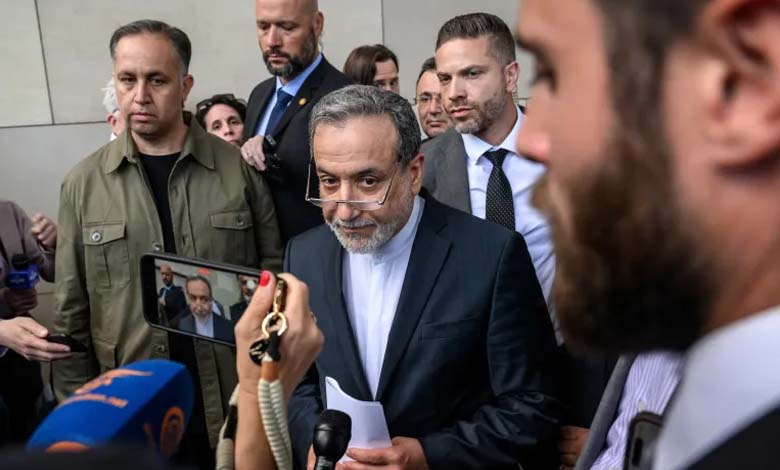
Israeli sources describe the atmosphere in Geneva as heavier than ever, noting that Washington is speaking of a timeframe of “weeks, not months” to reach an agreement, while Tehran insists on retaining its uranium enrichment activities.
Israeli officials have dismissed the likelihood that the parties will reach an agreement during the new round of U.S.–Iran talks that began today in Geneva, Switzerland, stating that the circulating assessments suggesting progress are not realistic.
-
Washington and Tehran discuss a ‘political ceasefire’
-
Diplomacy races against rising tensions: anticipation of Muscat talks between Washington and Tehran
Israel’s public broadcasting authority quoted unnamed Israeli sources as saying that “this round is decisive for the American decision on whether to continue negotiations or strike Iran,” adding that “the chances of the parties reaching an agreement are not realistic.”
They noted that earlier this month, the first round of talks between Iran and the United States was held in the Sultanate of Oman, and that sources familiar with the details said at the time that “neither side moved significantly from its initial position.”
-
Washington Targets Tehran with Harsh Sanctions as Araghtchi Demands War Reparations
-
Tehran and Washington Resume Nuclear Talks Under the Pressure of Red Lines
Meanwhile, the Israeli news website Walla reported on Tuesday that “this time, the atmosphere is heavier than ever, with Washington speaking of a window of ‘weeks, not months,’ while Tehran insists on not relinquishing uranium enrichment.”
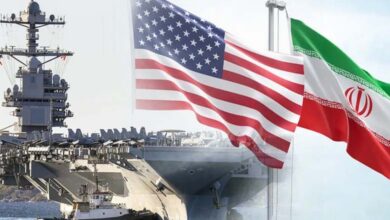
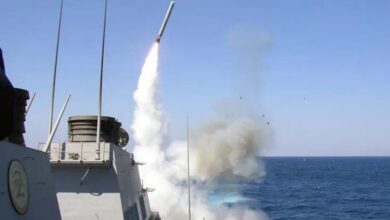
The report added that “the United States has already deployed additional aircraft carriers to the Middle East and is also preparing for the possibility of a prolonged military campaign if the talks fail to yield results.”
-
Washington continues military build-up to pressure Iran
-
On the eve of the Muscat talks, five milestones paved the way for Iran and Washington’s return to negotiations
It further stated that Prime Minister Benjamin Netanyahu said any agreement must include the complete dismantlement of Iran’s enrichment infrastructure, not merely a temporary suspension.
Thus, ahead of the second round in Geneva, the gaps appear deep: Iran is demanding sanctions relief while preserving enrichment, whereas the United States and Israel are calling for the dismantling of the infrastructure, as well as addressing missile activities and what they describe as “terrorism.” Above all, there is a sense of a race against time, and that if the talks fail, the next phase could be more dangerous.
-
Trump and Iran: three military paths on the decision table
-
Washington open to dialogue with Iran, while keeping its finger on the trigger
Between February 10 and 12, Netanyahu visited Washington and met President Donald Trump for the seventh time, discussing several issues, foremost among them Iran’s nuclear file.
Earlier, on February 6, Muscat hosted a new round of nuclear negotiations between Tehran and Washington, following their suspension after Israeli and U.S. strikes on Iran in June 2025.
Tehran believes that Washington and Israel are fabricating pretexts for intervention and regime change, and has warned that it will respond to any military attack, even if limited. Iran insists on the lifting of Western economic sanctions in exchange for curbing its nuclear program.
-
Iran in the crosshairs of Lincoln and its sisters… Messages of fire before the decision
-
Iran draws up a list of Israeli and U.S. targets in response to a potential attack
In contrast, the United States is demanding that Iran fully halt its uranium enrichment activities and transfer its highly enriched uranium abroad.
The U.S. administration has also sought to place Iran’s missile program and its support for armed groups in the region on the negotiating table, but Tehran has repeatedly affirmed that it will not negotiate on any issue other than its nuclear program.
Since January, Israel has raised its level of alert in anticipation of a possible Iranian attack should the United States strike Iran.
-
Khamenei calls protesters agents and accuses them of trying to appease Trump
-
Iran faces the most dangerous total war with Israel and the United States
Israel maintains that any agreement must include the termination of Iran’s nuclear program, its missile program, and its support for regional allies—demands that the Iranian government firmly rejects, urging Donald Trump not to yield to Israeli conditions.
Israel fears that the U.S. president may settle for an agreement limited to the nuclear file without addressing Iran’s missile program.
-
America, Iran, and the nuclear issue: Who can break the stalemate?
-
Washington targets Iran’s weapons supply lines beyond Gulf waters