Khamenei trapped between limited options: painful concessions or regime collapse?
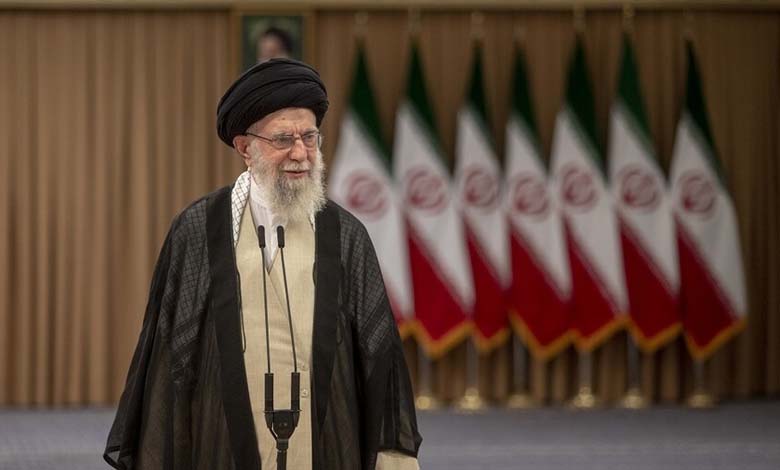
Iran’s Supreme Leader, Ali Khamenei, is facing one of the most critical moments of his political career, as his room for maneuver has sharply diminished both domestically and internationally.
The man who, for decades, withstood international sanctions, U.S. pressure and repeated popular uprisings now stands before an existential choice that directly clashes with his ideological convictions, should he seek to preserve the regime that has ruled Iran for nearly fifty years, according to The Washington Post.
-
British newspaper: Khamenei prepared a plan to flee Iran
-
Lessons from War: From Khamenei to Kim – A Strategic Gap Shifting the Nuclear Balance
Khamenei has long insisted on Iran’s right to enrich uranium and develop an advanced missile program. Through strict security repression, he has also managed to contain previous waves of protest.
However, the recent demonstrations that erupted in late December represent one of the gravest challenges the regime has faced, amid a crackdown that reportedly claimed the lives of thousands, according to human rights organizations.
Although Iranian security forces succeeded in temporarily suppressing the unrest, analysts argue that the root causes of public anger remain unaddressed and that the risk of a broader social explosion continues to loom.
-
Khamenei’s First Appearance Following the Truce with Israel
-
Iran’s Regime Focused on Finding a Successor to Khamenei
Former U.S. intelligence official Norman Roule warns that the absence of any middle ground could condemn the Iranian regime to a bleak future, potentially marked by widespread protests opening the door to regime change, either through massive internal upheaval or external intervention.
The roots of the crisis lie in Iran’s battered economy, which has suffered for years under the weight of international sanctions linked to the nuclear program.
Experts agree that rescuing the economy requires easing these sanctions, a goal that cannot be achieved without significant concessions from Tehran, particularly on the nuclear file.
-
Khamenei’s advisor breaks the silence on death rumors: I’m alive
-
Trump Pulls the Trigger Back: Why Did He Reject Israel’s Proposal to Assassinate Khamenei?
Yet such concessions collide with Khamenei’s doctrine, as he views nuclear enrichment as a symbol of national sovereignty. According to Roule, any genuine settlement would also require curtailing the missile program and ending the regional role of the Quds Force, directly undermining the core pillars of the regime’s influence.
Domestically, the gap between the state and society has reached unprecedented levels. Behnam Jafary, an expert on Iranian social movements, notes that this divide can no longer be bridged without fundamental structural changes. This reality reflects profound transformations within Iranian society since 1979, including rising education levels and the emergence of women as a central force in universities and the labor market, in contrast with a political system unable to adapt to these changes.
-
Khamenei Responds to Washington Over Uranium Enrichment
-
Khamenei, Iran’s Illness and the Obstacle to Any Agreement with Washington
Economically, Iran has entered a spiral of accelerating collapse. The rial has plummeted in value, inflation has soared to record levels, and the government has failed to control markets or secure basic necessities.
Decisions such as eliminating the subsidized exchange rate for essential goods have sparked widespread anger, while limited government cash assistance has proven largely ineffective.
These crises have been compounded by recurring electricity and water shortages, to the extent that Tehran itself is now facing an existential threat, according to official warnings.
-
Khamenei Urges Strengthening Military Power to Curb Trump’s Threats
-
Iran Reshuffles Its Strategy by Appointing Naim Qassem as Khamenei’s Representative in Lebanon
These domestic challenges coincide with regional strategic setbacks. Since Hamas’s attack on Israel on October 7, 2023, Tehran’s influence has waned as its allies suffered heavy blows, and the collapse of Bashar al-Assad’s regime in Syria in 2024 further weakened Iran’s regional position. Moreover, Israeli and U.S. strikes directly targeting Iranian facilities have shattered the belief that Iran’s network of militias provided an adequate deterrent shield.
Age adds another layer of complexity to the situation, as Khamenei is now 87 years old, in a scenario reminiscent of his predecessor Ayatollah Khomeini’s acceptance of a ceasefire with Iraq before his death. Despite the difficulty of replacing him, analyses suggest that the ruling establishment is already preparing for a post-Khamenei era, marked by the rising influence of the Revolutionary Guards.
Researchers warn that rejecting any form of compromise could push the Iranian regime toward an even more dangerous path, characterized by widespread violence or even the fragmentation of the state.
-
After Iraqi Factions Abandoned It, Khamenei: Iran Does Not Need Proxies in the Region
-
Khamenei: Damascus Ignored Our Warning about a Plot to Overthrow the Regime
-
Mystery Surrounding Khamenei’s Health Revives Rumors of His Death and Succession