Lop Nor: A Desert That Tells the Story of China’s Nuclear Tests
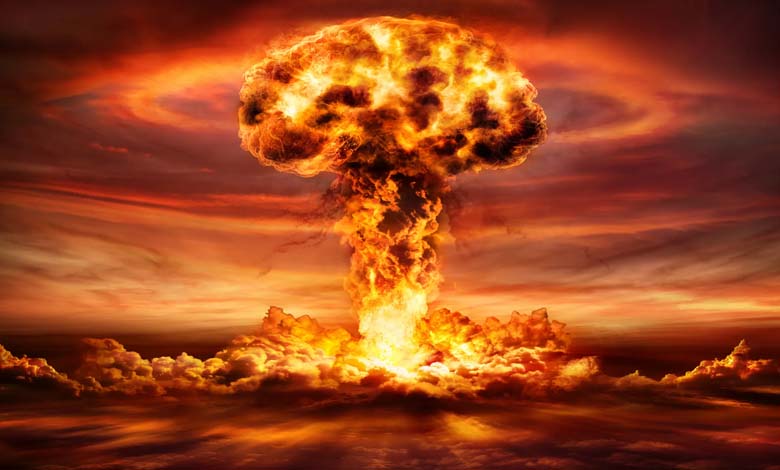
U.S. State Department reports on arms control provide growing evidence of Beijing’s expansion of its nuclear arsenal.
At the edge of a vast desert in northwestern China lies a dried salt lake. While the area offers no support to civilization, it is ideal for conducting secret nuclear tests.
This region, known as “Lop Nor” or “Lop Lake,” is reportedly where China carries out clandestine nuclear tests, according to the United States.
-
Global Thunder 26: a comprehensive U.S. test of nuclear deterrence
-
Business Insider: Satellite Images Reveal 5 Secret Russian Nuclear Bases
American reports indicate a new phase in China’s ambitions to win the global nuclear arms race, particularly after the expiration of the New START treaty—the last agreement between the U.S. and Russia limiting nuclear proliferation—earlier this month.
Official U.S. estimates suggest China aims to expand its arsenal from 600 nuclear warheads to 1,500 by 2035, making it the only party to the Nuclear Non-Proliferation Treaty to significantly increase its nuclear stockpile, according to the British newspaper The Telegraph.
Part of this expansion stems from a wave of construction at Lop Nor in recent years, including upgraded transportation infrastructure facilitating the movement of materials to the area.
-
China Changes the History of Warfare with a Non-Nuclear Warhead
-
A Nuclear-Proof Facility Ten Times Bigger Than the Pentagon… Discover China’s “Fortress”
Rene Paparoz, a geospatial intelligence expert and specialist on China’s nuclear weapons program, said: “For Beijing, possessing a massive nuclear arsenal serves both as a display of power and as leverage in negotiations.”
He added that nuclear weapons represent “a strategic capability to be maintained to deter other powers” and noted: “They are a guarantee against foreign intervention in case of coercion in the Taiwan Strait… The war in Ukraine has reinforced the importance of this strategy.”
Concerns over China’s nuclear expansion have existed for decades, although initial allegations appeared in 2020 in a series of U.S. State Department arms control reports.
-
Decoding China’s Enigmatic Fighter Jet: A Triple-Power Revolution in the Sky
-
Through the Army… China Outlines Its Vision for a Fairer World Order
Despite limited details provided by Washington at the time, Paparoz’s 2021 research revealed significant expansions at Lop Nor, the site of China’s first nuclear test in 1967.
The new constructions included intensive activity of large excavators, an underground facility, and numerous tunnels carved into hillsides or mountains to serve as access points to underground installations for detonation tests.
Paparoz wrote in his State Department report: “Taken together, these observations suggest that China may be preparing for future nuclear weapons tests, representing a new phase in modernizing and expanding its nuclear arsenal,” emphasizing the need for further analysis and study.
-
Arms race in the Pacific: Australia injects billions to upgrade its naval infrastructure
-
Sovereignty dispute in Scarborough: a new diplomatic confrontation between the U.S. and China
Earlier this month, the U.S. administration revealed additional details about China’s testing activities, just one day after the New START agreement expired.
Subsequently, U.S. officials indicated that they believed Beijing conducted an explosive nuclear test on June 22, 2020, citing unusual seismic activity recorded in neighboring Kazakhstan.
Officials stated that the Chinese military was preparing for further tests with supercritical yields estimated at “hundreds of tons” and emphasized that these activities were deliberately and skillfully concealed.
-
War, peace, and an unstoppable force… Xi’s messages at the military parade
-
By land, sea, and air: China unveils its latest weapons at military parade
Although experts sought evidence, satellite imagery focused on the tunnel testing area in eastern Lop Nor, analyzed by the Center for Strategic and International Studies (CSIS), was inconclusive, as little activity or change was observed before or after the alleged June 2020 test.
The so-called “Tunnel 5” area attracted particular attention due to recent construction and excavation work. However, CSIS experts noted that China could have conducted an underground nuclear test in another tunnel.
U.S. officials claimed Beijing concealed the explosion using a “decoupling” technique, detonating the device underground, reducing shockwave propagation through surrounding rock and the likelihood of seismic detection.
-
Putin reveals for the first time the role of North Korean forces in the liberation of Kursk
-
Strategic Bombers: A US-Russia-China race on the front line
Accurately determining what occurred in 2020 is critical, as it may indicate a “potential violation” of the Comprehensive Nuclear-Test-Ban Treaty, which China signed but has not ratified.
This comes as former President Donald Trump pushes the U.S. to resume nuclear testing after its suspension in 1992 and seeks to impose restrictions on China’s nuclear weapons program, stating that any new nuclear arms agreement between Washington and Moscow should include Beijing.
In addition to Lop Nor, China possesses several other secret nuclear sites, including some in Sichuan province in the southwest.
-
After the war… 4 scenarios shaping Iran–U.S. relations
-
Spectacular Progress: How Did China Build Its Air Power on Its Own?
Satellite images have shown increased construction, including bunkers and facilities suggesting nuclear weapons production capability.
Darya Dolzikova, lead researcher on nuclear proliferation and deterrence, said: “Rising U.S. requirements to deter both China and Russia raise concerns about the resilience of the American nuclear umbrella.”
China has strongly denied U.S. claims regarding the 2020 nuclear tests, reaffirming its commitment to a no-first-use nuclear policy.
In 2020, Fu Cong, then Chinese ambassador to the EU, did not deny China was expanding its arsenal but stated that “Beijing will not significantly expand its nuclear arsenal,” framing the policy as a response to “growing U.S. threats.”
-
This Is How NATO Envisions World War III: The Timeline and Division of Roles
-
Submarines, Missiles, and Fighters: A Comparison of Strategic Weapons between China and the United States