Morocco enters 2026 amid major transformations and growing confidence
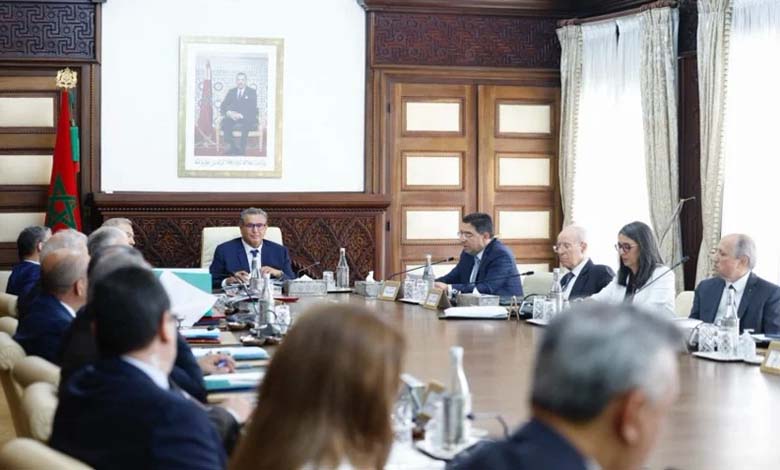
Morocco’s achievements across various fields are not the result of isolated decisions, but rather the outcome of an integrated Royal Vision that steadily builds the present while confidently and responsibly anticipating the future.
As the end of 2025 approaches, Morocco is closing a year marked by profound transformations affecting the political, diplomatic, economic, security and social spheres. This cumulative process reflects the clarity of the Moroccan State’s strategic vision and its ability to turn challenges into opportunities.
-
King Mohammed VI welcomes UN Security Council decision: The time of a unified Morocco has come
-
Morocco Moves Firmly to Protect Its Digital Sovereignty
This year represented a pivotal milestone that strengthened the Kingdom’s position as a pillar of regional stability, a reliable international partner and a model of gradual reform, led by His Majesty King Mohammed VI through a vision that combines political realism with a strong social dimension, a vision that goes beyond building the present to shaping future horizons.
In recent years, Morocco’s political and developmental trajectory has been grounded in a clearly defined Royal Vision that has served as the guiding framework for the transformations experienced by the Kingdom in multiple areas, from politics and diplomacy to the economy and social development. This vision is not based on short-term management or stopgap solutions, but on a long-term strategic approach that balances internal stability with the requirements of external openness, while placing the citizen at the heart of public policies as both the objective and the driving force of development.
-
King Mohammed VI Calls for Accelerating Reforms in Response to Youth Demands
-
King Mohammed VI’s Vision: Morocco’s Rise through Justice and Balance
The Royal Vision has helped establish a climate of stability that enabled Morocco to navigate a turbulent regional environment at minimal cost, while preserving institutional cohesion and adaptability. This has been reflected in the strengthening of constitutional institutions, the consolidation of good governance principles and the anchoring of reform within continuity, sparing the country from severe shocks or unpredictable upheavals.
On the diplomatic front, Morocco has achieved significant breakthroughs thanks to this vision, reinforcing its regional and international standing, particularly regarding the Moroccan Sahara issue. Moroccan diplomacy has succeeded in expanding support for the autonomy initiative and establishing it as a realistic and credible solution to the dispute.
-
Morocco accelerates the localization of defense industries in line with a balanced royal vision
-
King Mohammed VI Injects New Energy into Constitutional Institutions
In this context, Morocco crowned its intensive diplomatic efforts by securing the international recognition of the autonomy initiative as the sole realistic framework for resolving the artificial conflict, following the United Nations Security Council’s Resolution 2797 of 31 October, which enshrined the initiative as the exclusive basis for any negotiation process, encouraged the parties to negotiate on that basis and renewed the mandate of MINURSO. This marked a decisive shift in international positions and a significant step toward a lasting political solution.
The positions adopted by influential international powers, alongside numerous African, European and Latin American countries, reflect a growing conviction that the artificial dispute over the Sahara can no longer be addressed through outdated approaches, and that the autonomy proposal constitutes a serious foundation for any future negotiation process. This diplomatic momentum is the result of sustained institutional work carried out by Morocco within and beyond the United Nations, grounded in its historical and legal legitimacy and in the stability prevailing in the Southern Provinces.
-
The Mohammed VI Mosque in Conakry Reflects Morocco’s Efforts to Fortify Africa Against Extremism
-
France warns of a terrorist surge and praises Morocco’s role in foiling attacks
This orientation has also enabled the Kingdom to diversify its strategic partnerships, deepen its African engagement and strengthen its presence in the Arab and Mediterranean spheres, culminating in advanced partnerships with major global powers.
The Royal Vision has been translated into structuring projects that have reshaped the country’s development landscape, notably through the expansion of infrastructure, the modernization of ports and transport networks, and investment in renewable energy and strategic industries. These efforts have enhanced Morocco’s investment attractiveness, boosted its competitiveness and created employment opportunities, despite challenges linked to global economic fluctuations.
-
Italy Commends Progress and Stability in Morocco Under the Leadership of King Mohammed VI
-
Humanitarian Gesture from King Mohammed VI for the Benefit of Palestinian Students
On the social front, the Royal Vision has ensured a balance between economic growth and social justice by launching major social protection initiatives, reducing territorial disparities and supporting vulnerable groups. In this sense, Morocco’s achievements are not the outcome of isolated measures, but the result of a comprehensive Royal Vision that builds the present with determination and anticipates the future with confidence and responsibility.
At the same time, Morocco has strengthened its position as a key regional actor in an unstable environment, emerging as a force for stability and mediation, particularly in Africa and the Sahel region. The Kingdom has continued to present itself as a reliable partner in supporting regional security, through security and intelligence cooperation as well as development and economic initiatives aimed at addressing the root causes of instability.
Morocco has also consolidated its international image as a trusted actor in combating terrorism and organized crime, thanks to its accumulated security expertise and its proactive approach combining security, developmental and intellectual dimensions. This has made the Kingdom a focal point of international interest and a preferred partner for many major powers and international organizations.
-
Sarkozy: The strength of Morocco lies in the intelligence of King Mohammed VI in reconciling identity and modernity
-
From a National Epic to an International Victory: 50 Years of the Green March in Morocco
A quiet revolution in infrastructure and development
Economically and developmentally, Morocco continued in 2025 to implement major structural projects that strengthened its competitiveness and connected the various regions of the Kingdom to modern transport, logistics and energy networks. Infrastructure witnessed remarkable growth through the expansion of highway and railway networks, as well as the development of ports and industrial and logistics zones, reinforcing Morocco’s position as a regional platform for trade and investment.
In the same vein, the Kingdom expanded its economic partnerships with influential international actors through an approach based on diversifying partners and avoiding dependence on a single axis, which enabled the attraction of high-quality investments in key sectors such as renewable energy, the automotive and aerospace industries, and the digital economy.
-
FOPREL awards “Esquipulas Peace Prize” to HM King Mohammed VI
-
Morocco Consolidates the Realism of the Solution: The UN Security Council Resolution Marks a Turning Point in the Moroccan Sahara Issue
Politically, Morocco continued to consolidate a reform model based on stability and gradualism, far removed from risky leaps into the unknown. The work of elected institutions was strengthened, the principle of accountability was reinforced, and reforms related to advanced regionalization continued to be implemented, enhancing local development and bringing decision-making closer to citizens.
This dynamic has helped strengthen the confidence of economic and social actors in the State’s overall trajectory, at a time when the region is experiencing sharp political turbulence and stalled reform prospects in several countries.
One of the most prominent features of 2025 was the deepening of the social state project and concept, whose foundations were laid by King Mohammed VI. Morocco continued to implement major social programs aimed at improving citizens’ living standards, expanding health coverage, reforming the social protection system and supporting vulnerable populations.
-
From Backroom Diplomacy to the Voting Floor: How Morocco Won the UN Security Council Battle Over the Moroccan Sahara
-
The UN Security Council supports Morocco’s autonomy plan for Moroccan Sahara
This approach has not been limited to the economic dimension, but has also encompassed the strengthening of social and territorial justice and the reduction of regional disparities, thereby consolidating a more equitable and balanced development model.
On the cultural and intellectual levels, Morocco has maintained its role as a promoter of the values of tolerance and moderation, drawing on its religious specificity rooted in the Commandership of the Faithful, the Maliki rite and Ash‘ari doctrine. This choice has strengthened the Kingdom’s image as an open and tolerant country, capable of combating extremism at its intellectual roots.
-
Paraguay Demonstrates Its Support for Morocco’s Sovereignty over the Sahara by Opening a Consulate in the Southern Provinces
-
King Mohammed VI’s Vision: Morocco’s Rise through Justice and Balance
In the sports sector, the Kingdom continued to build on its previous achievements, particularly following the global successes of Moroccan football, turning sport into a tool of soft power that enhances its international presence and underscores its ability to host major events and develop advanced sports infrastructure.
As the end of 2025 approaches, Morocco thus appears to have accumulated significant strategic gains on multiple levels, positioning itself as a state that combines ambition with realism, openness with the preservation of constants. These transformations are neither temporary nor circumstantial, but the product of a long-term Royal Vision aimed at building a strong Morocco, socially cohesive, regionally influential and internationally credible, in a world increasingly in need of stable models capable of adapting to rapid change.
-
New Diplomatic Achievement for Morocco with Its Election as Vice-President of the Conference on Landlocked Developing Countries
-
Portuguese support for Morocco’s Sahara plan strengthens the Kingdom’s position