Political analyst: The Houthis are dragging Yemen into regional conflicts and pushing the country toward greater isolation
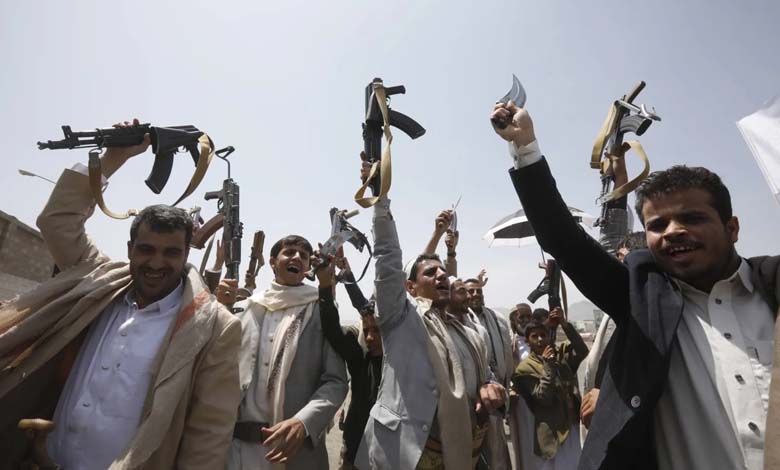
The Houthi movement in Yemen warned on Saturday evening of what it described as “catastrophic consequences for the region” resulting from the military escalation led by the United States and Israel against Iran, considering these developments a blatant violation of the sovereignty of an independent state and a clear breach of international laws and conventions.
-
The Houthis Align with Iran: Resumption of Attacks on Maritime Navigation
-
Expected Houthi escalation: calls for mass mobilization in support of Iran
In an official statement, the group said that the continuation of what it termed the “Israeli-American aggression” against Iran would drive the region toward further tension and potential eruption amid rising regional strain. It stressed that the repercussions of the escalation would not be confined to the borders of the targeted state, but would extend to the security and stability of the entire Middle East.
The movement noted that any expansion of the confrontation could pose a direct threat to international shipping lanes, particularly in the Red Sea and the Bab el-Mandeb Strait, potentially causing partial or total paralysis of global trade and negatively affecting the economies of many countries that rely on maritime corridors for transporting oil, gas, and strategic goods.
-
Domination through intimidation: the Houthis impose their ideology by force of arms
-
Houthi attacks strip the port of Eilat of all its revenues
The statement added that the ongoing developments represent “an adventure with unpredictable consequences,” warning that the continuation of military operations could open the door to broader confrontations beyond conventional calculations and further complicate the regional landscape amid successive crises.
The group emphasized that respect for state sovereignty and adherence to international law constitute the foundation of any sustainable stability, calling on the international community to assume its responsibilities in halting the escalation and preventing the region from sliding into a wider conflict whose consequences could be “devastating at both the regional and international levels.”
-
A human rights report exposes the secret collusion between Yemen’s Brotherhood and the Houthis against the South
-
From Marib to Midi: How Muslim Brotherhood Strongholds Became a Transit Corridor for Houthi Weapons
These warnings come at a time when the region is experiencing cautious anticipation, amid concerns over the impact of any new military escalation on energy markets and global supply chains, as the security of navigation in vital waterways remains closely tied to political and military stability in the area.
Yemeni political analyst Dr. Abdulsalam Al-Qaisi stated that the Houthi movement bears direct responsibility for drawing Yemen into escalating regional conflicts by adopting an escalatory rhetoric and linking Yemen’s position to external developments that do not reflect the country’s domestic priorities.
-
The Houthis escalate by detaining more UN staff
-
Houthis recalibrate their military compass toward southern Yemen
In remarks to Arab Mubasher, Al-Qaisi explained that the group approaches regional issues with a logic of open confrontation, placing Yemen at the center of tensions and threatening to widen the scope of conflict at a time when the country is suffering from an unprecedented humanitarian and economic crisis that calls for de-escalation rather than further escalation.
He pointed out that any threat to international navigation in the Red Sea or the Bab el-Mandeb Strait would negatively affect Yemen’s reputation and strategic interests, exposing it to additional political and economic pressures. He warned that continuing this approach could lead to greater international isolation and further complicate efforts to restore stability.
-
South Yemen Unifies Its Ranks Against the Houthis: Securing the Rear Before Moving Toward Sanaa
-
Fearing Israeli targeting… a Shura Council to select the Houthi leadership
He added that Yemen’s true priority should be restoring state institutions, alleviating citizens’ suffering, and advancing a comprehensive political settlement, rather than engaging in regional calculations that further complicate the situation and deepen internal divisions.
The Yemeni political analyst stressed the need to keep Yemen neutral from axis-based conflicts and to work toward building a unified national stance focused on the people’s interests, warning that continuing an escalation policy could push the country into a more dangerous phase both in terms of security and the economy.
-
Five months after sinking, the Houthis release the crew of the ship Eternity C
-
The Brotherhood Houthi Kizan triangle: Khalfan opens a new front against the trio of chaos
-
Al-Wazi’yah in Yemen: guardian of the Bab al-Mandeb against Houthi ambitions