Refugees in the West Bank face shrapnel from Iranian missiles
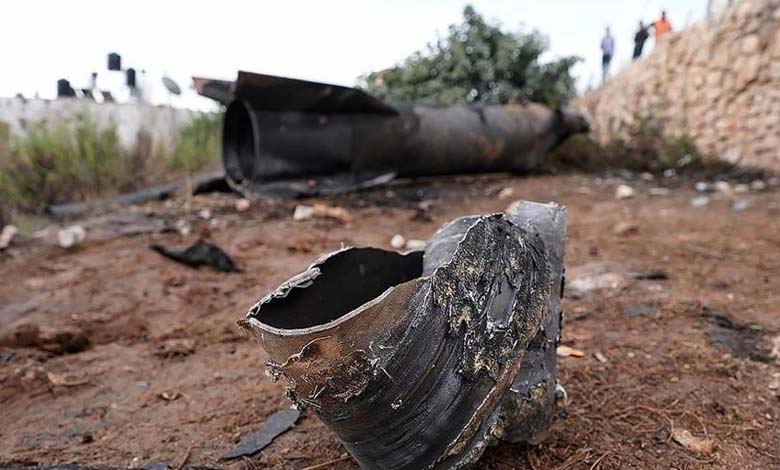
Unlike the situation in Israel, where bomb shelters are widely available, there are virtually no shelters in the West Bank.
Palestinian refugees displaced from their homes by attacks from the Israeli army and settlers now face the danger of shrapnel from Iranian missiles, as the war further worsens their suffering.
The sight and sound of Iranian missiles flying over the heads of the Ghanem family has become almost daily after the Israeli army expelled them from a refugee camp, forcing them to live in a dilapidated shack with a thin metal roof offering little protection.
-
Gulf states intercept dozens of Iranian missiles and drones
-
Intelligence reports refute Trump’s account on Iranian missiles
The family is among an estimated 32,000 people whom the Israeli army forced to leave their homes last year in three long-established refugee camps in the occupied West Bank.
Their situation has worsened since the United States and Israel launched an attack on Iran on February 28, exposing the West Bank to falling debris from Iranian missiles intercepted by Israeli defense systems.
Madeleine Ghanem, who lives with her children aged three, eight, eleven, and fourteen in a one-room shack, while her older children live elsewhere, said her children tremble in fear at the whistling sound of missiles.
-
15 Iranian Missiles in 4 Waves Trigger Alarms in Israel for 40 Minutes
-
How did Iranian missiles breach Israel’s “Dome”? 4 Reasons
The Palestinian Civil Defense says more than 270 pieces of missile debris have fallen across the West Bank since the war began.
Unlike Israel, where bomb shelters are widely available, there are virtually no safe shelters in the West Bank, leaving the Ghanem family with nowhere to hide.
Although there are no reports that Iran deliberately targeted Palestinian territories, four Palestinian women were killed last month when an Iranian missile struck the city of Hebron in the West Bank.
-
Israel reports shortage of interceptor missiles in the face of Iranian attacks
-
Iranian missiles expose racial discrimination in Israeli shelters
In early 2025, during a brief truce in fighting with Hamas in Gaza, the Israeli army began demolishing homes and destroying roads in the refugee camps of Tulkarem, Nur Shams, and Jenin in the northern West Bank.
Israel said the operations were necessary to destroy civilian infrastructure that could be used by militants. In a report published last year, Human Rights Watch described the displacement as war crimes and crimes against humanity.
Some leaders in Israel’s ruling coalition have repeatedly called for the annexation of the West Bank, a territory of about 100 kilometers that Palestinians see as the core of a future independent state alongside Gaza.
-
Missiles, Casualties, and Damage: Israel Reveals the Toll of Iranian Attacks
-
Arrow Missiles Running Out: A Critical Gap Threatening Israel’s Ability to Repel Iranian Attacks
Israel bases this stance on historical and religious ties to the West Bank, which it occupied in the 1967 war.
The Ghanem family lived in a three-story house in the crowded Tulkarem camp, where the women of the family had spent decades cultivating trees, flowers, and vines that wrapped around the balconies.
Areej Ghanem, Madeleine’s sister-in-law, said Israeli soldiers stormed their home without warning in the middle of the night last year.
She said, “We took no clothes and no belongings. My father cannot go up or down; he is elderly and can only move with the help of a vehicle, and young men carried him. Everyone in our neighborhood left completely.”
-
Iranian Missiles on Israel: Launch and Interception Costs
-
Missiles targeted Iranian Kurdish revolutionaries in Iraq’s Erbil near to the forces of US
After their home was destroyed, like many others in the camp, Areej, her sister, and her niece moved with their 89-year-old father Mahmoud Ghanem into a small rented room in nearby Tulkarem.
Areej is the family’s sole provider and works as a domestic worker. The room they rented is small and has no kitchen, so she washes dishes in the bathroom. Due to financial hardship, they have not been able to buy meat for more than a year.
Areej said, “What future? There is no future at all… everything is meaningless.”
Meanwhile, Madeleine, her husband Ibrahim, Areej’s brother, and their children moved to another part of Tulkarem, where they had bought a small plot of land in 2023, just before the Gaza war began.
-
How does the Iranian regime buy the loyalty of its supporters?
-
Israel strikes Iran’s nuclear program and missiles with 50 aircraft: map of the raids
Ibrahim worked in construction and was among thousands of Palestinians permitted to work in Israel. But after the Hamas attacks in 2023 that triggered the Gaza war, Israel revoked most work permits. Ibrahim has been unemployed since.
He says he and his wife sometimes cannot afford cooking gas and instead cook food outside over an open fire.
Although they now live about an hour’s walk apart, the family tries to meet weekly to maintain some sense of normal life.
On a dusty roadside field one Friday, Areej and Madeleine spread a sheet over a faded patch of artificial grass while their children played.
Madeleine says she dreams of completing the house they started building and hopes the family will one day be reunited under one roof. Areej says the most important thing is to find a way to stay together, adding, “Either we die together, or we live happily together.”
-
An Iranian newspaper: Tehran expands its target bank in the Gulf
-
The people are stronger than our leaders: Iranian president’s son reveals secrets of a strategy-less war