Report Highlights Morocco’s Role in Promoting Spiritual Security in the Sahel
The Spanish newspaper La Razón points to the Kingdom’s emergence as a stabilizing power capable of linking economic development, military modernization, and spiritual security, with clear strategic support from the United States.
Morocco today represents a distinctive model in the management of religious affairs, not only at the national level but also as a key soft-power actor in shaping regional stability in Africa, particularly in the Sahel region. This Moroccan approach is grounded in the concept of “spiritual security” as a primary bulwark against extremist movements and cross-border violence.
-
Morocco strengthens its position on the global aviation map
-
Security talks deepen cooperation between Morocco and Denmark in combating crime
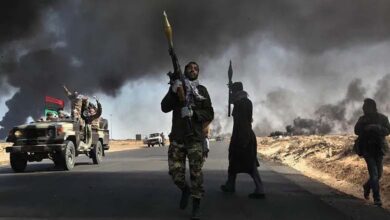
International reports, including coverage by the Spanish daily La Razón, indicate that Morocco’s role in the Sahel extends beyond the religious dimension to constitute an “advanced line of defense.” The newspaper highlights Rabat’s success in containing the expansion of jihadist Salafism in the region, noting that these efforts prevent the Sahel from becoming a rear base for attacks against Europe, thereby making Morocco an indispensable partner for Washington and Brussels.
It further notes that, amid the decline of traditional French influence, Morocco has emerged as a stabilizing force capable of integrating economic development, military modernization, and spiritual security, backed by clear strategic support from the United States.
-
Military cooperation expands Morocco’s presence in the Horn of Africa
-
Morocco Moves Firmly to Protect Its Digital Sovereignty
The recognition enjoyed by Rabat, particularly from Washington, is also reflected in the Sahara issue and U.S. backing of the autonomy initiative, interpreted as acknowledgment of the Kingdom’s pivotal role in safeguarding regional stability.
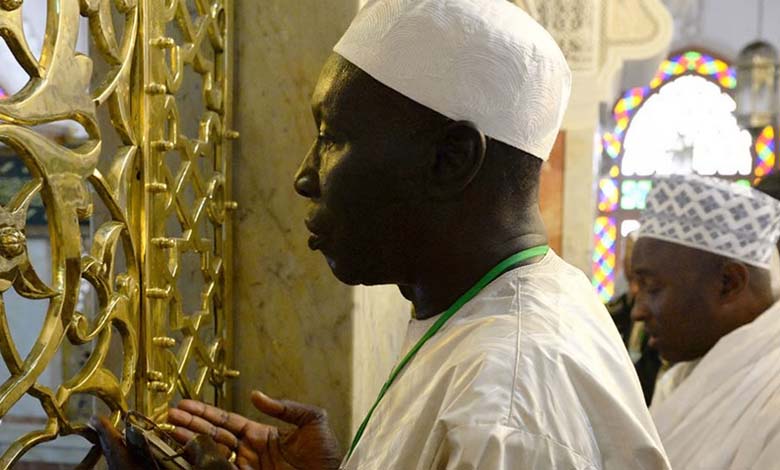
The strength of Morocco’s approach lies in its grounding in the Kingdom’s longstanding and widely endorsed religious foundations: Ash‘arite doctrine, the Maliki school of jurisprudence, and Sunni Sufism. This combination gives Moroccan religiosity a moderate and open character, distinct from the rigidity and extremism associated with jihadist Salafi currents.
-
Morocco accelerates the localization of defense industries in line with a balanced royal vision
-
Morocco Consolidates the Realism of the Solution: The UN Security Council Resolution Marks a Turning Point in the Moroccan Sahara Issue
This model is characterized by an independent “spiritual sovereignty,” far removed from Sunni-Shiite rivalries and Middle Eastern conflicts, making it both acceptable and credible to African societies.
The Mohammed VI Institute for the Training of Imams, Morchidines and Morchidates serves as the principal operational tool for disseminating the values of tolerant Islam. It hosts hundreds of students from Sahel countries — including Mali, Niger, Chad, Guinea, and Côte d’Ivoire — who receive training that combines religious sciences with humanities.
-
From Backroom Diplomacy to the Voting Floor: How Morocco Won the UN Security Council Battle Over the Moroccan Sahara
-
The UN Security Council supports Morocco’s autonomy plan for Moroccan Sahara
The institution aims to graduate imams capable of dismantling hate speech within their local communities and replacing it with discourse that promotes coexistence and development, thereby limiting the recruitment capacity of extremist groups.
The institute also provides an institutional framework that brings together scholars from across the continent to coordinate efforts in countering ideological deviations. Morocco’s role extends beyond training to the construction of religious landmarks, such as the Mohammed VI Mosque in Abidjan, Côte d’Ivoire, and in Conakry, Guinea, which are managed in line with a Moroccan approach centered on the values of moderate Islam.
-
for Morocco’s Sovereignty over the Sahara by Opening a Consulate in the Southern Provinces
-
King Mohammed VI’s Vision: Morocco’s Rise through Justice and Balance
The institution functions as an instrument of soft diplomacy, strengthening deep spiritual ties, particularly through Sufi brotherhoods such as the Tijaniyya, linking Morocco with sub-Saharan Africa.
Analysts note that these bridges are characterized by a win-win partnership approach: the Kingdom does not view Africa merely as a market but as a shared destiny. This integration has led major powers such as the United States to regard Morocco as the “key to the continent” and a safeguard against instability in the Sahel.
In short, Morocco’s approach to promoting spiritual security constitutes a multidimensional strategy: soft in its means — education, Sufism, and religious institutions — yet firm in its security outcomes. Morocco has succeeded in transforming religion into a tool for bridge-building and for curbing the roots of extremism, thereby becoming a vital pillar of stability in the Sahel and across Africa as a whole.
-
The World Bank chooses Morocco as a regional headquarters for its stability and strong economy
-
New Diplomatic Achievement for Morocco with Its Election as Vice-President of the Conference on Landlocked Developing Countries