Revealing the potential timing of a U.S. strike on Iran
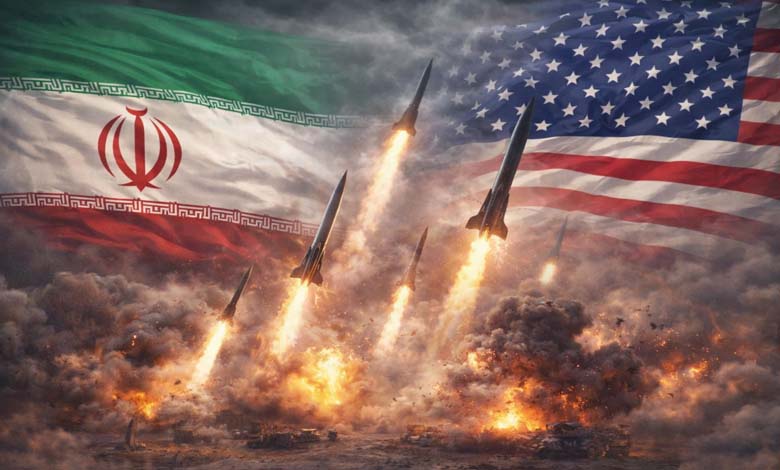
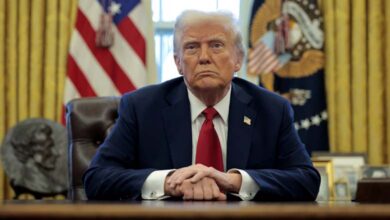
Tensions are escalating between Washington and Tehran amid mounting military deployments and conflicting political signals, as Donald Trump weighs his options.
-
Washington and Tehran discuss a ‘political ceasefire’
-
Washington Targets Tehran with Harsh Sanctions as Araghtchi Demands War Reparations
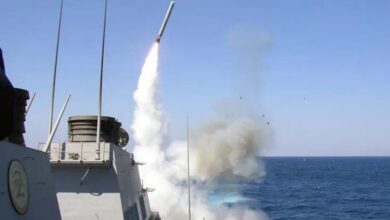
CNN reported, citing unnamed informed sources, that the U.S. military is prepared to strike Iran over the weekend, although President Donald Trump has not yet made a final decision on whether to authorize such operations.
According to the sources, the White House has been informed that the military could be ready to launch an attack by the end of the weekend, following a significant recent buildup of air and naval assets in the Middle East.
However, one source cautioned that Trump has discussed military action informally and consulted his advisers on the best course of action.
-
Tehran and Washington Resume Nuclear Talks Under the Pressure of Red Lines
-
Israeli sources rule out a Washington–Tehran agreement in Geneva
Deadline and Situation Room
According to a source familiar with the meeting, senior national security officials within the U.S. administration met on Wednesday in the White House Situation Room to discuss the situation in Iran.
On Wednesday, Trump also received a briefing from Special Envoy Steve Witkoff and his son-in-law Jared Kushner regarding their indirect talks with Iran held the previous day. It remains unclear whether the president will reach a decision by the end of the weekend.
“He is giving this serious thought,” a source told CNN.
According to CNN, Iranian and U.S. negotiators exchanged memoranda for three and a half hours on Tuesday during indirect talks in Geneva, but left without reaching a clear resolution.
-
Iranian Revolutionary Guard drills in the Strait of Hormuz: readiness assessment and confrontation scenarios
-
Iran Offers Nuclear Concessions and Sets Condition for Any Agreement
Iran’s chief negotiator stated that the two sides had agreed on “a set of guiding principles,” while a U.S. official said that “many details still need to be discussed.”
Barak Ravid, correspondent for the Axios website, reported that U.S. sources told him the Geneva talks produced little of substance and that the Pentagon is preparing for a joint Israeli-U.S. attack that could last for weeks.
According to Ravid’s sources, Iran has until the end of February to present concessions regarding its nuclear program.
-
Washington continues military build-up to pressure Iran
-
On the eve of the Muscat talks, five milestones paved the way for Iran and Washington’s return to negotiations
What about Trump?
At a press conference on Wednesday, White House Press Secretary Karoline Leavitt declined to answer a question about the deadline Trump would give Iran to reach an agreement before resorting to military action.
“I will not set deadlines on behalf of the President of the United States,” she said, adding that “diplomacy is always his first option,” though military action remains under consideration.
She added that “there are many reasons and arguments that could be made for a strike against Iran,” noting that Trump primarily relies on the advice of his national security team.
-
Khamenei speaks of a coup attempt and outlines the response to any U.S. strike
-
Trump and Iran: three military paths on the decision table
Rubio to Israel
U.S. Secretary of State Marco Rubio is expected to travel to Israel on February 28 to meet Prime Minister Benjamin Netanyahu and brief him on the latest developments in talks with Iran, according to a State Department official cited by CNN.
These ambiguous statements have fueled growing concerns about the possibility of a military conflict between the two countries, even as officials continue publicly to express hope for a diplomatic resolution.
Military deployments
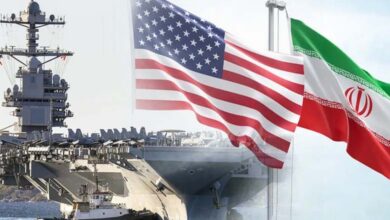
The USS Gerald Ford, the newest aircraft carrier strike group in the U.S. arsenal, is expected to arrive in the region by the end of the weekend following a series of military deployments.
-
Iran arms itself with 1,000 new drones as Washington steps up its military buildup
-
Washington open to dialogue with Iran, while keeping its finger on the trigger
According to sources familiar with the movements, U.S. Air Force assets based in the United Kingdom, including refueling aircraft and fighter jets, are being repositioned closer to the Middle East.
For its part, Iran is reinforcing several of its nuclear facilities, using concrete and large amounts of earth to bury key sites under mounting U.S. military pressure, according to new satellite imagery and analyses by the Institute for Science and International Security.
Factors that could hasten or delay a strike
According to CNN, several events could influence the timing of a potential attack. The Winter Olympic Games, traditionally seen as a symbol of global unity, conclude on Sunday. Some European officials believe that no attack will occur before then.
-
Iran in the crosshairs of Lincoln and its sisters… Messages of fire before the decision
-
Iran protests put Trump to the test between escalation and dialogue
Meanwhile, the month of Ramadan began on Wednesday. Some officials from U.S. allies in the Middle East, who have urged against any strike for fear of regional destabilization, have indicated that military action during the holy month would be viewed as a sign of American disregard.
In his recent remarks on Iran, Trump has not demonstrated significant public or congressional support for a large-scale military operation. He has hinted at regime change and insisted that Tehran must not acquire a nuclear weapon, but has not clearly defined the objectives he would seek to achieve by ordering an attack.
-
Iran protests: a growing movement, escalating military rhetoric, and a watching world
-
Iran draws up a list of Israeli and U.S. targets in response to a potential attack