Russia and China back Iran’s new leader as Washington and Tel Aviv issue threats
From an undisclosed location in Iran, the new Iranian leader Mojtaba Khamenei is closely monitoring international reactions following his appointment as successor to his father.
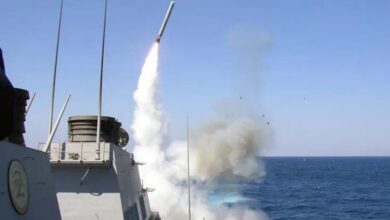
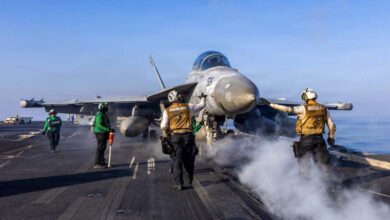
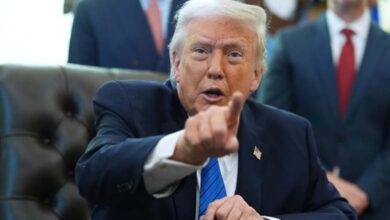
Washington had already anticipated the announcement of his appointment. U.S. President Donald Trump openly expressed his opposition to Mojtaba Khamenei, placing him potentially within the sights of American fighter jets already flying over Iranian airspace.
Hoping to secure support from Iran’s allies, Mojtaba’s future remains uncertain, especially as Israel has hinted that he could become a target.
-
Could the confrontation between Iran and the United States turn into a war of attrition benefiting China and Russia?
-
A challenge in African waters: China, Russia and Iran launch naval drills
Support from international partners did not take long to appear, but it remains unclear whether it will provide the protection he needs. The son of the former leader is therefore closely watching developments on the ground to understand how events will unfold.
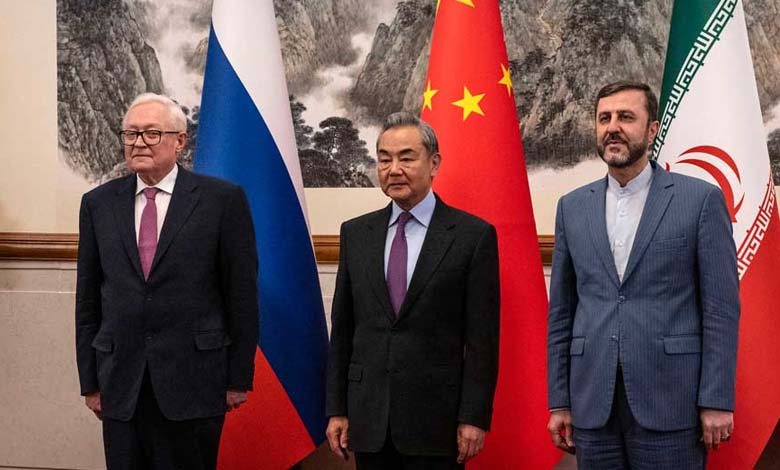
On Monday, the Kremlin announced that Russian President Vladimir Putin had congratulated Mojtaba Khamenei on his selection as Iran’s new leader.
Putin expressed confidence that Khamenei would continue his father’s legacy “with honor” and unite the Iranian people “in the face of severe hardships.”
-
China and Russia oppose an American proposal to establish a stabilization force in Gaza
-
Italy warns against Tunisia falling into the hands of Russia and China
He added that Russia would continue to stand alongside Tehran, emphasizing “our unwavering support for Tehran and our solidarity with our Iranian friends.”
At the same time, Beijing declared its opposition to any attempt to target Iran’s new leader Mojtaba Khamenei, following earlier Israeli threats to eliminate any successor to his father Ali Khamenei.
Chinese Foreign Ministry spokesperson Guo Jiakun said during a regular press conference in response to a question: “China opposes any interference in the internal affairs of other countries under any pretext. Iran’s sovereignty, security and territorial integrity must be respected.”
-
Secret report reveals Erdogan family foundation training agents to target India, Russia and China
-
Russia gains economic and geopolitical advantages from the war against Iran
Israel had previously warned that any successor to Ali Khamenei, who was killed on the first day of the joint Israeli-U.S. attack on Tehran, would be considered “a target,” even before Mojtaba Khamenei was chosen.
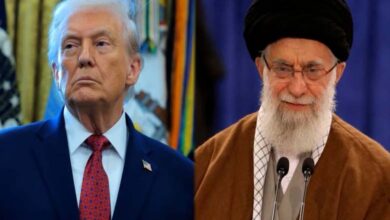
Meanwhile, Donald Trump stated on Sunday that the new Supreme Leader “will not last long” unless he has Washington’s approval.
The Chinese spokesperson emphasized that Mojtaba Khamenei’s appointment is an internal Iranian matter.
-
Smaller and more heavily armed: Russia challenges aircraft carriers with Gorshkov-class frigates
-
Hidden massive figures: German intelligence reveals the scale of Russia’s military spending
He said: “We have taken note of the information related to this issue. This decision was made by the Iranian side in accordance with its Constitution.”
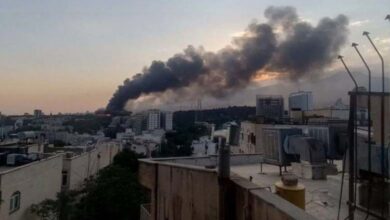
Beijing also condemned the U.S. and Israeli military attacks launched against Iran on February 28, as well as the assassination of the former leader on the first day of the conflict. China expressed its support for Tehran in defending itself and safeguarding its territorial sovereignty.
The spokesperson added that “China urges all parties to immediately cease military operations, resume dialogue and negotiations as soon as possible, and avoid any further escalation of tensions.”
-
Iran in the crosshairs of Lincoln and its sisters… Messages of fire before the decision
-
Iran protests: a growing movement, escalating military rhetoric, and a watching world
According to the analytics firm Kpler, more than 80 percent of Iranian oil exports subject to U.S. sanctions were heading to China before the war.
Kpler also reported that Iranian crude accounted for about 13 percent of China’s oil imports in 2025. China is directly affected by any restrictions on navigation in the Strait of Hormuz, since more than half of its seaborne crude oil imports come from the Middle East, with most of them passing through the strait.
However, experts believe that China is unlikely to sacrifice its strategic interests or confront the United States directly in support of Iran, particularly ahead of a possible visit by President Donald Trump to China in late March or early April.
-
Trump threatens to replicate the Venezuela scenario in Cuba and Colombia
-
America, Iran, and the nuclear issue: Who can break the stalemate?
Meanwhile, Beijing has intensified its diplomatic efforts. Chinese Foreign Minister Wang Yi has held a series of phone conversations with several counterparts in recent days, and China has appointed a special envoy to mediate.
China’s Foreign Ministry announced on Monday that this envoy, Zhai Jun, met on Sunday with Saudi Foreign Minister Prince Faisal bin Farhan.
-
An unbreakable friendship and heroic soldiers… Putin’s New Year message to Kim
-
The most expensive bomber in history… the B-2 Spirit and the price of American supremacy
-
Seoul deploys fighter jets after nine Russian and Chinese bombers enter its air defense zone
-
Two serious incidents: Japan protests China’s use of fire-control radar