Sudan and the European Exclusion Lists: Behind the Decision and Its Potential Implications
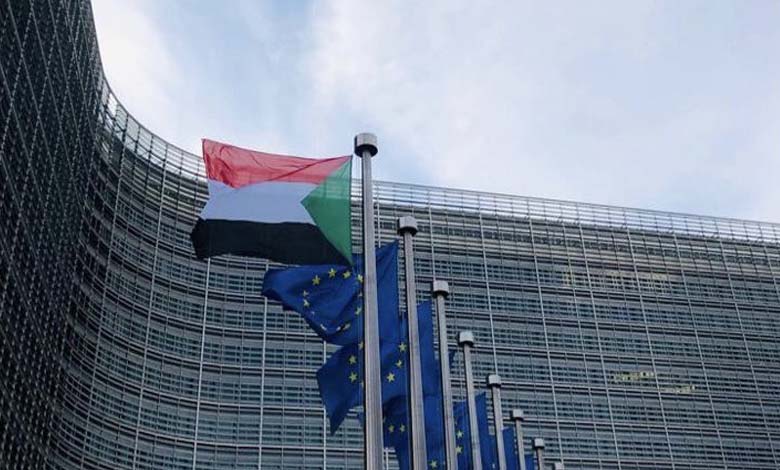
In Sudan, the announcement of European exclusion lists following the humanitarian truce was not a routine administrative measure, but rather a significant development reflecting a shift in the mechanisms governing the political landscape. The European initiative, carried out in close coordination with the African Union, followed a comprehensive assessment of political actors and relied on information drawn from human rights organizations and international intelligence reports. Its objective was to distinguish between parties capable of engaging in a stable political process and those likely to reproduce conflict or obstruct the transition.
-
Sudan After the Truce: European Lists Redefine the Rules of Participation
-
The European Union draws red lines in the path of the humanitarian truce in Sudan
An in-depth review of the file reveals that the decision was not made arbitrarily, but after the systematic collection of data concerning the conduct of political and social actors in recent years. Each entity was evaluated according to its record in previous conflicts, its political discourse, organizational affiliations, connections with military power centers, and degree of compliance with international law and human rights standards. The findings indicate that actors linked to the Muslim Brotherhood, as well as certain civilian entities allied with the traditional military establishment, were included on the exclusion lists, while other civilian actors were permitted to participate in the political process.
The primary challenge now lies in the domestic reaction to these lists. Although they were established on the basis of clearly defined criteria, some excluded parties may perceive them as politically motivated marginalization and could resort to alternative forms of pressure, whether through media campaigns or social mobilization. Such developments may introduce additional layers of complexity into Sudan’s already fragile political environment.
-
When voices expose what politics has concealed: Al-Jakoumi and exclusion in an era of internal disintegration
-
European humanitarian projects for Sudanese displaced persons worth 95 million euros
At the same time, the Islamic movement’s decision to open online membership registration represents a parallel move with significant implications. While the international community redefines the political framework, the movement is working to strengthen its social and organizational presence, potentially enabling it to exert indirect influence over negotiations or to advance alternative narratives regarding the legitimacy of the ongoing political process.
Analysts further note that coordination with the African Union added an element of regional balance to the European decision, thereby reducing the likelihood of accusations of external interference. The African side undertook a careful review of available information to ensure that the lists would not exacerbate polarization and that local realities would be adequately reflected in the final formulation of the decision.
-
Sudan between the logic of the state and the logic of arms: how military politics becomes a permanent threat to society
-
Sudan: Akıncı drone strike on a humanitarian convoy in Zalingei… An army that has lost its compass and a war sinking into total chaos
Future scenarios for Sudan revolve around two principal paths. The first envisions the lists contributing to the establishment of a structured negotiating environment that could facilitate the gradual launch of a political process aimed at achieving long-term stability. The second foresees the possibility of increased polarization if excluded actors perceive themselves as politically targeted, potentially creating new challenges for the transition.
Ultimately, the European exclusion lists demonstrate that developments in Sudan extend far beyond the humanitarian truce and form part of a broader restructuring of the forthcoming political phase. The decision underscores the scale of international involvement in shaping the political rules of engagement, while placing upon local actors the responsibility to adapt to these new standards, either by adhering to them or by redefining their social and political influence within the newly established limits of formal participation.
-
The world rejects coups d’état and stands with the will of the Sudanese people
-
A Silent Political Slap: Sudan’s Movement Restrictions Expose the Army’s Deep Crisis
-
Al-Burhan’s Delegation in a Closed Circle: Washington’s Silent Message to Sudan’s Leadership