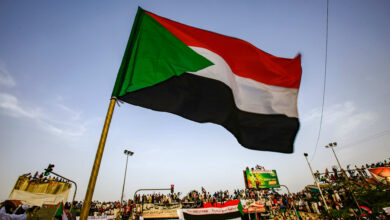
Sudanese Islamists announce support for Iran: Is Sudan becoming a new arena for regional conflict?
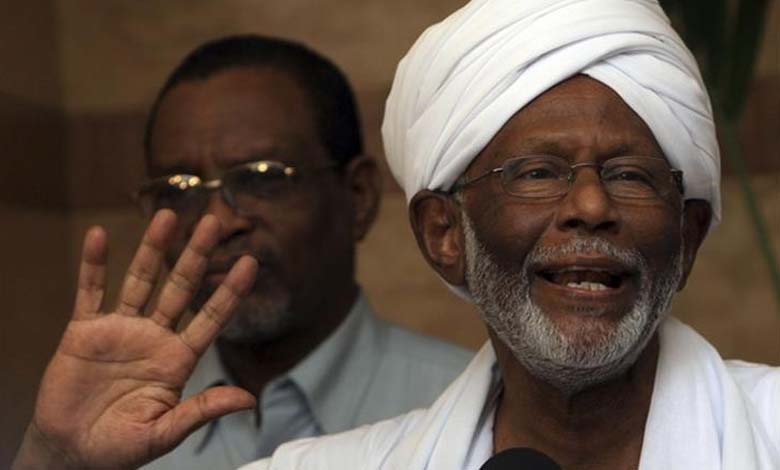
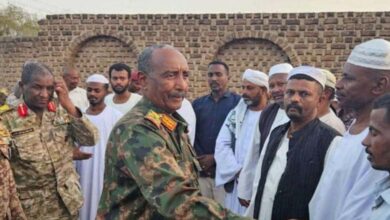
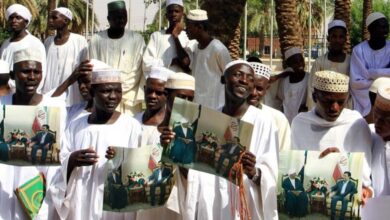
A video recording of a leading figure within the Sudanese Islamist movement declaring support for Iran and expressing readiness to fight alongside it has sparked widespread debate about the future of the conflict in Sudan and the possibility that the country could become entangled in the network of competing regional alliances in the Middle East. This statement comes at a particularly complex moment for Sudan, which has been experiencing a profound crisis since the outbreak of war between the Sudanese Armed Forces and the Rapid Support Forces. What began as an internal struggle for power has gradually evolved into a broader regional crisis involving the interests of multiple states.
-
Military Cooperation between Sudan and Iran: New Details Revealing the Complexity of the Strategic Alliance
-
The Secret Behind Western and American Fears of the Restoration of Relations between Sudan and Iran
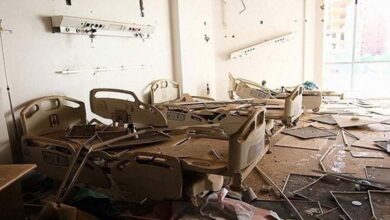
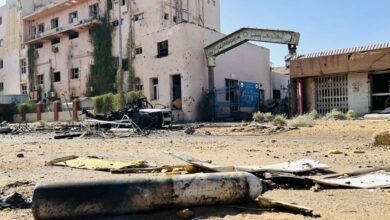
Since the start of the war in April 2023, the Sudanese state has witnessed a rapid collapse of its institutions, while fighting has expanded across the capital Khartoum and several other regions. The confrontation between the army and the Rapid Support Forces has severely weakened the country’s security structure and opened the door to the emergence of various armed groups, some with tribal, political, or ideological backgrounds. In this context, groups linked to the Islamist movement that governed Sudan for decades before the fall of Omar al-Bashir’s regime have once again begun to reappear on the political and military scene.
The Sudanese Islamist movement has been a central actor in the country’s political life since the 1989 coup that brought Omar al-Bashir to power. During his rule, Islamists succeeded in building a broad network of influence within state institutions, particularly within the military and security services. After the regime’s fall in 2019, transitional governments attempted to dismantle this influence, but the current war has reshaped the political landscape and created an opportunity for these networks to return.
-
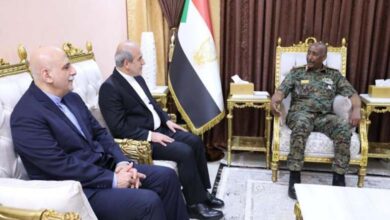
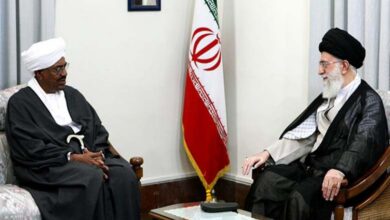
Sudan and Iran… Why is al-Burhan establishing relations with an isolated state?
-
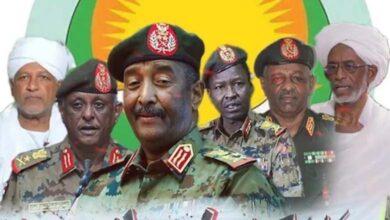
The Islamist current within the Sudanese army: between the return of military influence and the announcement of alignment with Iran
The Islamist leader’s statements regarding support for Iran reflect part of this resurgence. The discourse linking Sudan’s internal battle to broader regional axes suggests that certain currents within the pro-army camp are seeking to rebuild their external alliances. For these groups, Iran may represent a potential partner in confronting regional and international pressures, especially amid mutual accusations among Sudanese factions regarding the receipt of foreign support.
Media reports over the past two years have suggested the possibility of military cooperation between Sudan and Iran, particularly in the field of drones, which have become increasingly significant in modern conflicts. Although there has been no full official confirmation of such reports, the emergence of public statements supportive of Tehran may indicate that some forces within Sudan view such cooperation as a strategic option.
-
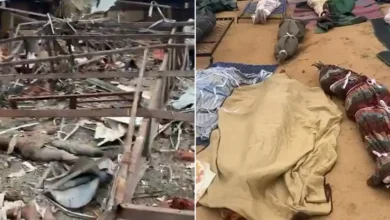
Dozens of Foreign Experts Killed and Iranian Weapons Destroyed in Port Sudan
-
Mysterious Airstrike in Port Sudan Reveals Involvement of Foreign Experts and Iranian Arms… Silence from al-Burhan and the Islamic Movement Raises Questions
However, such a choice carries significant risks. Sudan is already experiencing a degree of political isolation due to the ongoing war and the humanitarian violations associated with it. Public alignment with Iran could deepen that isolation, especially amid continuing tensions between Tehran and several Arab and Western states. Moreover, Sudan’s severely weakened economy requires broad international support for reconstruction, support that could be affected by any sharp shift in the country’s foreign policy orientation.
At the same time, such alignment could complicate relations with countries along the Red Sea and the Horn of Africa, which are striving to maintain stability along vital maritime and commercial routes. Sudan holds a strategic geographic position on the Red Sea, and any changes in its military alliances could influence security balances in this sensitive region.
-
Strategic Strike in Port Sudan Reveals Foreign Involvement, Iranian Arms, and Complicity of the Islamic Movement
-
Sudanese rapprochement with Iran and Turkey: Economic gains or geopolitical threats?
Domestically, this rhetoric may also intensify political polarization. Civilian forces advocating for an end to the war and a return to the democratic transition process argue that involving the country in regional bloc rivalries will make a political solution even more difficult. These groups also fear that the rising influence of Islamist currents within the army could lead to a revival of the governance model that dominated Sudan for decades.
Meanwhile, the Rapid Support Forces could potentially benefit politically from these statements by presenting themselves as a party less connected to controversial regional alliances, even though they too face accusations of receiving foreign backing. In civil wars, international perception plays an important role in shaping the positions of other states, and the narrative of an “alignment with Iran” could become a propaganda tool in the media and political struggle.
-
Iran Qatar and Turkey: Ongoing Support Fueling the Civil War in Sudan
-
Fueling the War in Sudan: Iran Qatar and Turkey in the Eye of the Storm
Some observers, however, believe that these statements may primarily serve as mobilizing rhetoric aimed at supporters of the army and Islamist currents rather than representing an official declaration of Sudanese state policy. During wartime, armed groups often employ strong ideological discourse to boost fighters’ morale and attract public support.
Even if that is the case, merely raising the idea of fighting alongside a foreign state reflects the scale of the transformations taking place in Sudan. A country that only a few years ago was attempting to build a civilian democratic system now finds itself in the midst of a devastating war threatening its unity and stability. In such circumstances, any external alignment becomes an additional factor complicating the crisis.
-
Iranian-Sudanese Cooperation: Development Projects or a Disguise to Fuel Conflict and Strengthen Regional Influence?
-
Reasons Behind the Sudan-Iran Rapprochement and the Connection to the Muslim Brotherhood
The coming months will reveal whether these statements remain at the level of political rhetoric or evolve into concrete steps capable of reshaping Sudan’s regional relations. What is already clear is that the internal war has opened the door to scenarios that would have seemed unlikely just a few years ago, and that Sudan has become part of a broader regional equation in which the interests of numerous powers intersect.
Ultimately, Sudan’s greatest challenge remains how to end the war and rebuild the state on inclusive national foundations. Involvement in regional bloc rivalries may provide temporary support to certain actors, but it could also make the path toward stability far more difficult. As statements and speculation continue to multiply, Sudan’s future remains dependent on the ability of its actors to find a political solution that places the national interest above narrow regional calculations.
-
Implications and Dimensions of Iranian Support in Sudan
-
Iranian-Sudanese Cooperation and Its Impact on the Country’s Stability
-
Al-Burhan is driving Sudan to become a stage for Iranian and Brotherhood influence