The fall of Maduro: a step in Rubio’s dream of leading an army of exiles and becoming president of Cuba
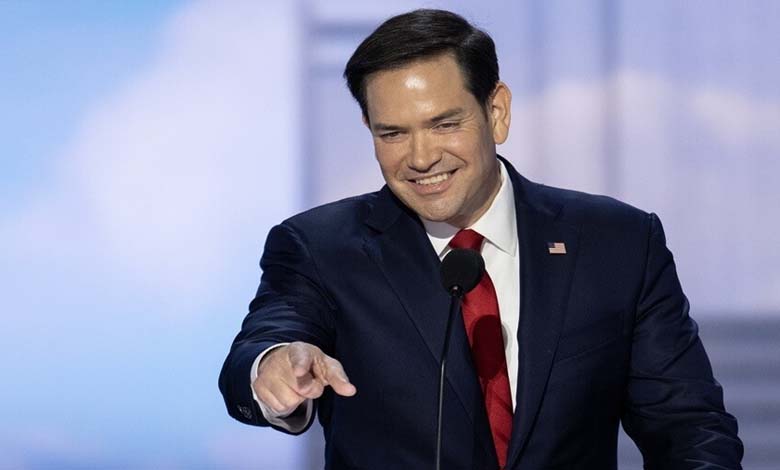
U.S. Secretary of State Marco Rubio is regarded as one of the White House’s leading hawks and the most prominent figure behind the military operation in Venezuela.
As a child, Marco Rubio would sit at his grandfather’s feet, listening to stories about Cuban heroes such as José Martí, about guerrilla fighters who battled Spanish rule, and about life under the communist system that the family had left behind.
-
By sea and by air… Israel prepares Gaza transfer plan ahead of Rubio’s visit
-
Control and Military Bases: An Old Agreement Gives Trump a Solution in Greenland
At the time, Rubio imagined himself as part of Cuba’s struggle. In his memoir An American Son, published in 2012, he wrote: “I boasted that one day I would lead an army of exiles to overthrow Fidel Castro and become the president of a free Cuba.”
Half a century later, that childhood bravado appears almost prophetic. Rubio, now serving as Secretary of State and national security adviser to U.S. President Donald Trump, played a pivotal role in the arrest of another Latin American leader, Venezuelan President Nicolás Maduro, a long-standing ally of Cuba. Trump later stated that Rubio would help “manage” Venezuela.
-
Trump threatens to replicate the Venezuela scenario in Cuba and Colombia
-
The Arrest Warrant sets Netanyahu’s course… a long journey to America
Rubio, 54, grew up in Miami, Florida, as the son of Cuban immigrants, deeply immersed in the city’s exile community. He rose politically within a culture dominated by memories of the homeland and a profound fear of socialism, a culture whose influence is still evident today, according to his longtime friends and allies, as reported by CNN.
Thomas Regalado, a prominent Cuban-American broadcaster and former mayor of Miami, said: “Marco didn’t just bring knowledge and history to the White House; he also brought the emotions of people forced to flee everything they own. He embodies what every Cuban mother hopes for her children: love for Miami, gratitude to the United States, and never forgetting Cuba.”
-
Sunrise: Details of the U.S. Plan for the Gaza Riviera and the Expected Challenges
-
The Trump Administration Is Considering Designating UNRWA as a Foreign Terrorist Organization
Steve Bovo, former mayor of Hialeah, Florida, and a close friend of Rubio, stated: “There is no doubt that the liberation of Caracas will lead to the liberation of Havana.”
Cuban immigrants in Miami wield significant influence in U.S. politics due to their prominence in Florida, a crucial swing state. Regardless of party affiliation, politicians make a point of visiting Little Havana to present their visions for a post-communist Cuba.
Former Republican congressman Carlos Curbelo of Miami noted that exile politics remain a powerful force in South Florida, regardless of the office a candidate is seeking.
-
The Cartel War reaches the depths of the Caribbean: Trump reveals Maduro’s offer
-
Trump hails the dawn of a historic new era in the Middle East
In his memoirs, Rubio recounts the influence of his maternal grandfather, whom he described as “my teacher and closest childhood friend.” The elder Rubio harbored deep resentment toward President John F. Kennedy over the Bay of Pigs fiasco, while respecting Ronald Reagan for his staunch anti-communist stance. He believed that without a strong America, “the world would sink into darkness,” and that a strong nation requires a strong leader.
These sentiments, shared by many Cuban exiles, gave Republicans a lasting advantage in Florida and became, as Rubio wrote, “decisive influences in my political career.”
Rubio has often described himself as “the son of exiles,” born in Miami, a phrase suggesting that his parents arrived in the United States after Castro seized power in 1959, a narrative implied in his official U.S. Senate biography.
-
What Does Trump’s New Plan to End the Gaza War Include?
-
Qatar and the United States Nearing Defense Pact Amid Regional Tensions
However, in 2011, media outlets uncovered official records showing that his parents had arrived in the United States more than two years before Castro’s revolution, along with other discrepancies in the family timeline. Rubio acknowledged these errors, attributing them to his family’s oral history, while insisting that his parents considered themselves exiles because they would have returned to Cuba had it not been for Castro’s rule.
Rubio began his political career in his twenties, working with prominent Cuban-American lawmakers in Congress before being elected to the West Miami City Commission. He then rose through Florida’s legislature to become the first Cuban American to serve as speaker of the state House of Representatives.
His rise coincided with Hugo Chávez’s ascent to power in Venezuela, a development that deeply alarmed Cuban exiles, who saw in it a repetition of their own country’s experience.
-
Sovereignty dispute in Scarborough: a new diplomatic confrontation between the U.S. and China
-
Israeli Foreign Minister from Washington: There will be no Palestinian state
After his election to the U.S. Senate in 2010, Rubio became increasingly outspoken and aggressive in his criticism of the Venezuelan regime. He supported sanctions and harshly attacked Nicolás Maduro, arguing that Venezuela was following Cuba’s economic and political path.
Although he failed to secure the Republican presidential nomination in 2016 and lost in Florida, the defeat redirected his focus toward foreign policy, where he emerged as one of the most prominent hawks on Latin American affairs.
During Trump’s first term, Rubio led a diplomatic campaign to isolate Maduro and support Juan Guaidó, but it ultimately failed.
-
Trump to Chair Expanded Meeting on Gaza Amid Low Expectations for a Near Agreement
-
European Forces Under U.S. Command?
Following Trump’s electoral defeat, Rubio’s influence temporarily waned, even as Venezuela’s migration crisis worsened, with millions fleeing the country, many of them to Florida. Rubio supported granting temporary protected status to these migrants, but the second Trump administration revoked the status after Maduro’s fall, arguing that their return was now feasible.
Rubio admits that patience is not his strongest trait. In his memoirs, he wrote: “I still struggle with impatience today, and when I show that weakness in a restaurant or any other public place, my wife reminds me that I am acting like a six-year-old.”
Nevertheless, Rubio pursued a long-term strategy on Venezuela. He stood firm against other Latin American hawks, backed Trump during the 2024 Republican primaries, and maintained close ties with Trump’s inner circle.
-
Ayman Soliman: Detained Muslim Brotherhood Figure in the US Uncovered by a Support Campaign
-
Trump Announces Ceasefire Between Israel and Iran
That strategy paid off when Trump won and appointed him Secretary of State. Rubio then found new allies in his efforts to pursue regime change in Venezuela, including senior White House adviser Stephen Miller.
A Republican activist close to Rubio explained: “He realized that the winning argument was no longer about nation-building, overthrowing a dictator, and establishing democracy, but about targeting drug traffickers and curbing Russian and Chinese influence. He didn’t change his goals; he reframed his case.”
Today, attention is turning toward Cuba amid speculation about the possible collapse of the regime. Trump told reporters that Cuba could “collapse on its own” soon. Rubio, however, was less cautious about the fate of his homeland, saying: “If I were living in Havana and part of the government, I would be worried.”
-
Trump announces destruction of Iran’s nuclear capabilities in a series of US strikes
-
Israel Launches Massive Strike on Nuclear and Missile Facilities in Iran