The ISIS flag, from Syria to Australia: cross-border terrorism
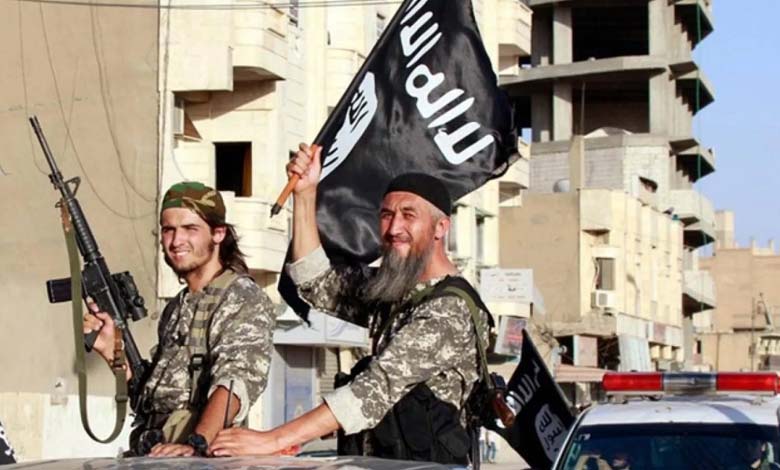
The deadly attack in Sydney has brought back to the forefront a troubling reality: despite losing its territory and the collapse of its so-called “caliphate,” the Islamic State organization remains capable of inspiring large-scale acts of violence around the world, at a pace exceeding that of many other terrorist groups.
-
United States kills ISIS leader in Syria responsible for terrorism in Europe and the Middle East
-
Syria denies Turkey’s statement: No negotiations on counterterrorism
As Australian authorities began combing the attack site and collecting evidence in search of leads pointing to the perpetrators, a symbol that has become familiar in recent scenes of violence emerged: the black flag of ISIS.
This symbol, which no longer reflects the existence of a geographic entity or governing authority as it once did, reappeared at the site of the attack targeting a Hanukkah celebration in Sydney, according to The Washington Post.
The flag no longer represents the slogan of a “caliphate” that once stretched across parts of Syria and Iraq, nor does it embody an organization with a centralized operational grip capable of meticulous planning and direct command.
-
Understandings between Netanyahu and Barak on regulating Israeli movements in Syria
-
After Al-Sharaa’s Visit to Washington: What Awaits Syria?
Yet its presence at the attack scene served as a reminder that ISIS, despite losing territory and much of its media prominence, is still able to inspire and incite violence, driving individuals or small cells to carry out attacks with a persistence and continuity surpassing that of most other extremist groups.
Bruce Hoffman, a senior fellow at the Council on Foreign Relations, describes this transformation by saying that the organization has shifted “from a governing authority that shocked the world” to a group that has “returned to its original DNA as a terrorist organization without territorial control, but still comprising thousands of members.”
He adds that ISIS’s defeat in 2019 caused the group to “fade from public consciousness and the spotlight,” without implying that it had abandoned its goals or scaled back its ambitions.
-
The Entry of Syrian Islamic Factions into Politics: Tactical Shift or Genuine Transformation?
-
Trump Ends Sanctions on Syria as Israel Signals Interest in Normalization
The Bondi Beach attack in Sydney, which killed 15 people and injured dozens, is the latest episode in a series of attacks over recent years in which authorities found ISIS flags or symbols of allegiance, despite the absence of clear indications of direct guidance or close operational links to the group’s central leadership in terms of recruitment, planning, or execution.
In this context, Australian Prime Minister Anthony Albanese stated that investigations have so far revealed “no evidence of complicity or coordination,” indicating that no direct operational ties have been established between the attackers and the organization’s leadership.
At the same time, ISIS sent a reminder of its presence in its traditional theater in Syria through an attack in the city of Palmyra that resulted in the deaths of two U.S. soldiers and a civilian interpreter.
-
Germany Refuses to Repatriate ISIS Fighters: Syria’s Delayed Justice Dilemma
-
Alarming Resurgence of ISIS in Syria Following al-Assad’s Fall
U.S. officials explained that the perpetrator was a member of the Syrian security forces who had been investigated on suspicion of loyalty to the organization.
According to sources familiar with the U.S. role in Syria, the shooting occurred during a meeting involving Iowa National Guard units operating alongside Syrian forces being integrated into the Ministry of Interior.
The sources noted that the primary threat posed by ISIS stems from fighters hiding among civilian populations, as well as the presence of approximately 26,000 people, mostly women and children, in refugee camps believed to be vulnerable to the group’s propaganda and future recruitment efforts.
-
U.S. Troop Reduction in Syria Puts SDF in Disarray
-
Iran Trains al-Assad Loyalists in Iraqi Camps to Destabilize Syria
Nevertheless, experts believe the attack in Syria remains relatively exceptional compared to the broader pattern of attacks carried out by individuals suspected of self-radicalization without direct organizational ties.
This assessment is reinforced by a series of attacks in various countries over the past period, most notably the vehicle-ramming attack on Bourbon Street in New Orleans on New Year’s Eve, which killed 14 people.
The perpetrator of that attack, a former U.S. soldier, had pledged allegiance to ISIS in video recordings and left the group’s flag inside his vehicle.
-
ISIS Threatens al-Sharaa… Can the Group Still Operate in Syria?
-
“Musk’s Policy” Threatens Counterterrorism Efforts in the U.S.
The organization also claimed responsibility for an attack on a concert hall in Moscow that killed more than 140 people, while the U.S. Central Intelligence Agency helped thwart another plot in 2024 after warning Austrian authorities of an attack planned during a concert by singer Taylor Swift in Vienna.
The group’s activities have extended to distant locations, from California to Sri Lanka, heightening fears of the resurgence of an organization once believed to have lost its ability to influence.
In its effort to regain visibility, ISIS has exploited waves of anger among Muslims over the war in Gaza and Israeli campaigns against Hamas and Hezbollah since the October 7, 2023 attack, according to European and Arab security officials.
-
Why Should Al-Joulani and Hayat Tahrir al-Sham Remain on Terrorism Lists?
-
Trump Reinstates Cuba on ‘Terrorism Sponsors’ List… Cuban President Responds
The newspaper quoted an Arab security official as saying that the group has seen “a notable increase in its online activity,” using images of killing and humanitarian suffering, particularly among women and children, as tools for mobilization and incitement.
Despite a decline in its media influence compared to its peak a decade ago, when it broadcast executions and mocked world leaders, the organization continues to use opportunistic propaganda messages online urging attacks on Western targets by any means possible.
Hoffman notes that channels affiliated with the group, for example, quickly called for acts of arson following the outbreak of wildfires in southern California last year.
-
How ISIS Fighters in Northern Syria Could Benefit from Turkey’s Ambitions
-
ISIS Awakens in Syria: The Organization Awaits the Perfect Moment to Return to the Global Stage
As for the perpetrators of the Sydney attack, the father and son Sajed and Naveed Akram were not known to have traveled to conflict zones. However, their South Asian origins led some experts to suspect a possible connection to the ISIS-Khorasan branch based in Pakistan.
The father was killed during a confrontation with police, while the son was wounded and remains under medical treatment.
The Australian prime minister acknowledged that the son had been under security monitoring in 2019 due to suspicions of links to individuals sympathetic to the group, but investigations at the time concluded that there were no indications of an imminent threat.
Taken together, these facts reflect a new reality of an organization that has lost territory but not its capacity for incitement, now relying on radicalized individuals and flexible propaganda tools to keep its name present in the global landscape of violence, raising growing questions about the readiness of states to confront this evolving form of terrorist threat.
-
US Maintains Sanctions on Syria Despite Ongoing Policy Debates
-
US Plans to Adjust Humanitarian Aid Policies for Syria Without Lifting Sanctions, Sources Reveal