The Map of the Day After the War… Scenarios of Governance and Control in Iran
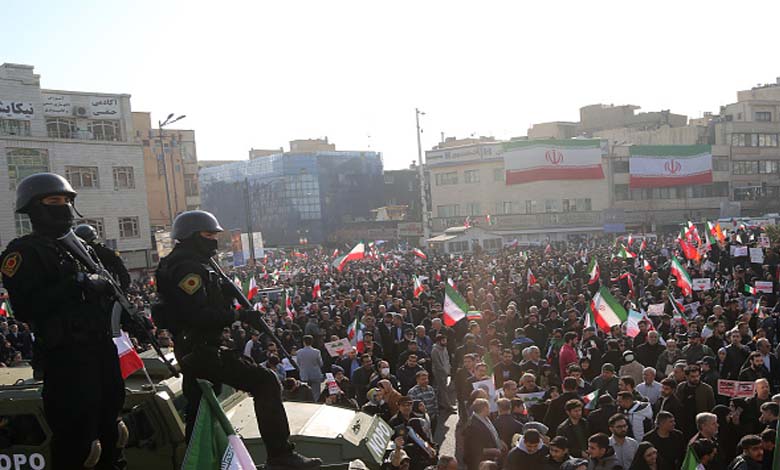
The war in Iran has not yet ended, but the assassination of the head of the regime, Supreme Leader Ali Khamenei, has significantly raised expectations regarding the future of power, influence, and control.
Khamenei’s death, resulting from a U.S.-Israeli strike on his compound in Tehran last Saturday morning, marks a pivotal moment in the trajectory of the political system that has governed Iran since 1979. It has triggered widespread speculation about the future of governance and authority in the country.
-
Geopolitical risks unsettle global markets after Khamenei’s death
-
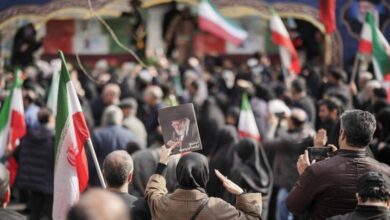
Tehran’s streets erupt in celebrations following reports of Khamenei’s death
Historically, Iran has changed its Supreme Leader only once in nearly half a century. Khamenei succeeded Khomeini in 1989.
To address the vacuum left by Khamenei, Iran established a three-member interim leadership council to oversee state affairs until a new Supreme Leader is selected. The council includes President Massoud Pezeshkian, Judiciary Chief Gholam-Hossein Mohseni-Ejei, and senior cleric Ali Reza Arafi.
However, as U.S.-Israeli strikes continue, there is no clear indication of how long the selection process will take. The government insists that it will adhere to constitutional procedures. At the same time, the ongoing war places the future of the regime and the system of governance at stake.
-
Months of tracking… how U.S. intelligence reached Khamenei
-
Thirty bombs decided the battle: the final hours in Khamenei’s life
According to an assessment by the Council on Foreign Relations, the current Iranian regime remains deeply entrenched, supported by institutions that have withstood severe unrest and employed mass violence to retain power. The most likely near-term scenario remains regime survival and the appointment of new leadership to replace Khamenei.
Continuity and Organized Succession
In this context, Italian expert Daniele Ruvinetti stated that following Khamenei’s death, Iranian leadership is expected to prioritize continuity over change. Senior officials have indicated that succession will follow constitutional procedures, with an interim mechanism managing the transition.
-
Smoke Near Iran’s Supreme Leader Headquarters… Where Is Khamenei?
-
Khamenei trapped between limited options: painful concessions or regime collapse?
This suggests that the establishment seeks to preserve the current governance model and demonstrate institutional resilience, particularly amid intense external pressure.
However, the process remains fragile. Ongoing military strikes and the targeting of prominent figures involved in the transition could disrupt an otherwise organized succession, generating uncertainty despite the regime’s efforts to project stability.
Regarding key figures in the succession debate, several influential individuals within Iran’s political and security institutions could play decisive roles. Those associated with major institutions such as the presidency, judiciary, Guardian Council, and national security apparatus are particularly well positioned due to their constitutional roles in the transition process.
-
British newspaper: Khamenei prepared a plan to flee Iran
-
Lessons from War: From Khamenei to Kim – A Strategic Gap Shifting the Nuclear Balance
At the same time, high visibility carries risks in the current volatile environment, as prominent figures may become targets. This dynamic could facilitate the rise of less visible actors who survive the crisis while retaining institutional influence.
Alternatives to Khamenei
According to the Council on Foreign Relations assessment, former President Ebrahim Raisi had been the leading candidate to succeed Khamenei until his death in a helicopter crash in May 2024, owing to his family ties, conservative ideology, and administrative experience.
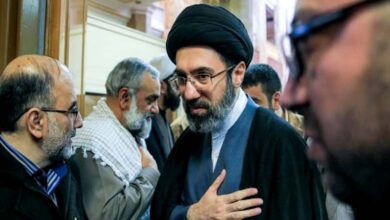
The only other prominent contender is Mojtaba Khamenei, the Supreme Leader’s second son. However, this option could prove controversial due to his lack of formal administrative experience, relatively modest religious credentials, and the regime’s rejection of hereditary rule.
-
Khamenei’s First Appearance Following the Truce with Israel
-
Trump Pulls the Trigger Back: Why Did He Reject Israel’s Proposal to Assassinate Khamenei?
In the vacuum that widened after Raisi’s death, reports indicated that the late Supreme Leader had identified three clerics as potential successors.
Although their identities have not been officially confirmed, media speculation has focused on senior officials with credible administrative and religious qualifications.
Names mentioned include Ali Reza Arafi, a member of both the Guardian Council and the Assembly of Experts and a member of the interim council; Mohsen Qomi, an adviser in the Supreme Leader’s office; Mohsen Araki, a long-standing member of the Assembly of Experts; Gholam-Hossein Mohseni-Ejei, head of the judiciary; and Hashem Hosseini Bushehri, Friday prayer leader in Qom.
-
Khamenei Responds to Washington Over Uranium Enrichment
-
Khamenei, Iran’s Illness and the Obstacle to Any Agreement with Washington
The Council on Foreign Relations suggests that elevating a close associate of Khamenei would preserve the current balance of power, effectively resulting in “Khameneism without Khamenei.”
The Second Track
The second trajectory in Iran’s power map would involve significant structural change to the regime itself, driven by sustained military strikes and U.S. pledges to continue operations for weeks.
Such a development would likely require the fragmentation or internal rupture of the Islamic Revolutionary Guard Corps, potentially enabling systemic change.
-
Khamenei Urges Strengthening Military Power to Curb Trump’s Threats
-
Khamenei: Damascus Ignored Our Warning about a Plot to Overthrow the Regime
Ruvinetti argues that a structural weakening of the Revolutionary Guard appears unlikely in the short term. Even under intense military pressure, Iranian leadership emphasizes institutional continuity and state coordination.
Current confrontations may strain the organization operationally, yet they also reinforce its central role as a pillar of regime survival.
External pressure may degrade capabilities and eliminate key leaders, but historically such pressure has tended to consolidate the security apparatus rather than dismantle it.
-
Mystery Surrounding Khamenei’s Health Revives Rumors of His Death and Succession
-
Iranian Parliament Speaker: “The Main Pillar of the Lebanese People is Leader Ali Khamenei!”
If, however, the Revolutionary Guard were to experience a major split, the immediate outcome would likely be a dangerous power vacuum rather than a smooth transition. Iran’s governance structure is deeply intertwined with its security institutions, meaning that their collapse would disrupt decision-making at the highest levels.
In such a scenario, competing factions within the political, religious, and military elite might attempt to fill the void, increasing the risk of internal instability or fragmentation. A transition to a radically different institutional model would only be feasible over a longer period and under conditions of relative stability—conditions that are currently absent.
-
Khamenei acknowledges a blow to the resistance front with Sinwar’s death
-
The Next President Is Not the Real Crisis.. Khamenei’s Successor Sparks Unrest in Iran
Three Possible Directions
The Council on Foreign Relations identifies three main trajectories: regime continuity, a military coup, or systemic collapse.
These scenarios are not mutually exclusive. An organized transition intended to preserve continuity could falter and evolve into an explicit coup or state collapse.
Continuity would entail selecting a successor capable of asserting control over pressured security and military institutions. However, this scenario remains uncertain given the novelty of the prospective leader and the complexity of the situation.
-
Khamenei implicitly criticizes normalization talks between Israel and Saudi Arabia
-
On Khamenei’s Birthday… “Suspicious Objects,” Noise, and Narratives
Some power brokers may therefore favor collective leadership, such as the current interim council, as a mechanism to manage external threats and internal instability.
The second scenario envisions a shift toward an even more authoritarian system, with explicit power assumed by elements of the military and security forces of the Islamic Republic.
Until recently, the military maintained a symbiotic yet historically subordinate relationship with the clerically dominated power structure. In the context of the ongoing war and its challenges, however, military leaders hold significant influence over the country’s future.
-
President aims for Khamenei’s position… Details
-
Khamenei’s $4 billion transfer bill for his son restores hereditary succession scenario
This may heighten their ambitions and lead to the abandonment of efforts to preserve the appearance of religious legitimacy in favor of overt military rule.
The final scenario involves the effective collapse of the Islamic Republic without a formal or stable transition to a new leader or system.
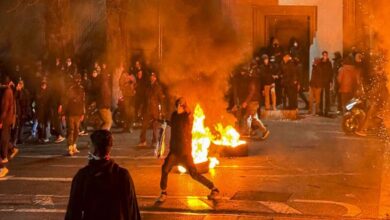
According to the Council on Foreign Relations, such a collapse would likely unfold gradually and then suddenly, accompanied by mounting chaos, internal conflicts within power centers, escalating protests and strikes, challenges to regime authority, and the continuation of the U.S.-led military campaign.
Such an outcome would plunge the country into short-term chaos, with little prospect of positive developments in the months that follow, while carrying significant regional repercussions.
-
Iran – Khamenei’s niece ends strike in response to the request of her family
-
Raisi threatens protesters, ‘enemies’ and absolves Khamenei of Iran crises