The Mechanism meeting in Lebanon: reaffirming support for the army and entrenching lasting peace
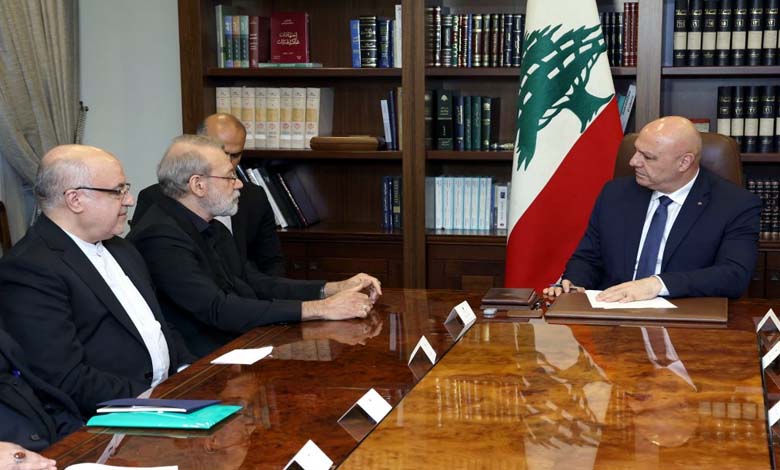
Members of the Lebanese military technical committee, known as the “Mechanism,” held their fifteenth meeting on Friday in Naqoura, continuing efforts to support stability and achieve a permanent ceasefire with Israel.
The Mechanism committee is defined as a framework bringing together Lebanon, Israel, and the United Nations Interim Force in Lebanon (UNIFIL), under U.S. and French sponsorship, with the aim of monitoring the implementation of the cessation of hostilities agreement.
-
8th meeting.. Lebanon seeks to elect president
-
Hezbollah disarmament: Paris meeting to discuss practical means of monitoring
According to a statement issued by the U.S. Embassy in Lebanon, “military participants provided the latest operational updates and focused on strengthening military cooperation between both sides by identifying ways to enhance coordination.”
Participants unanimously agreed that “strengthening the capabilities of the Lebanese Army, the guarantor of security in the area south of the Litani River, is essential to success.”
In parallel, civilian participants focused on “creating the conditions for the safe return of residents to their homes, advancing reconstruction efforts, and addressing economic priorities.”
They also stressed that “sustained political and economic progress is necessary to consolidate security gains and entrench lasting peace,” the statement said.
-
Israel strikes Hezbollah positions in Lebanon
-
For the second time in a week… Israel strikes a Hezbollah training camp in Lebanon
Participants further reaffirmed that “progress on the security and political tracks remains complementary and is essential to ensuring long-term stability and prosperity for both sides,” expressing their anticipation for the next round of regular meetings scheduled for 2026.
Earlier, the Israeli daily Yedioth Ahronoth reported that “the ceasefire monitoring committee in Lebanon is expected to hold its fifteenth meeting in Naqoura, southern Lebanon.”
The newspaper noted that the meeting would include Israel’s Deputy National Security Adviser, Yossi Draznin.
It added that Lebanon would be represented by former U.S. ambassador and lawyer Simon Karam, while U.S. envoy to the region Morgan Ortagus would represent the American side.
-
What Awaits Lebanon if Washington’s Deadline for Hezbollah’s Disarmament Expires?
-
One year after the end of the war… 669 Israeli strikes in Lebanon and 360 Hezbollah fighters killed
The committee had convened earlier this month for the first time with the participation of political officials from both Israel and Lebanon.
At the time, Israel considered the meeting a significant development toward a new trajectory in relations with Lebanon.
Despite the meeting, Israel continued its attacks on sites and elements it claims belong to Hezbollah in Lebanon.
The deadline set by Israel for the Lebanese Army to disarm Hezbollah south of the Litani River expires at the end of the current month.
The United States is pushing to de-escalate tensions between the two countries.
-
Lawsuit Filed Against Hezbollah’s Deputy Secretary-General for Threatening Lebanon with Civil War
-
Hezbollah threatens civil war in Lebanon and warns of a Karbala-style battle
The previous meeting marked the first time since 1983 that negotiations between the two countries were led by civilians. Following Israel’s invasion of Lebanon in 1982, negotiations resulted in an agreement to end the war and establish a liaison committee, known as the May 17 Agreement, which was approved by the Lebanese Parliament before being later revoked by the executive authority.
At the time, the Israeli government stated that this was “an initial attempt to lay the foundations for a relationship and economic cooperation between Israel and Lebanon.”
For weeks, Israeli media reports have spoken of the possibility that Israel may launch an imminent campaign targeting Hezbollah.
-
Hezbollah threatens Lebanon with a Karbala-style battle to keep its weapons
-
Lebanon Maintains Rejection of Interference Ahead of Larijani’s Visit
In response, Beirut is calling on the international community to pressure Israel to halt its attacks and withdraw its forces from five hills in southern Lebanon that it occupied during the war.
An Israeli-Lebanese-American committee exists to monitor the implementation of the ceasefire agreement between the two countries.
On October 27, 2022, an agreement delimiting the maritime boundary between Lebanon and Israel was signed under U.S. mediation.
Lebanon does not maintain diplomatic relations, or any relations of any kind, with Israel.
-
Washington and Riyadh Support ‘Third Option’ to End Lebanon’s Presidential Vacancy
-
Suffering of Returning Southerners… Lebanon’s Homes Destroyed Due to Bombings