The mystery of Iran’s permanent survivor: Qaani’s disappearance fuels speculation of espionage for Israel
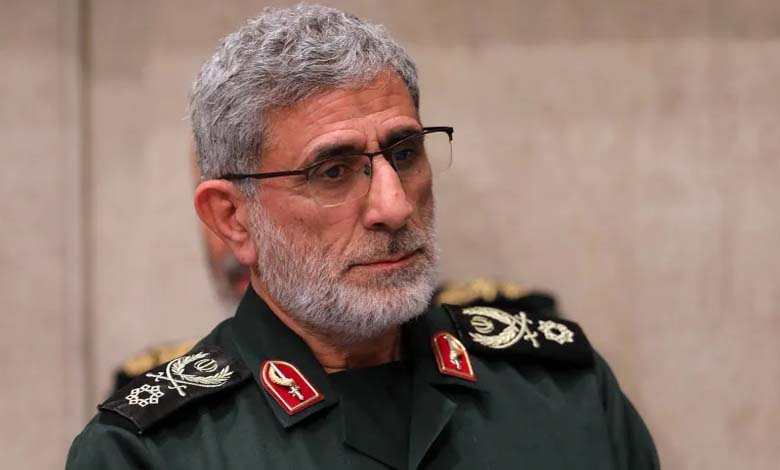
Questions are mounting over the fate of Esmail Qaani, commander of the Quds Force, after he disappeared from public view and speculation intensified that he may have been a “collaborator” with Israel.
According to several media reports, including a report by the British newspaper The Telegraph, Qaani has become the focus of widespread controversy after surviving the strike that occurred at the beginning of the war and resulted in the death of Iran’s Supreme Leader Ali Khamenei along with several of his senior aides.
-
Qaani in Baghdad to Impose Iranian Agendas on the Arab Summit
-
Ismail Qaani: A Faint Appearance After Rumors of Death and Arrest
Some circulating accounts suggest that the 68-year-old general may have been placed under house arrest or even executed due to internal suspicions about possible cooperation with Israel. However, Iranian authorities have issued no official comment on the matter.
As commander of the Quds Force, one of the five branches of the Islamic Revolutionary Guard Corps, Qaani had been responsible since 2020 for exporting terrorism across the region by training and arming militant groups outside Iran, according to The Telegraph.
He succeeded Qassem Soleimani, who was killed in a U.S. strike near Baghdad International Airport in 2020.
-
Iran Investigates Qaani Amid Suspicions of His Office Manager’s Espionage for Israel
-
Ismael Qaani Back in Iraq Again… What Are the Objectives of the Visit?
A man who “always survives”
In recent years, Qaani has gained a striking reputation for repeatedly surviving deadly attacks. Reports indicate that he has “spent the past two years surviving attacks while those around him were killed.”
One notable incident occurred during Israel’s 12-day war against Iran in June last year, when several senior commanders of the Revolutionary Guard were targeted simultaneously. Qaani was initially believed to have been killed, but later reappeared at a public event wearing civilian clothing and a baseball cap.
-
Ismail Qaani in Baghdad: What is behind the suspicious visit of the commander of the Quds Force?
-
Baghdad Rules Out Forced Disarmament of Militias Amid Security Concerns
This sequence echoed a similar set of events in October 2024.
Rumors were further fueled by reports of an Israeli list of Iranian figures targeted for assassination during the war, from which Qaani’s name was notably absent.
At the same time, reports suggested that the Revolutionary Guard’s internal security services had questioned him in order to investigate these suspicions.
Nevertheless, a Persian-language account on the platform X, believed to be linked to Mossad, denied last year that Qaani was one of its agents.
-
U.S. Pressure on Baghdad Mounts to Halt Attacks on Kurdistan’s Oil Industry
-
Iran Holds Official Funerals for Military Commanders and Scientists Killed in Israeli Strikes
The truth remains unclear
The Telegraph also cited Israeli sources with intelligence backgrounds who said the truth remains uncertain.
One of these sources stated: “In the end, no one really knows the truth. He may indeed be what he claims to be, a general loyal to the Iranian regime. But these rumors could also be part of an operation aimed at weakening him and undermining his role in confronting Israel.”
These speculations come amid indications of what appears to be a significant Israeli penetration of Iran’s security apparatus.
-
U.S. Moves to Sanction Baghdad Over Iranian Influence
-
Trump Gives Iran Two Months to Negotiate a New Nuclear Deal
Some clues have emerged regarding how the assassination of Khamenei may have been carried out, including the hacking of Tehran’s traffic camera broadcast systems.
Reports also suggested that Mossad operated on the ground during the June war to help destroy Iranian anti-aircraft defenses.
However, it remains unclear whether Israeli agents managed to infiltrate Iran in the period leading up to the current conflict.
-
Iran’s Nuclear Program: What is the “Wisest” Path for the U.S. to Face It?
-
“Surprise” in Israeli Attack on Iran: Advance Warning of Date and Targets?
Compared with Soleimani
Within the Revolutionary Guard, Qaani is widely viewed as less charismatic and less influential than his predecessor Qassem Soleimani. Nevertheless, he possesses extensive experience gained since his participation in the Iran-Iraq war and is regarded as a loyal figure within the regime, according to The Telegraph.
Yet his disappearance from the public scene and his repeated survival of deadly operations continue to raise widespread questions about his true fate.
-
Iran Complains to the International Atomic Energy Agency About Israel
-
New York Times Reveals: Iranian Supreme Leader Ordered Direct Strike on Israel