The United States avenges the killing of its soldiers in Syria with Hawk Eye: airstrikes against ISIS
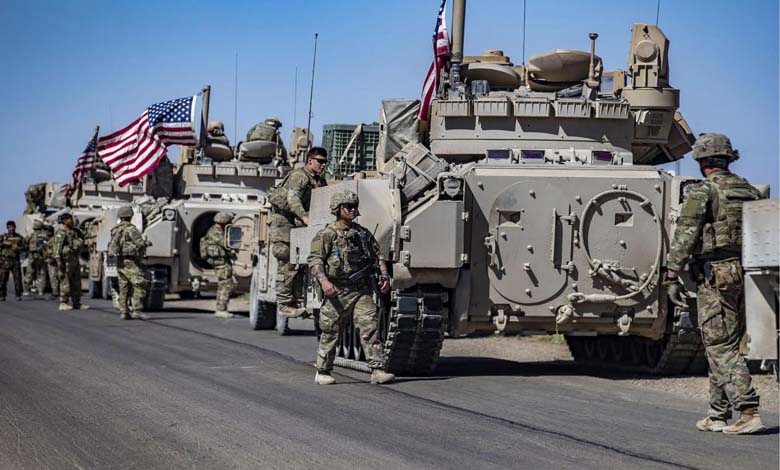
In fulfillment of President Donald Trump’s pledge to avenge the killing of two U.S. soldiers by ISIS last week, American forces carried out strikes on Saturday against dozens of sites suspected of being linked to the terrorist organization.
According to a U.S. official who spoke to The New York Times, the United States has begun launching extensive airstrikes against ISIS in Syria, honoring President Trump’s commitment to retaliate for the deaths of two U.S. Army soldiers in a terrorist attack that took place last Saturday in central Syria.
-
It will continue for weeks: What weapons were used in Hawk Eye against ISIS in Syria?
-
Alarming Resurgence of ISIS in Syria Following al-Assad’s Fall
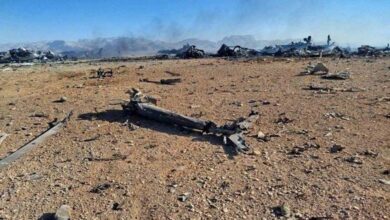
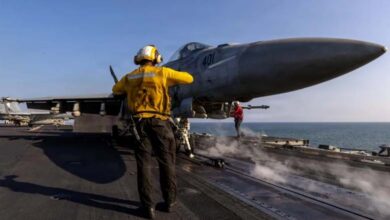
The official, speaking on condition of anonymity, said that U.S. fighter jets, attack helicopters, and artillery fire targeted dozens of locations suspected of belonging to ISIS across several areas of central Syria, including weapons depots and other facilities used to support the group’s operations.
He added that the U.S. air and artillery strikes were expected to continue for several hours, into the early hours of Saturday morning in Syria, describing the operation as a “large-scale offensive.”
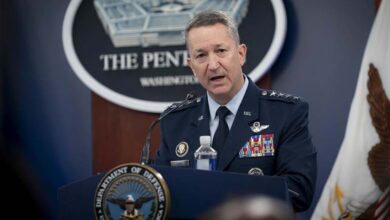
U.S. Secretary of Defense Pete Hegseth said the strikes were part of a military operation against ISIS in Syria in response to the attack in Palmyra that killed three Americans.
-
France Fights ISIS in Syria: Strikes on “Specific Targets”
-
The forest fires crisis in Syria threatens the fate of farmers
In a post on the X platform, Hegseth stated: “U.S. forces have launched the Hawk Eye strike operation in Syria to eliminate ISIS fighters, infrastructure, and weapons storage sites, in direct response to the attack that targeted U.S. forces on December 13.”
Admiral Brad Cooper, commander of U.S. Central Command, said: “This operation is critical to preventing ISIS from planning terrorist attacks against the United States.”
He added: “We will relentlessly pursue terrorists who seek to harm Americans and our partners in the region.”
-
The European Union warns of the danger of ISIS in Syria and Iraq
-
The ISIS flag, from Syria to Australia: cross-border terrorism
Military escalation
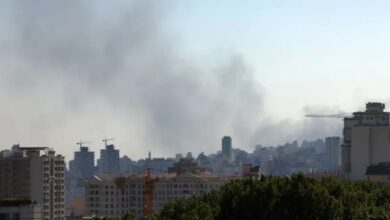
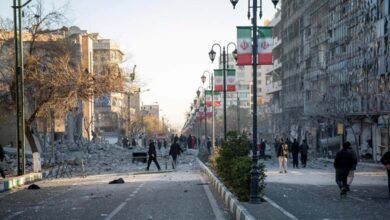
Social media accounts inside Syria reported hearing the sound of explosions across wide areas of the country.
The two soldiers killed last Saturday were the first U.S. casualties in Syria since the fall of Bashar al-Assad last year. American and Syrian sources said the soldiers were taking part in counterterrorism operations against ISIS in the city of Palmyra, in central Syria, when they were targeted by gunfire from a lone assailant.
The U.S. strikes carried out on Friday, and the prospect of further counterterrorism operations in the coming days, point to a “sharp military escalation” in Syria, at a time when the United States has reduced its presence there to about 1,000 troops, half the number deployed at the beginning of the year. The decision to scale back forces reflected the changing security environment in Syria following the collapse of the Assad government.
-
Syria after al-Assad: Will the new army turn into another version of “ISIS”?
-
ISIS Booby-Traps Al-Hol Camp in Eastern Syria as Terrorist Operations Escalate Amid International Security Efforts
The strikes were also confirmed by sources from the Syrian Observatory for Human Rights, which reported that U.S. airstrikes hit ISIS positions in eastern Raqqa and western Deir ez-Zor, resulting in the death of a senior ISIS leader and several members of a cell responsible for attacks in Deir ez-Zor.
According to the sources, intense exchanges of gunfire took place during the raid on the home of a wanted individual, between ISIS cell members and international coalition forces. One ISIS member was killed, another was wounded and arrested, and a woman believed to be the suspect’s wife was killed. A minor, approximately 14 years old, was also killed by stray gunfire.
The sources confirmed that Syrian internal security forces under the Ministry of Interior did not directly participate in the operation, limiting their role to securing the perimeter of the landing area.
-
Germany Refuses to Repatriate ISIS Fighters: Syria’s Delayed Justice Dilemma
-
ISIS Threatens al-Sharaa… Can the Group Still Operate in Syria?
Growing threats
Earlier this year, senior U.S. intelligence officials informed Congress that ISIS would seek to exploit the end of Assad’s rule to free between 9,000 and 10,000 of its fighters, as well as around 26,000 family members currently detained in northeastern Syria, and to revive its ability to plan and carry out attacks.
Although the group no longer controls large swaths of territory, it continues to spread its extremist ideology through clandestine cells and regional branches outside Syria, as well as online. Over the past year, ISIS has been responsible for major attacks in Iran, Russia, and Pakistan.
-
Iran Plans to Restore Its Influence in Syria: Will It Use ISIS or Other Factions?
-
How ISIS Fighters in Northern Syria Could Benefit from Turkey’s Ambitions
Challenges
The deadly attacks targeting U.S. soldiers have also highlighted the challenges facing the Syrian government led by President Ahmad al-Sharaa.
Since the overthrow of Bashar al-Assad’s government, al-Sharaa has faced threats from ISIS and other armed groups, while simultaneously attempting to build a new national army.
In the months immediately following his rise to power, the United States carried out dozens of airstrikes against ISIS strongholds in the Syrian desert, seemingly reducing the immediate threat. However, attacks have increased over the past month, particularly after al-Sharaa publicly embraced an international campaign against ISIS, according to analysts.
-
ISIS Awakens in Syria: The Organization Awaits the Perfect Moment to Return to the Global Stage
-
Neutralization of several leaders of ISIS and Al-Qaeda organizations in Syria… Details
U.S. military officials said the strikes build on nearly 80 missions conducted since last July to eliminate terrorist elements in Syria, including remnants of ISIS.
In a statement this week, U.S. Central Command said ISIS inspired at least 11 plots or attacks against targets inside the United States over the past year. It added that
over the past six months, its operations resulted in the detention of 119 militants and the killing of 14 others.
Over the past month, U.S. forces and Syrian security forces conducted operations to locate and destroy more than 15 ISIS weapons caches in southern Syria. These operations destroyed more than 130 mortar shells and rockets, as well as several rifles, machine guns, anti-tank mines, and materials used to manufacture improvised explosive devices, according to U.S. Central Command.
-
Betting on a “Breath of Life”… U.S. Officials Warn of ISIS’s Return in Syria
-
Anticipated Saudi Role in Syria through Resolution of Constitutional Committee Crisis
Following last Saturday’s attack, partner forces carried out ten operations against ISIS targets in Syria and Iraq, resulting in the deaths of approximately two militants. More importantly, according to the U.S. official, these operations enabled allied forces to recover intelligence that helped U.S. intelligence analysts identify or refine the targets selected for Friday’s strikes.
Reactions
U.S. President Donald Trump described the operation in a post on his Truth Social network as an “extremely harsh retaliatory response,” adding: “We are delivering very powerful strikes against ISIS strongholds in Syria.”
-
SDF Fights Syrian Army, Calls on Coalition to Combat ISIS
-
Campgrounds in Northeast Syria: The Most Haphazard Amidst Food Crisis
Trump said the Syrian government fully supports the strikes, adding that the United States is carrying out an “extremely severe response.”
The Syrian Ministry of Foreign Affairs said in a statement that Syria “reaffirms its unwavering commitment to combating ISIS and ensuring that there are no safe havens for the group on Syrian territory. It will continue to intensify military operations against the organization in all areas it threatens.”
-
Complex Situation and Declaration of War: Escalating Crisis Between Arab Tribes and Syrian Democratic Forces
-
The Syrian Crisis: Damascus agrees to allow aid entry through Turkey