The widening gap between Washington and Israel over Gaza’s future
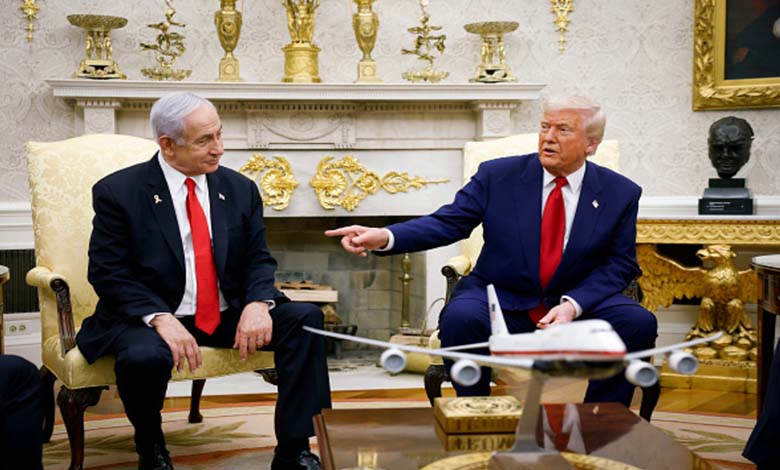
As Gaza stands at the threshold of a decisive turning point, the strategic visions of U.S. President Donald Trump’s administration and the Israeli government clash over “priorities” for the future of the Palestinian territory. While Washington seeks to turn its twenty-point plan into reality by launching reconstruction to stabilize the area, Israel, absorbed by security concerns, is attempting to turn reconstruction into a “final leverage card” to disarm Palestinian factions.
-
Washington Expands Secret Mechanisms to Supply Weapons to Israel: Experts Warn of Catastrophic Consequences
-
Washington Plans to Deploy Fighters and Destroyers in the Region to Defend Israel
This divergence is not merely a technical disagreement; it exposes a deep crisis of trust. Washington relies on the “carrot” (reconstruction) as an entry point to peace, while Tel Aviv insists on the “stick” (dismantling Hamas) as a precondition for any measures to be taken on the foundations of the devastated territory.
Israel’s official broadcasting authority cited, without naming sources, that the Israeli army “has already begun to settle areas in the city of Rafah, southern Gaza, as part of preparations for a later phase involving the transfer of Palestinians to new residential neighborhoods planned in the city, with these areas to be free of Israeli army presence and Hamas.”
-
Washington warns of a possible cut in relations between Israeli and Palestinian banks
-
Washington Seeks Normalization Between Israel and Saudi Arabia Before Presidential Elections
The report added that the U.S. plan’s first phase “includes the deployment of temporary housing units in the form of caravans, as a prelude to permanent construction projects,” noting “questions regarding the formation of a multinational international force expected to operate in Gaza.”
According to a well-informed source cited by the agency, both Italy and Indonesia have agreed to send troops to participate in this force, which is expected to operate under a mandate similar to that of the United Nations Interim Force in Lebanon (UNIFIL).
-
Washington denies using floating dock in rescue of Israeli hostages and announces completion of aid deliveries
-
Washington Tests Military Capabilities Amid Escalation Between Israel and Iran
UNIFIL is a temporary UN force “established in March 1978 to ensure Israel’s withdrawal from Lebanon, restore international security and peace, and assist the Lebanese government in regaining authority in the area.”
Israel and Hamas reached a two-phase ceasefire agreement in Gaza on October 9, mediated by Egypt, Qatar, and Turkey, based on a twenty-point plan proposed by Trump to end the war.
-
Washington seeks to contain the war between Hezbollah and Israel by sending an official to Beirut
-
Iran faces the most dangerous total war with Israel and the United States
The following day, the first phase went into effect, but Israel repeatedly violated the agreement, failing to comply with its provisions, particularly regarding humanitarian access and aid delivery, while Hamas fully adhered. According to Gaza’s Ministry of Health, 410 Palestinians were killed.
Israel has also delayed moving to the second phase, citing the continued detention of the remains of one of its soldiers in Gaza, while Palestinian factions continue searching amid the massive destruction caused by the Israeli offensive.
The second phase includes “the formation of a temporary technocratic committee to manage the territory and reconstruction file, the establishment of a Peace Council, the deployment of an international force, further withdrawal of the Israeli army from the territory, and the disarmament of Hamas.”
-
Israeli media reveal approval of three countries to send forces to Gaza
-
America, Iran, and the nuclear issue: Who can break the stalemate?