Trump signals a possible withdrawal from NATO
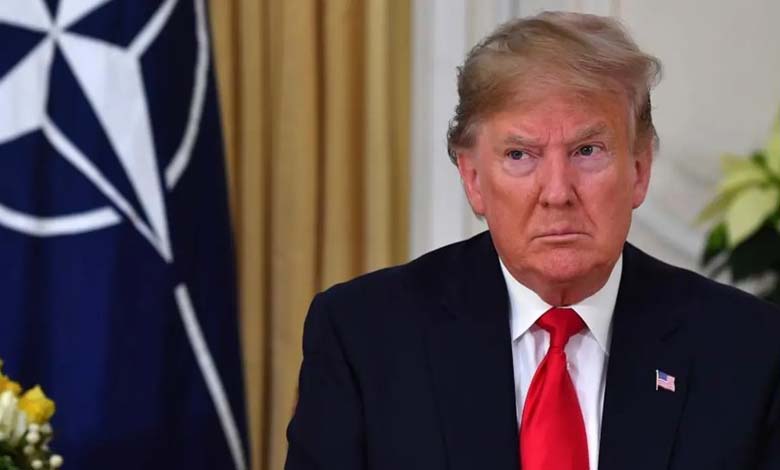
The U.S. president expressed his anger over the refusal of Alliance countries to participate in the war against Iran, describing NATO as a “paper tiger.”
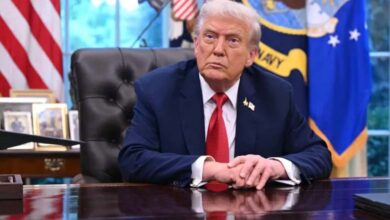
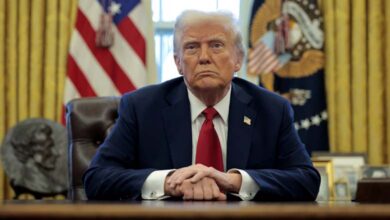
U.S. President Donald Trump stated, in an interview with the British newspaper The Daily Telegraph, that he is seriously considering withdrawing the United States from the North Atlantic Treaty Organization following the allies’ failure to support U.S. military action against Iran. Such a move would have major repercussions for the future of the Alliance as well as for American influence worldwide, given the presence of numerous U.S. bases in several member states, and would also significantly affect the course of the war in Ukraine.
The newspaper reported that Trump described the Alliance as a “paper tiger” and quoted him as saying that the issue of U.S. withdrawal from the defense pact “has gone beyond the stage of reconsideration.” He added that he had long harbored doubts about NATO’s credibility.
When asked whether he would reconsider U.S. membership in the Alliance after the war, he replied, “Yes, I say it has gone beyond the stage of reconsideration,” adding, “I was never convinced by NATO. I always knew it was a paper tiger, and Russian President Vladimir Putin knows that as well, by the way.”
Amid the war against Iran, tensions have escalated between the United States and its NATO allies, with Trump issuing sharp criticism of the Alliance for what he views as a failure to support military operations.
The U.S. president accused the Alliance of playing no real role in the confrontation, arguing that member states had failed the “loyalty test,” particularly by refusing to engage directly in military action or to provide substantial logistical support. He also expressed dissatisfaction with the refusal of several European countries to participate in securing navigation in the Gulf, especially in the Strait of Hormuz, despite their heavy reliance on energy supplies from the region.
In contrast, several European capitals adopted a cautious stance, refusing to engage in a war they do not consider a strategic priority, preferring to avoid direct military escalation with Iran while providing defensive assistance to Gulf states. This divergence in positions revealed a clear gap in the assessment of the nature and limits of the conflict between Washington, which is leading it militarily, and its partners, who favor a more restrained approach.
Trump’s criticism was not limited to the military dimension but extended to questioning the very usefulness of the Alliance, raising the possibility of reassessing his country’s commitment to NATO, arguing that the United States bears the main burden without sufficient support from allies. He repeatedly used strong rhetoric, indirectly calling on European countries to assume responsibility for protecting their own interests rather than relying on Washington.
These statements reflect a growing fracture within the Western alliance at a time when the war against Iran presents complex challenges that extend beyond the military dimension into broader economic and security aspects. They also raise serious questions about NATO’s future and its ability to maintain cohesion amid diverging interests among its members.
Trump’s apparent desire to leave NATO is also expected to have repercussions for the war in Ukraine, while some view the move as a way to test reactions and apply pressure on the Alliance to participate in the war against Tehran.