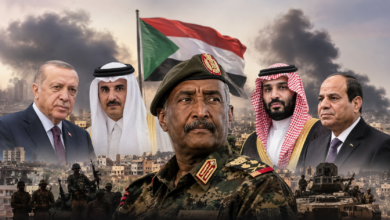
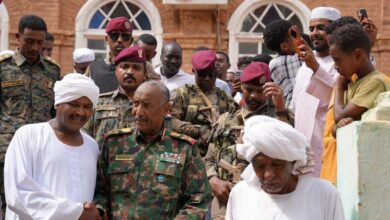
Turkey Expands Its Military Influence in Sudan: From Supporting the Army to Seeking Red Sea Bases
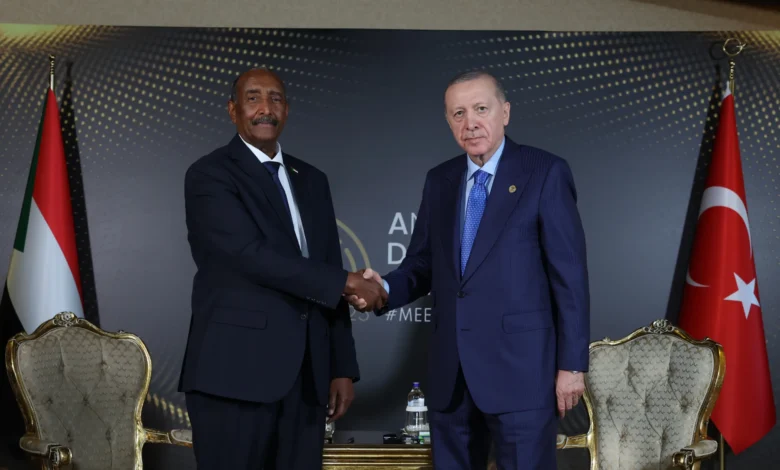
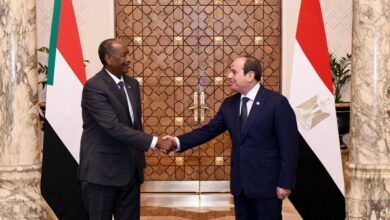
Relations between Ankara and Sudan’s military leadership are no longer confined to diplomatic cooperation or a conventional economic partnership. Recent developments point to cooperation in more sensitive military areas, including the development of naval facilities and the strengthening of military capabilities, amid reports of Turkish ambitions to secure a strategic foothold on the Red Sea coast. In a country devastated by war since April 2023, this rapprochement raises concerns that Sudanese territory could become another arena for expanding regional influence, with the country’s future shaped more by foreign powers’ calculations than by the will of Sudanese people and their demands for an end to the war.
Port Sudan: The Gateway to Turkey’s Return
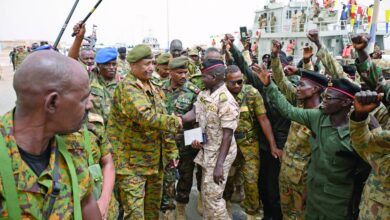
A Turkish military delegation’s visit to Port Sudan from November 2 to 5, 2026, has renewed scrutiny of the role Ankara seeks to play in Sudan. Announced by Turkey’s Ministry of National Defence, the visit went beyond ceremonial meetings between military officials. It included inspections of ship repair workshops and a launching slipway at Port Sudan’s naval base, with representatives from the Naval Forces Command and the General Directorate of Shipyards taking part.
According to the Turkish announcement, the aim was to assess opportunities to develop the Sudanese navy’s shipbuilding and maintenance capabilities. The delegation also met Sudanese Navy commander Vice Admiral Mahjoub Bushra Ahmed Rahman, underscoring that engagement has moved beyond diplomacy into direct cooperation between the two military institutions.
The visit’s significance lies not only in the workshops and facilities inspected, but also in its timing. Sudan is not a stable country modernising its navy through a routine defence programme. It is engulfed in an open-ended war, with institutions under a military authority facing unprecedented political, military, economic and humanitarian challenges.
Any long-term military cooperation with a foreign country therefore cannot be treated as a technical agreement detached from the war, particularly when it concerns strategic facilities along one of the world’s most important maritime routes.
Turkish reports on the visit confirm that the inspections covered ship repair facilities and the launching slipway. However, no formal agreement to establish a Turkish base, or timetable for a permanent military project, has been announced. This is an essential distinction, but it does not remove questions about the future direction, nature and limits of the cooperation.
From Military Cooperation to Strategic Influence
Turkey regards the Red Sea as a vital area for protecting its commercial, economic and military interests. Linking the Mediterranean to the Indian Ocean, it is a major corridor for international trade, energy flows and shipping.
An advanced military partnership with Sudan therefore offers Ankara an opportunity to expand its presence in a region where numerous regional and international powers compete. Sudan’s coastline occupies a strategic position and contains ports and naval facilities that, if developed under long-term agreements, could become instruments of influence extending beyond the Sudanese navy’s own requirements.
The risk is that cooperation beginning with ship maintenance and workshop development could later expand into training, arms supplies, intelligence sharing and logistical services, potentially followed by more sensitive arrangements concerning access to naval facilities. This does not mean that all these steps have already been taken. It does, however, explain why any future agreements require civilian oversight and full transparency.
States do not share military expertise and advanced technologies without strategic calculations. Nor can investment in naval facilities be separated from the investing country’s long-term interests.
For Turkey, stronger relations with Sudan’s army leadership could provide a military partner on the Red Sea as Ankara seeks to consolidate its presence in the Horn of Africa and surrounding regions.
For Sudan, the central question is whether, amid the current war, the country needs deeper military ties with foreign powers—or whether priority should instead be given to ending the conflict and rebuilding national institutions on stable civilian foundations.
Suakin: A Project Still in Turkey’s Calculations
Turkey’s current moves cannot be understood without revisiting 2017, when President Recep Tayyip Erdoğan travelled to Sudan and met former president Omar al-Bashir. An agreement was announced to redevelop the historic Red Sea island of Suakin.
At the time, the project was presented as economic and tourism cooperation aimed at restoring historic buildings and improving facilities and services. It nevertheless prompted regional questions because of the island’s strategic location and the possibility that it could eventually be used for military or security arrangements.
Suakin carries additional significance because of its place in Sudan’s maritime history and its proximity to international shipping routes. The Turkish-Sudanese rapprochement also raised concerns over the Red Sea’s security balance, particularly among its coastal states.
After al-Bashir’s fall in 2019, the project stalled, limiting Ankara’s ability to translate earlier agreements into an established presence in Sudan. Current developments nevertheless suggest that Turkish interests have not disappeared and that Ankara continues to regard Sudan as an important partner in its African and maritime strategy.
The war appears to have created new conditions for rebuilding relations with the military authority based in Port Sudan, particularly as that authority needs foreign allies and sources of military and technical support against its adversaries.
However, using Sudan’s political and institutional weakness to build long-term strategic influence poses a serious problem. It could turn the country’s domestic crisis into an opportunity for foreign powers to obtain privileges that would be difficult to reverse.
Al-Burhan and Decisions That Outlast His Leadership
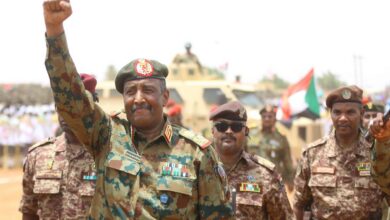
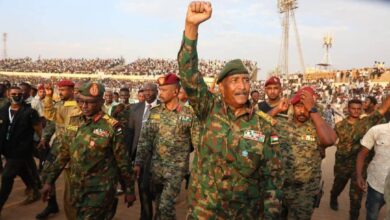
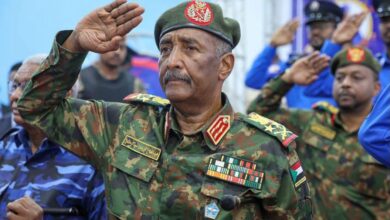
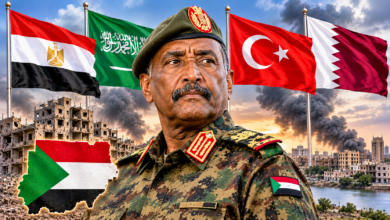
These concerns become more acute when considering the Sudanese authority negotiating such arrangements. The military leadership under Abdel Fattah al-Burhan consolidated its hold on power following the October 25, 2021, coup, which overturned the civilian transition process and led to the suspension of transitional governing institutions.
The African Union’s Peace and Security Council condemned the military takeover and suspended Sudan’s participation in AU activities until the restoration of a civilian-led transitional authority. The UN Security Council also called for the restoration of the civilian transitional government and respect for the Constitutional Document.
This raises a fundamental question: can an unelected military authority, during an unresolved war, legitimately make decisions that could constrain Sudanese sovereignty for decades?
Granting a foreign country long-term maritime privileges or military access is not an ordinary administrative decision. It concerns national security, sovereignty and the future of Sudan’s foreign relations.
Any such agreement should be reviewed by constitutional and oversight institutions and made available to the public so that Sudanese people understand the commitments it may entail.
It is not enough for the military authority to present these agreements as support for the army or a contribution to developing its capabilities. There is a substantial difference between building independent national forces and creating relationships that make those forces dependent on a foreign state for training, weapons, maintenance and supplies.
The Red Sea Must Not Become an Arena for Settling Scores
The Red Sea is a vital artery of international trade. Any escalation in military competition along its shores could affect navigational security and regional stability.
If Sudanese facilities become footholds for competing foreign powers, Sudan could find itself at the centre of conflicts driven by influence, military deployments and international power balances rather than the immediate interests of its people.
Multiple military partnerships in a country suffering from political and military divisions could also open the way for competition among its allies over privileges, resources and ports.
Sudan undoubtedly needs balanced international relations. First, however, it needs a state capable of defining its interests and negotiating on behalf of its people, rather than an authority treating foreign agreements as a means of strengthening its position in the war.
The most troubling outcome would be for Port Sudan to become a hub for managing foreign military competition while other Sudanese cities remain overwhelmed by destruction, displacement and collapsing services.
A Partnership for Whom—and Who Pays the Price?
Ankara may benefit from expanding its naval and military presence in Sudan, while the army leadership may gain expertise, technology and external support. Yet one question remains unanswered: what will Sudanese citizens receive from this partnership?
Sudan does not need a race to establish military bases or to have its ports turned into bargaining chips between foreign capitals. It needs a ceasefire, humanitarian corridors, restored basic services and national institutions that are not subject to the decisions of individuals.
Any military cooperation that disregards the war’s consequences for civilians could deepen the crisis, particularly if it strengthens combat capabilities without accompanying genuine political pressure to end the conflict.
Turkey must clarify the limits of its military cooperation with the authority in Port Sudan and disclose the nature of any understandings concerning naval facilities. The army leadership, meanwhile, bears responsibility for providing clear answers about the future of Sudanese sovereignty.
A military base, if one is established, cannot be assessed solely by its size or the number of ships using it. It must also be judged by the political and security commitments it entails and the host state’s ability to retain control over its own decisions.
Sudan has already paid a heavy price for internal conflicts. It should not become another platform for international rivalry. The Red Sea should be a space for cooperation, development and the protection of trade—not a gateway to wider wars and prolonged crises.