U.S. withdrawal from NATO… legal battle and constitutional constraints
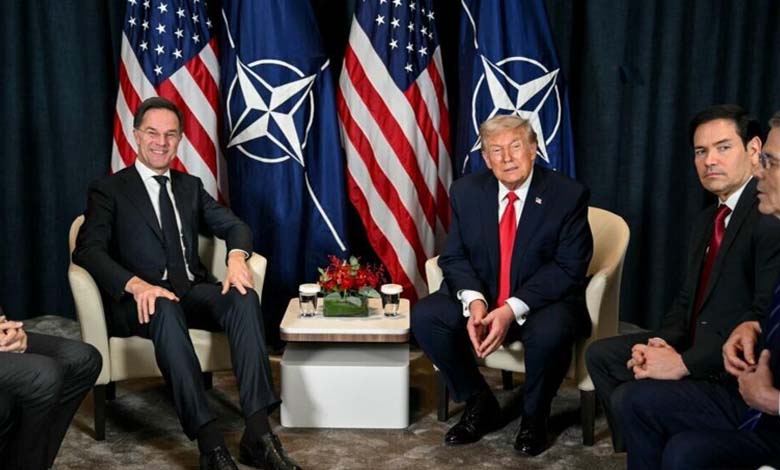
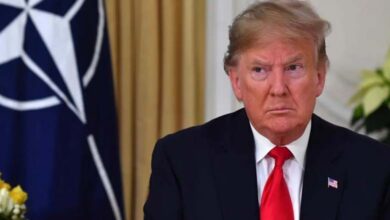
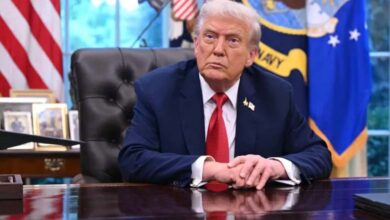
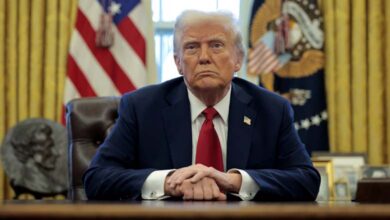
Debate is intensifying over the future of U.S. membership in the North Atlantic Treaty Organization as President Donald Trump signals the possibility of withdrawal, while diplomatic efforts seek to contain rising tensions.
NATO Secretary General Mark Rutte has announced his intention to visit Washington next week in a trip described as “long planned,” yet taking place at a sensitive moment amid Trump’s escalating criticism of European allies in the context of the war with Iran.
The visit reflects an attempt to preserve the cohesion of the Alliance in the face of unprecedented American statements questioning NATO’s usefulness.
From criticism to threat
Trump has sharpened his tone toward the Alliance, criticizing what he views as European countries’ failure to support military efforts, particularly in securing navigation in the Strait of Hormuz.
He described the Alliance as a “paper tiger,” arguing that some allies are “very bad” and suggesting that the United States “may not need them.”
He also confirmed that he is seriously considering the option of withdrawal, placing the Western alliance before an unprecedented test since its founding.
The U.S. Constitution… ambiguity open to interpretation
According to Reuters, the U.S. Constitution stipulates that treaties are concluded with the approval of two-thirds of the Senate but does not clearly define the procedure for withdrawal, creating legal ambiguity.
This gap has opened the door to differing interpretations regarding whether the president can decide on withdrawal alone or whether legislative approval equivalent to treaty ratification is required.
The NATO treaty… withdrawal theoretically possible
Article 13 of the North Atlantic Treaty allows any member state to withdraw after providing one year’s notice.
Despite this provision, no country has withdrawn from the Alliance since its establishment in 1949, making any potential U.S. move a historic precedent that could reshape the global security order.
Congress imposes strict restrictions
In 2023, the U.S. Congress passed legislation prohibiting the president from withdrawing from NATO without the approval of two-thirds of the Senate, a law signed at the time by President Joe Biden.
The law also bars the use of federal funds to implement any withdrawal decision, creating a practical obstacle to unilateral action.
The legislation prohibits any U.S. president from suspending, terminating, invalidating, or withdrawing from the treaty establishing NATO without the consent of two-thirds of the 100-member Senate.
This reflects legislative concern over the implications of such a move for U.S. national security and international alliances.
The provision was introduced as an amendment to the National Defense Authorization Act for fiscal year 2024, a major annual bill that sets Pentagon policy.
The main sponsors of the amendment were Democratic Senator Tim Kaine of Virginia and then-Republican Senator Marco Rubio of Florida.
Rubio, who currently serves as Secretary of State and National Security Advisor in the Trump administration, said Tuesday that Washington would have to reconsider its relationship with NATO following the war with Iran that began on February 28.
The amendment also stipulates that no U.S. funds may be spent on withdrawing from NATO.
A potential court battle
Despite these restrictions, previous legal opinions suggest that the president may have the authority to withdraw from treaties, opening the door to a possible constitutional confrontation.
If a formal decision is made, the matter could reach the Supreme Court, which has never considered a similar dispute, adding further complexity to the legal landscape.
Under international law, a head of state generally has the authority to withdraw from a treaty if the treaty allows withdrawal and the required procedures are followed.
However, U.S. law is less clear, even though presidents have withdrawn from several treaties without congressional approval, including Trump’s 2020 withdrawal from the Open Skies Treaty, which includes 35 countries and allows unarmed observation flights over member states.
NATO installs “smart minefields” along the border with Russia
If the issue reaches the courts, any challenge to Trump’s decision would face significant hurdles, including determining who has the legal standing to contest such a withdrawal.
The U.S. Supreme Court, whose conservative majority has often ruled in Trump’s favor, has never heard a case involving withdrawal from a treaty based on its subject matter.
Experts cited by Reuters argue that the real impact may depend less on a formal withdrawal decision and more on the extent of the U.S. administration’s commitment to NATO.
Even without an official departure, Washington could reduce its military and political role within the Alliance, effectively weakening it and altering its internal balance.
Multiple scenarios
In light of this escalation, several options remain open. Diplomatic efforts, such as the Secretary General’s visit to Washington, may succeed in containing tensions and reaffirming U.S. commitment to NATO.
Alternatively, Trump may continue to use the threat of withdrawal as leverage to pressure European allies into assuming greater burdens without taking concrete action.
The most complex scenario would involve an attempt at formal withdrawal that could trigger an internal legal dispute between the White House and Congress, with major political and constitutional consequences.
Among these paths, there also remains the possibility that the United States stays within the Alliance while reducing its military and political role, a choice that could reshape NATO in practice without formally dismantling it.