War Objectives in Iran Portend Rift Between Trump and Netanyahu
The U.S. President faces domestic pressures that may shift his calculus as the conflict continues without broad public support in the United States.
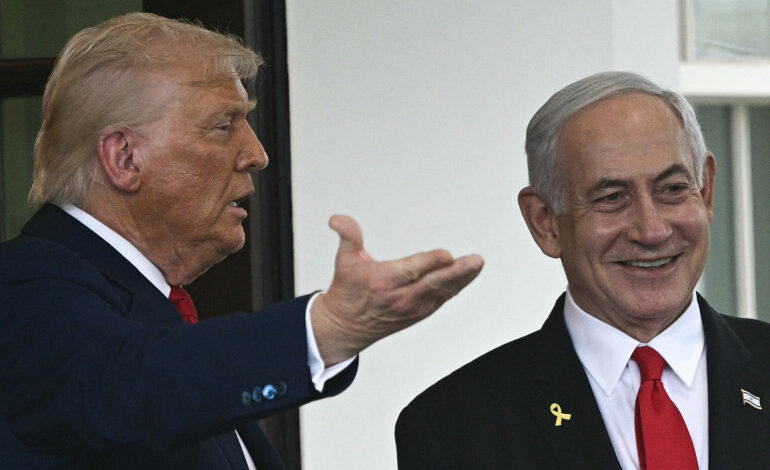
Israeli Prime Minister Benjamin Netanyahu has realized a lifelong political ambition: the dismantling of the Iranian leadership. However, his steadfast alliance with U.S. President Donald Trump is facing a rigorous test as indications grow that the military campaign may drag on, with strategic objectives potentially shifting in the coming weeks.
-
WhatsApp and a hired killer: 55-page document on the Hamas attack turns fire on Netanyahu
-
Trump Pulls the Trigger on Phase Two in Gaza: Peace Takes Precedence over Netanyahu’s Conditions
At the onset of the bombing campaign last Saturday, both Trump and Netanyahu signaled that “regime change” was the goal. Yet, in remarks made at the White House on Monday—two days after the elimination of Supreme Leader Ayatollah Ali Khamenei and much of the Iranian leadership in Israeli airstrikes—the U.S. President stopped short of calling the ouster of the Iranian government his top priority.
Trump stated that the primary U.S. objective is the destruction of Iran’s missile capabilities and naval fleet, and preventing it from acquiring nuclear weapons. Defense Secretary Pete Hegseth echoed this during a press conference the same day, clarifying that the operation is not a “so-called regime change war.”
-
Netanyahu stalls under U.S. pressure to prevent the opening of the Rafah crossing
-
Coinciding with Netanyahu’s visit, the Pentagon announces an F-15 deal for Israel
In stark contrast, Netanyahu continued to call on Iranians to take to the streets and topple their rulers as late as Monday evening. “We will first work on creating the necessary conditions to enable the Iranian people to control their own destiny,” he told Fox News.
When questioned about this divergence, a U.S. official familiar with White House thinking noted that the two countries’ military campaigns have differing endgames. “Regime change is one of their [Israel’s] goals,” the official said on condition of anonymity.
In the lead-up to the conflict, Netanyahu successfully convinced Trump that the time had come to neutralize Iran’s nuclear ambitions and ballistic capabilities. Trump initially suggested the operation could last “four or five weeks” or “whatever it takes.” On Monday, when asked if he could maintain focus on a protracted conflict, Trump replied, “I don’t get bored. I never get bored.”
-
The Arrest Warrant sets Netanyahu’s course… a long journey to America
-
Netanyahu to present Trump with a new plan for Gaza if Hamas refuses to disarm
However, Israeli officials privately acknowledge that the U.S. President will ultimately decide when the war ends. Dan Shapiro, former U.S. Ambassador to Israel, suggested that Trump might seek an “early exit.” “If President Trump decides he has reached the end of this process before Netanyahu wants it over, he’ll end it anyway,” Shapiro noted.
The U.S. President is navigating significant domestic headwinds. A Reuters/Ipsos poll shows the operation lacks widespread support, with only one in four Americans favoring strikes on Iran. Furthermore, primary elections began Tuesday in swing states like Texas and North Carolina, which are crucial for congressional control in the upcoming fall midterms.
-
Israel on the verge of rupture… Netanyahu’s request for clemency ignites the streets
-
Netanyahu hopes to sign a peace agreement with Saudi Arabia before the early 2026 elections
With shipping and energy production disrupted, rising fuel prices are becoming a daily reminder of the cost-of-living crisis for many Americans. Gasoline prices jumped 11 cents per gallon in the U.S. this week, with global market trends signaling further hikes. Additionally, support for Israel has become increasingly partisan; a Pew Research Center poll from October showed that 59% of Americans view the Israeli government unfavorably.
War Planning
Throughout his decades in power, Netanyahu has often clashed with U.S. leaders, most notably criticizing Barack Obama over the Iran nuclear deal. The Biden administration also sparred with him frequently over the military offensive in Gaza.
-
Netanyahu once again at the gates of hell… will Trump’s Gaza plan endure?
-
Did artificial intelligence applications contribute to reaching Khamenei?
According to a U.S. official, Netanyahu met with Trump seven times since the latter’s return to office in 2025. In numerous phone calls, he urged Trump to pivot from Gaza to focus on Iran’s ballistic missiles and nuclear aspirations, framing the Islamic Republic’s clerical rulers as a “common enemy.”
An Israeli official revealed that while Trump was dispatching envoys to nuclear talks in Geneva and Oman, the U.S. and Israel had been planning this military operation for months. The timing was finalized weeks ago. Following a closed-door meeting on February 11, 2026, the USS Gerald Ford was redeployed from the Caribbean to the Mediterranean.
-
Iran after Khamenei: American red lines
-
Geopolitical risks unsettle global markets after Khamenei’s death
Political Survival
For the 76-year-old Netanyahu, a war supported by most Israelis offers a chance to cement his legacy ahead of the October elections. His far-right coalition is fractured, he faces ongoing corruption trials, and the public is still reeling from the multi-front war that began in 2023.
Political analysts suggest that while a swift victory—reminiscent of the June 2025 successes—could bolster his image as Israel’s “protector,” the scars of the October 7, 2023, failures run deep. The subsequent two-year campaign in Gaza, which resulted in at least 72,000 Palestinian deaths and significant Israeli military casualties, has left the electorate traumatized.
“The events of the past three years have been so shocking and tragic for swing voters that I don’t think any outcome in Iran will mitigate that,” said political analyst Amotz Asa-El of the Shalom Hartman Institute.
-
Tehran’s streets erupt in celebrations following reports of Khamenei’s death
-
Thirty bombs decided the battle: the final hours in Khamenei’s life
-
Revealing the potential timing of a U.S. strike on Iran