Why are women more prone to anterior cruciate ligament injuries than men?
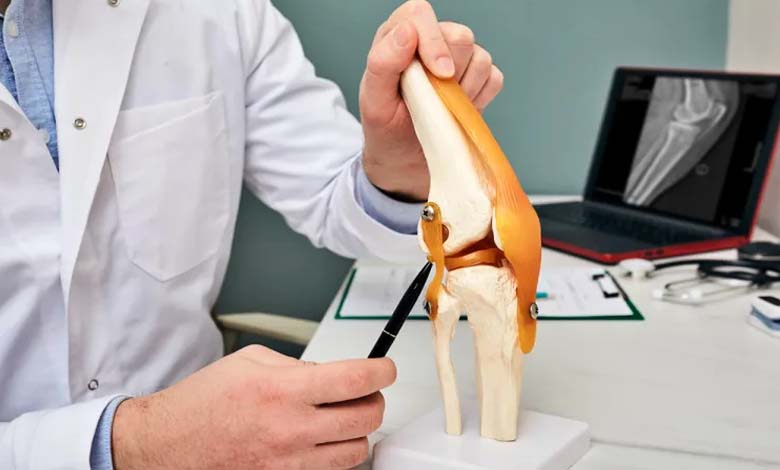
Anterior cruciate ligament injuries, commonly known as ACL injuries, are among the most feared traumas in sports and physical activity. They affect both elite athletes and recreational practitioners and often lead to long rehabilitation periods or even long-term interruption of sporting activities. Numerous studies have highlighted a striking reality: women face a significantly higher risk of ACL rupture than men. This difference does not stem from a single cause but rather from a complex interaction of anatomical, hormonal, biomechanical, and neuromuscular factors.
-
Back Pain… Early warning of these diseases
-
Why Joint Pain Increases in Cold Weather: Scientific Analysis and Practical Recommendations
The role of anatomy in female knee vulnerability
One of the primary explanations lies in anatomical differences between the sexes. On average, women have a wider pelvis than men, which alters the alignment of the lower limbs. This configuration creates a more pronounced angle between the hip, knee, and ankle, often referred to as the Q angle. A higher Q angle can increase stress on the knee, particularly during pivoting movements, jumps, or rapid changes in direction.
In addition, some studies suggest that the intercondylar notch of the femur, the space through which the anterior cruciate ligament passes, may be narrower in women. This anatomical feature could increase the likelihood of ligament impingement or friction during intense movements, thereby raising the risk of injury.
-
Physical Exercise May Make the Brain Appear Younger
-
Diversifying Physical Activities May Reduce the Risk of Mortality
Hormonal influences on ligament stability
Hormonal factors represent another key element in understanding this increased risk. Female sex hormones, particularly estrogen and progesterone, can influence ligament flexibility and elasticity. Hormonal fluctuations throughout the menstrual cycle may alter the mechanical properties of the anterior cruciate ligament, making it temporarily more susceptible to mechanical stress.
Some research indicates that higher estrogen levels may reduce ligament stiffness, decreasing its ability to withstand tensile forces. Although the precise relationship between hormonal cycles and injury risk remains under scientific debate, it is widely acknowledged that hormones play a meaningful role in joint stability.
-
Sweating and Physical Exercise: Can They Cure the Common Cold?
-
Physical exercise: the forgotten medicine for osteoporosis
Biomechanical differences and movement patterns
Women and men often display different movement patterns during sports activities. When jumping or landing, women tend to use less knee and hip flexion, which increases the load transmitted to the anterior cruciate ligament. They may also exhibit a greater tendency for the knee to collapse inward, a movement known as dynamic valgus, which is strongly associated with ACL injury risk.
These biomechanical differences are not purely innate but are largely shaped by motor learning, physical conditioning, and training habits. They highlight the importance of technique and movement control in injury prevention.
-
How to Avoid Physical Stress during Fasting? Effective Tips for Healthy Fasting
-
A study reveals a striking link between depression and osteoporosis
Neuromuscular factors and muscle strength
Neuromuscular coordination and muscle balance also play a critical role. Women often display a different strength ratio between the quadriceps and the hamstrings. A dominance of the quadriceps combined with relatively weaker hamstrings can increase anterior tibial translation and place greater strain on the anterior cruciate ligament.
Furthermore, slightly slower muscle reaction times or less optimal muscle activation during rapid movements may reduce the knee’s ability to absorb shock and stabilize the joint in high-risk situations.
Prevention and risk reduction strategies
The encouraging news is that the higher risk of ACL injury among women is not inevitable. Numerous prevention programs have proven effective in significantly reducing the incidence of these injuries. Such programs focus on targeted strength training, improved proprioception, balance exercises, and the teaching of safer jumping and landing techniques.
Early implementation of these strategies, particularly among young female athletes, helps correct high-risk movement patterns and enhances long-term knee stability. Raising awareness among coaches, healthcare professionals, and athletes themselves is a crucial step toward reducing the burden of these often life-altering injuries.
In conclusion, the higher prevalence of anterior cruciate ligament injuries in women results from a complex interplay of anatomical, hormonal, biomechanical, and neuromuscular factors. A deeper understanding of these elements not only explains this disparity but also supports the development of effective prevention strategies, contributing to safer and more sustainable sports participation for women.
-
How stress affects gut health : A complex relationship between the mind and the digestive system
-
Why walking should be combined with other exercises
-
Study challenges common belief: meat consumption may increase chances of living to 100
-
Midlife depression as an early indicator of future dementia risk