Why did Europe abandon the Russian assets plan?
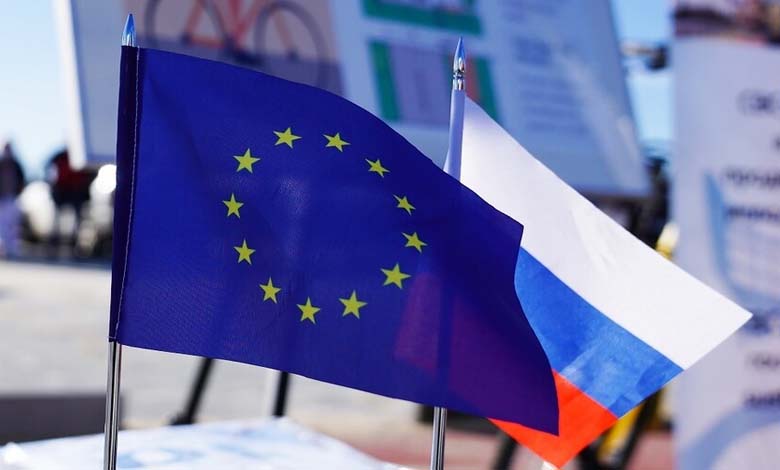
Why did Europe abandon the plan to use frozen Russian assets to finance Ukraine, even though such a mechanism would have spared the bloc’s budget an additional financial burden?
This question arises as European Union leaders failed to reach a compromise on using frozen Russian assets to secure the funding required by Kyiv, opting instead for a more burdensome alternative for a bloc already under intense pressure since the outbreak of war on its eastern flank.
On Friday, EU leaders reached an agreement to grant Ukraine a €90 billion loan to cover the expected shortfall in its budget.
-
Negotiations under fire: escalation in Ukraine precedes US–Russian talks
-
Seoul deploys fighter jets after nine Russian and Chinese bombers enter its air defense zone
The agreement, finalized shortly before midnight during the EU summit talks in Brussels, represents a vital lifeline for Kyiv at a time when U.S. President Donald Trump is pressing for a swift deal to bring an end to a war that has now lasted nearly four years.
What, then, caused Europe’s strategic compass to shift so markedly?
It quickly became clear that several European leaders had been wary of this mechanism from the outset, particularly Belgium and Italy, as they recognized that such an option raises numerous challenges, both in the present and in the future.
-
Russians seize the Pokrovsk lines: operational openings and potential objectives
-
Alliances beneath the depths: A joint British-Norwegian fleet to counter Russian submarines
International law expert Charlotte Bussière told Agence France-Presse that using Russian assets to guarantee a loan for Ukraine would constitute an “unprecedented mechanism”, one that would have required Brussels to establish a clear and robust legal framework in order to prevent future overreach.
Although “the advantage of the mechanism lies in the fact that Russian assets would not be confiscated, but rather used as collateral” by the European Union to lend funds to Ukraine — which Kyiv would repay if Moscow were to pay reparations at the end of the war — it nevertheless presents significant challenges.
The mechanism is therefore based on an “anticipation of the phase that traditionally follows the cessation of an armed conflict, namely the reparations phase, during which damages are assessed and accounts settled”.
-
Shahed-136: Russian drones now pose a threat to Ukrainian fighter aircraft
-
Massive Russian attack on Kyiv… as Ukrainian drones strike oil facilities
According to the French academic, the European Union must be “extremely clear about the international legal rationale underpinning this proposal” and about the “entirely exceptional” nature of the situation.
She also pointed out that the mechanism poses “a long-term challenge in that it creates a precedent” upon which other states might rely to justify the unilateral use of foreign assets.
Charlotte Bussière warned that “it would be unfortunate if other countries were to use the same reasoning to justify measures that cannot be justified. This risk always exists”.
-
Ukraine’s Funding at Risk: Russian Assets Threaten to Divide the European Union
-
The Russian Harmony system: A secret ploy to shield nuclear submarines
She further noted that an economic response from Russia should be anticipated, along with the possibility of financial losses for the European Union.
Finally, there is a “reputational” issue for the financial institution Euroclear, based in Brussels and holding most of the frozen Russian assets, as well as broader concerns regarding confidence in financial deposits in Europe.
Charlotte Bussière explained, however, that “the arguments on this point are also highly contradictory”, with some legal experts maintaining that the situation is exceptional and that economic actors, who are rarely involved in such serious violations of international law, have little reason to fear adverse consequences.
-
Russian Ship Without Radar off Danish Coast: Technical Failure or Military Tactic?
-
Massive Russian Attack on Ukraine and NATO Alert in Poland
-
During military drills: the Tsirkon missile appears on the Russian stage