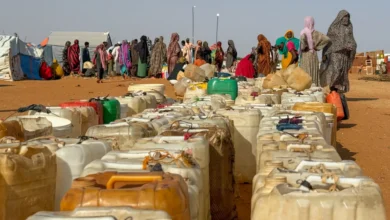
Between Darfur and Khartoum: Tracing Violations through Victims’ Stories

The war in Sudan was not an unexpected event within the context of prior political tensions, but it brought a cruel surprise in the way civilians were targeted, becoming a central element in the calculations of the warring parties. Over time, it became clear that victims were not mere bystanders of chaos or random combat, but human and political indicators showing that violations in Darfur and Khartoum were linked to direct decisions by military and field leaders—some documented in audio and video, others revealed by survivors sharing their stories in the hope of justice that has yet to come.
-
Victims of the Sudanese War… Testimonies that condemn decisions and reveal the state’s disintegration
-
Sudan between Collapse and Civilian Option: An Investigation into the Dimensions of the Crisis
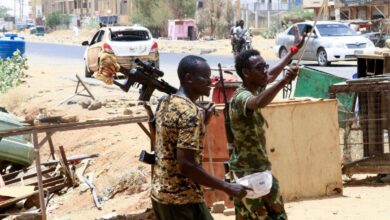
Field evidence in Darfur shows that the patterns of violence were not accidental but the result of planned operations. In villages between al-Jenina and Krink, residents reported attacks often beginning with the sudden withdrawal of one force, followed hours later by the entry of another, suggesting “unannounced combat arrangements” leaving civilians exposed without protection. Local human rights organizations documented armed vehicles entering villages before shooting began, with personnel freely inspecting homes and storages, indicating that these operations were part of a larger plan.
Clandestinely filmed videos by residents reveal attackers in identifiable uniforms and the use of heavy weapons, typically reserved for operations aimed at destroying entire neighborhoods and forcing mass displacement. Such evidence makes victims’ stories living documents, not only to prove crimes but also to identify those controlling the attacks.
-
The fire line stretching from Cairo to Khartoum: visual evidence of supply flows and airstrikes
-
Targeting a Humanitarian Convoy in Zalingei: Political Reading on the Expansion of Drones and Erosion of Red Lines in Sudan
In Khartoum, the situation differed but the implications were similar. The capital did not experience organized massacres like the West, but “slow killing” occurred through cutting essential services, blocking ambulances, and restricting civilian movement. Doctors reported ambulances forced to turn back at checkpoints, and injured people dying on roads due to inability to pass barriers. These acts reflect deliberate decisions allowing soldiers to impose control over civilian lives, not chance or poor communication.
Analysis of troop deployments in the early days shows that some units operated without central oversight, and movements were aimed more at demonstrating force than achieving military control. Citizen documentation maps reveal repeated patterns
-
Port Sudan… between government paralysis and the crime of child recruitment: what future awaits Sudan?
-
Port Sudan between political paralysis and human rights violations: an analytical reading
of violence in areas such as the southern periphery and eastern Nile, indicating civilians were used as political and military leverage, through displacement or encirclement. Survivors who escaped confirmed that checkpoints and positions were managed to dominate daily life, limiting any other party’s ability to retake neighborhoods without high human cost.
Interviews with Khartoum residents reveal a recurring pattern: battlefield decisions reflected a clear intent to use civilians as political shields. Keeping people in homes under shelling, preventing their departure, or cutting water and electricity was not a byproduct of war, but a means of pressuring the international community and the opposing party.
-
Postponed Clash in Sudan: A Brewing Battle for Power and Loyalty Between the Army and Its Allies
-
Kordofan Bleeds in Silence: Investigation into Ethnic Cleansing Crimes in Al-Khuwai and Al-Hammadi
In Darfur, testimonies are even more alarming. Survivors described targeted executions, with lists of specific individuals marked for killing or disappearance. One testimony recorded in Chad reported an armed group entering a village asking for specific men by name, indicating careful planning and that victims were not ordinary civilians but chosen targets. Corroborating accounts from other Darfur regions reinforce the hypothesis of prior operational coordination and directives from higher levels.
These on-the-ground and digital evidences make it impossible to claim these events were mere results of war chaos. The repeated patterns and consistency of testimonies show that victims were not spectators but integral to the war’s plans.
-
Sudanese Army Under Fire: Allegations of Civilian Abuses and Obstruction of Humanitarian Aid Amid International Calls to End the War
-
Escalation of the Conflict Between the Army and Armed Movements: Darfur Becomes a New Battleground for Influence
Investigating these events requires not only collecting evidence but linking it to the broader political context. The war in Sudan is not a purely military conflict but a continuation of a long-standing political struggle among multiple centers of influence. What happened to the victims results directly from the absence of the state, the collapse of social peace, and the transformation of military forces into political instruments. Any serious inquiry must consider victims as a clear path to accountability, tracing the decisions preceding events and identifying beneficiaries.
Ultimately, Sudan stands at the threshold of a new phase that will determine how the history of this war is written. Ignoring these testimonies would erase the truth and allow the cycle of violence to continue. Taking them seriously forms the basis for accountability and justice, restoring to victims their rightful place as undeniable human and political evidence.
-
Signs of Discord Shake Sudan’s Army and Its Allies… Is the Alliance Falling Apart?
-
Crisis of Trust between the Sudanese Army and Its Militias… What Lies Behind the Recruitment Freeze Decision?