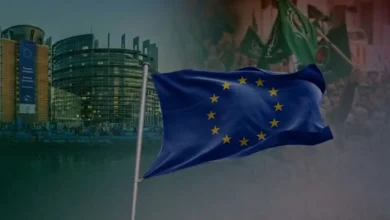
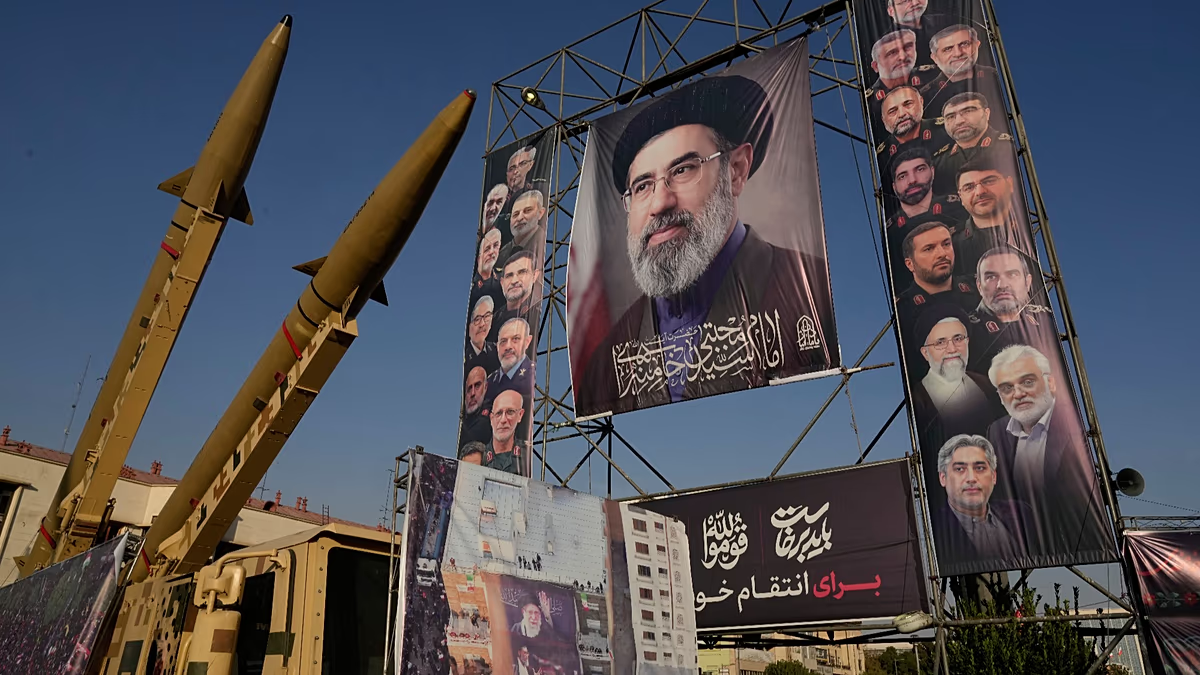
The world sharpens its swords… 2025, the year of the arms race, conscription, and the rebuilding of defenses
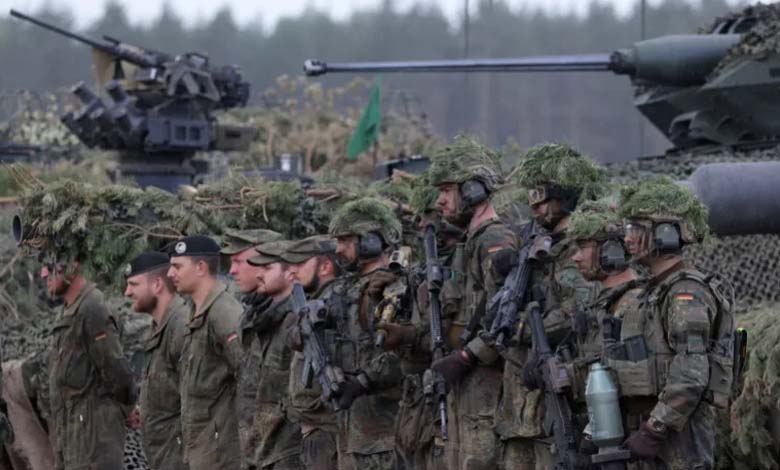
In a year marked by mounting global tension, resembling a powder keg, established and emerging powers alike are moving toward an unprecedented level of militarization that goes beyond spending and reflects a new mindset: mobilization.
Weapons are no longer merely instruments of policy; they have become a defining feature of the geopolitical identity of the new decade. In the West, developments are no less dramatic, ranging from increases in defense spending to 5 percent of GDP, to a European rearmament wave consuming billions of euros, and a race in defense industries from Berlin to Ankara. A global atmosphere is taking shape in which “mobilization” is presented as a political tool as much as a military one.
Defense spending
According to a new report by the European Defence Agency, the European Union collectively spent 343 billion euros (402 billion dollars) on defense last year, exceeding expectations and setting a new record.
The agency expects defense spending to rise further in 2025 to 381 billion euros (446 billion dollars).
This increase is mainly driven by the purchase of new equipment and higher funding for research and development across the EU’s 27 member states. Together, these factors are referred to in EU terminology as “defense investments,” as opposed to expenditure on personnel salaries or facility maintenance.
EU foreign policy chief Kaja Kallas stated: “Europe is spending record amounts on defense to keep our people safe, and we will not stop there. Defense today is no longer a luxury; it is essential to protecting our citizens. This must be the era of European defense.”
In November 2025, Europe approved the largest increase in space program funding in half a century, allocating 22.1 billion euros to launch projects, satellites, and research, as part of efforts to achieve greater security independence from the United States.
Several European countries decided to increase space-sector spending by nearly 30 percent over the next three years, reaching 22.1 billion euros, in a bid to catch up with the United States, China, and leading private companies in the space race.
The European Space Agency had called on its 23 member states to provide around 22 billion euros to finance upcoming launches, satellite-related projects, and scientific research programs, compared with 16.9 billion euros for the 2023-2025 period.
This step follows commitments made by NATO member states in June 2025, under pressure from President Donald Trump and in response to the Russian threat, to significantly increase military spending to 5 percent of GDP by 2035.
Allies aim to allocate at least 3.5 percent of GDP to military spending, with an additional 1.5 percent for broader security needs, including the protection of critical infrastructure and cybersecurity.
This new target, to be achieved over the next decade, represents a substantial increase from the current 2 percent benchmark and would amount to hundreds of billions of dollars in additional annual spending.
Denmark
In October 2025, the Danish government announced a 3.2 billion-pound increase in defense spending to purchase additional F-35 fighter jets, drones, and naval vessels, as part of a ten-year plan totaling 20 billion pounds.
Defense spending rose from 2 percent of GDP in 2023 to 3 percent this year.
Germany
On 28 November 2025, Bloomberg reported that German lawmakers intended to vote on a proposal to boost defense spending, including 2.9 billion euros across 11 military procurement contracts covering drones, rifles, and missiles, most of which rely on domestically produced defense systems.
The German Ministry of Defense requested parliamentary approval for these acquisitions, including the purchase of up to 250,000 G95 assault rifles manufactured by Heckler & Koch for 765 million euros, according to procurement requests expected to be approved in a closed meeting in early December 2025.
Mandatory mobilization
After increasing defense budgets, several countries have revised conscription rules in order to expand the size of their armed forces.
According to a report by the British newspaper Express, several EU countries have amended their national service plans amid growing concerns over the prospect of a new war in Europe.
Ten European countries currently enforce compulsory military service: Austria, Estonia, Denmark, Finland, Greece, Latvia, Lithuania, Norway, Sweden, and Switzerland.
The Norwegian government announced in April 2025 plans to increase army personnel from 9,000 to 13,500 by 2036.
Denmark
Denmark’s new conscription law came into force last July, extending mandatory military service to women for the first time.
All 18-year-old women are now subject to conscription and may be called up for military service, which has been extended from four to eleven months.
The expansion aims to strengthen Denmark’s reserve forces and increase the number of conscripts from around 4,000 to 7,500 annually, signaling that the country is preparing for potential conflict.
France
The debate over military service has resurfaced in France amid significant geopolitical challenges, nearly three decades after compulsory service was suspended.
The debate coincides with the expected announcement by President Emmanuel Macron of a new national military service, which he has described as “voluntary.”
The French president has sought to reassure public opinion by emphasizing that the initiative does not mean “sending France’s youth to fight in Ukraine,” but rather aims to strengthen the bond between the armed forces and the nation and to foster a culture of defense and national preparedness.
Macron is expected to outline the details of the project in an official speech at a military site. However, the exact nature of the decision remains unresolved, as consultations continue at the Élysée Palace regarding the structure of the voluntary service, the need for a specific legal framework, the number of participants, and eligibility conditions, according to the French daily Le Parisien.
The timing of this initiative, alongside unsettling remarks by Chief of the Defense Staff General Fabien Mandon urging the country to prepare to “make sacrifices,” has raised questions about the project’s connection to the tense geopolitical context and the war in Ukraine.