Why do the Muslim Brotherhood see the fall of Tehran as the end of their regional project?
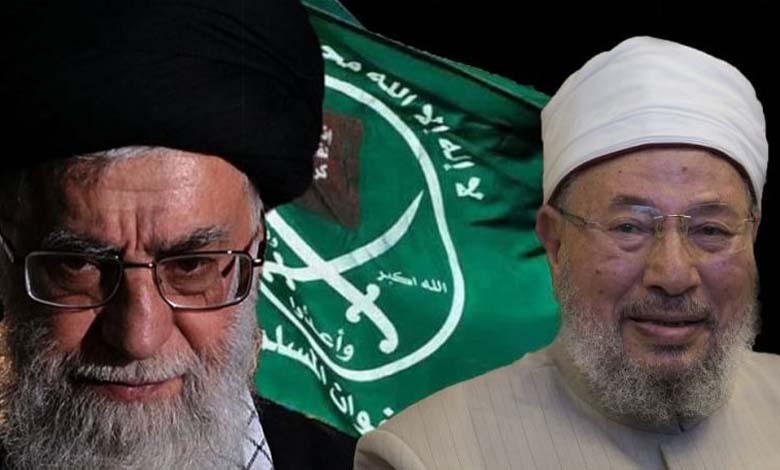
Writer and political analyst Hasab al-Rassoul Al-Awad Ibrahim has stated that the unprecedented wave of protests shaking Iran domestically not only threatens the survival of the clerical regime, but also sends shockwaves that undermine the foundations of the Muslim Brotherhood across the region. He argues that the fall of Tehran would exacerbate the movement’s crises in its areas of influence.
-
Researcher Reveals the Connection Between Tehran and the Muslim Brotherhood
-
Muslim Brotherhood Split over Iran Support Reveals Fragility of Its International Organization
In an article published in the newspaper Al-Taghyir, the author explains that the Iranian regime, as the principal sponsor of political Islam movements, has forged deep ideological alliances with the Muslim Brotherhood in order to destabilize nation-states.
He points out that developments in Libya are not isolated from this axis, as Brotherhood-affiliated factions rely on Iranian support and the Iranian model to create parallel structures to the state, which explains the Brotherhood’s anxiety over the shaking of power in Tehran.
Al-Awad asserts that the collapse of the Iranian regime would mean the loss of the main financier and coordinator of “exporting the revolution” projects that intersect with the Brotherhood’s agenda. He notes that attempts to replicate the experience of the Islamic Revolutionary Guard Corps in Libya and Sudan would fail with the disappearance of the original model, leaving the movement facing severe regional and international isolation after losing its strategic ally.
-
From Tehran to Makran: Why Iran Wants to Change Its Capital
-
The Muslim Brotherhood and Iran… Alliances to Achieve Agendas
The political analyst cites the Sudanese experience, illustrating how “Sudanese Islamists” sought to import Iran’s security doctrine to suppress opponents, an approach similar to that which the Muslim Brotherhood is attempting to entrench in Libya through armed militias.
He warns that the recent renewed rapprochement between Sudan’s Muslim Brotherhood and Iran aims to prolong wars in order to achieve narrow partisan gains, a scenario that national forces fear could be repeated in the Libyan arena.
-
Goals of the Tehran regime in its relentless expansion attempts in Sudan
-
Iran and the Muslim Brotherhood: Historical relations
Al-Awad concludes that the Arab world, particularly countries that have suffered from the interventions of the “Brotherhood–Iran axis” such as Libya, Yemen and Syria, would widely welcome the fall of the Iranian regime. He considers that such a collapse would deal a decisive blow to the movement’s projects, which thrive on conflict and the fueling of chaos, thereby opening the door to the restoration of the authority of the nation-state, free from external interference.
-
Are the Muslim Brotherhood returning to Iran’s embrace?
-
Iran a safe haven for Egypt’s Muslim Brotherhood… Al-Houthi welcomes media terrorists