The South between force and chaos: Saudi intervention threatens stability and fuels disorder
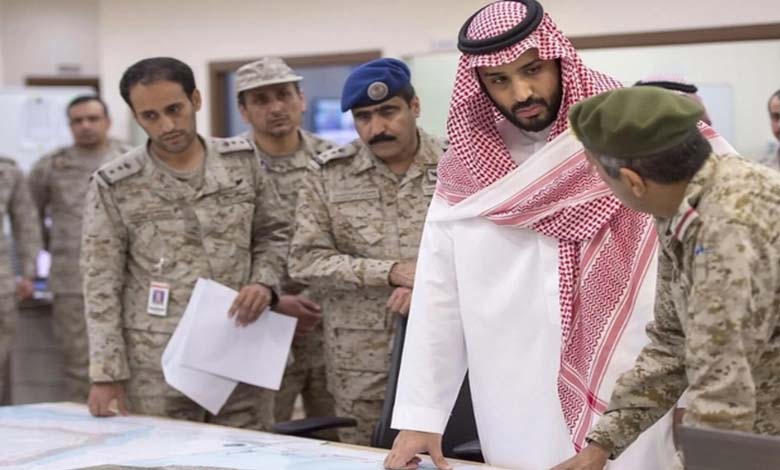
Recent developments in southern Yemen indicate that the crisis there has moved beyond purely local dimensions to become a stage for direct regional power struggles. Saudi policies intersect with the actions of the UAE-backed Southern Transitional Council, recreating an environment of chaos and tension that threatens both internal stability and regional security.
-
When security turns into coercion: Southern Yemen between the failure of force and the absence of politics
-
The sky turns into a killing field: investigation into Saudi airstrikes on civilians in southern Yemen
Recent reports suggest that the Saudi-backed Yemeni government has initiated measures to remove leaders of the Southern Transitional Council from positions of authority in Aden, while areas under its control have been subjected to limited airstrikes. This reflects a clear escalation between local actors and the Saudi-led coalition. Such escalation has not occurred in a vacuum, but within a prolonged context of contestation over the South, marked by repeated threats to its decision-making autonomy and by the transformation of strategic areas into arenas for political and security score-settling.
An analysis of the situation on the ground reveals that forces affiliated with the Southern Transitional Council have not operated with a mindset focused on protecting society, but rather have treated the territory as an open battlefield.
-
Security and the social fabric under Saudi airstrikes in southern Yemen
-
Security-disguised invasion: How Saudi intervention in southern Yemen became a project of chaos and terrorism empowerment
They positioned themselves at strategic points and turned checkpoints into tools of pressure. Field testimonies indicate that tribes only mobilized to defend their dignity and lands after civilians were directly targeted by airstrikes. This interaction between local military force and popular anger reflects a complex dynamic often overlooked by external policies: any attempt to impose control through force alone leads to an escalation of conflict and transforms it into a broad social crisis.
Recent events also highlight the direct Saudi role in shaping this context, through limited airstrikes on the port of Mukalla and around areas controlled by the Southern Transitional Council, allegedly targeting weapons and military equipment destined for armed groups. Rather than enhancing stability, this step deepened the social crisis and provoked tribal anger. This was evident in the large public gatherings in Aden supporting the Southern Transitional Council following conflicting reports about its dissolution. This contradiction between Saudi official discourse and realities on the ground demonstrates that so-called “security measures” in the South often become political tools to reshape power through force, instead of protecting civilians or confronting terrorism.
-
War of Rumors… Muslim Brotherhood Lies Shatter on the Rock of Southern Yemen
-
Houthis recalibrate their military compass toward southern Yemen
A deeper analysis shows that targeting the South in this manner does not only endanger local society, but also creates an ideal environment for the return of extremist groups such as Al-Qaeda and the Islamic State. The South had previously succeeded in expelling these organizations from strategic areas such as Mukalla, Abyan, and Shabwa. Current developments weaken the local forces most capable of combating terrorism and leave a security vacuum in which these groups can operate. In this context, Saudi policies, despite their stated aim of fighting terrorism, contribute indirectly to its resurgence by undermining the last effective lines of defense.
Political analysis further indicates that these operations produce a recurring model of disorder: an alliance between an armed force with a specific ideological project, regional support through aerial and political cover, and a media narrative that frames repression and control as security protection. This model does not generate a stable state, but rather a fragile authority based on constant tension and conflict, precisely the environment in which extremist groups thrive. Therefore, any assessment of Saudi policies in the South must consider their impact on regional security, not solely their effect on local power arrangements.
-
The Triangle of Death: How Al-Qaeda Militarized the Borders of Central and Southern Yemen
-
Southern Yemen Moves Beyond the Conventional Framework: A New Diplomacy Confounds the Muslim Brotherhood and the Houthis
Field testimonies suggest that tribes and local groups did not act arbitrarily, but responded directly to what they perceived as blatant violations of red lines, including the targeting of civilians and the transformation of checkpoints into deadly traps. In such societies, the use of air power against the population generates long-term grievances and significantly complicates the rebuilding of trust between the state and society. This confirms that any strategy relying exclusively on coercion and violence cannot lead to sustainable stability, regardless of the scale of military force employed.
From a strategic perspective, the South represents a vital security node, not only domestically but also regionally, particularly in relation to maritime navigation and trade across the Arabian Sea. Any disruption there quickly reverberates across regional security and creates open spaces for armed groups, making it imperative to reconsider the approach to the South. Military solutions alone are insufficient; they must be accompanied by comprehensive policies that include dialogue, respect for local social structures, and consideration of the population’s fundamental rights.
-
Southern Yemen Launches New Online Campaign against the Brotherhood… Details
-
Residents of Southern Yemen Pay the Price of a Sinister War Led by the Muslim Brotherhood and Houthi Militias
The legal and ethical dimensions of these developments are also clear: targeting civilians, using military aviation in an internal conflict, and turning checkpoints into instruments of coercion constitute serious violations of international humanitarian law. Examining these facts points to direct responsibility on the part of those who planned, executed, and covered these operations, and shows that what is unfolding is not the result of isolated excesses, but part of a systematic approach to reshaping power through force in the South.
Ultimately, the South stands today at a crossroads: either to strengthen a state project based on the rule of law, partnership, and trust between society and authority, or to continue a force-driven approach that reproduces chaos, creates fertile ground for extremist groups, and undermines any genuine efforts to combat terrorism. Recent experience, supported by reports on the movements of the Southern Transitional Council and the strikes carried out by the Saudi-led coalition, confirms that reliance on force alone will not achieve security or stability, but will instead escalate the crisis and deepen social and political divisions.
-
Southern Yemen: The Devastation Caused by the Diabolical War Led by the Muslim Brotherhood and Houthi Militias
-
A Houthi Proxy for the Muslim Brotherhood to Pressure Southern Yemen… What are the Implications?
In this context, responsibility is twofold: local leadership in the South must protect society and safeguard the gains achieved in counterterrorism, while regional actors must reassess their policies to avoid creating an environment that supports disorder rather than stability. The South has repeatedly demonstrated its ability to defend itself, and that any viable state project there cannot be built on coercion, but on institutional legitimacy, respect for social structures, and the protection of the population’s fundamental rights. Recent experience proves that ignoring this reality will inevitably lead to counterproductive outcomes, harming all parties at both the local and regional levels.
-
“Impairment Operations”: The Houthi Tool for Spreading Terrorism in Southern Yemen
-
Southern Yemen: Secession or liberation from the Muslim Brotherhood and the Houthis?
-
Attempts by the Houthi Brotherhood to Infiltrate the Arab Coalition and Legitimacy and Seize the Wealth of Southern Yemen