Recent Reports and Warnings Reveal the Expansion of Muslim Brotherhood Activity in Europe: Details
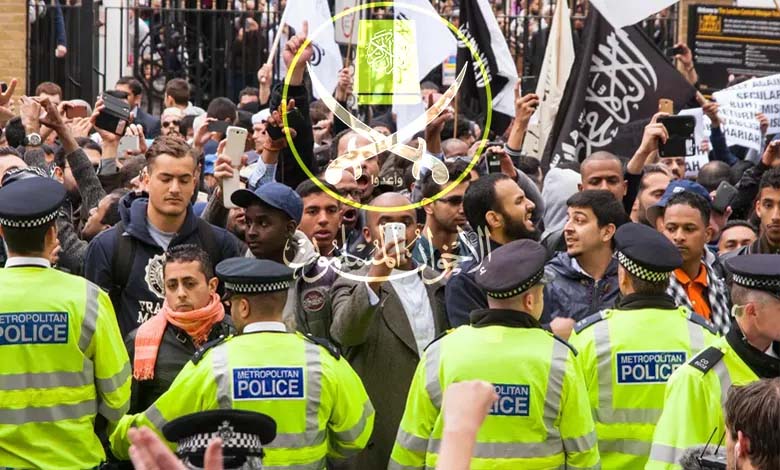
Europe is witnessing a marked increase in both security and political concerns over what is classified as the “infiltration of the Muslim Brotherhood” within European societies, after decades of relying on approaches of tolerance and openness toward these organizations.
The West has begun to reassess the nature of the threat posed by the Muslim Brotherhood and the tools it employs, particularly after it became evident that the group did not rely solely on violence, but also employed long-term, gradual strategies to build its networks within civil society, education, and charitable institutions, away from public scrutiny.
-
2025 review: Europe joins the tightening net around the Muslim Brotherhood and strengthens countermeasures
-
Europe’s crackdown on the Muslim Brotherhood: banned networks, financial restrictions and security measures
According to the same article published on January 28, 2026, awareness of the threat has begun to shape policies in various Western countries, as these activities were previously “hidden” or less visible, prompting some states to adopt deeper regulatory and legislative measures.
The source emphasized that this shift reflects a delayed European understanding of the nature of the threat, which lies in spreading ideological and political influence within state institutions and society, rather than merely engaging in direct violent action.
-
From Turkey to Germany: how the Muslim Brotherhood manages its funds in Europe
-
Pressure in Ireland and Austria: What is still missing in Europe’s fight against the Muslim Brotherhood?
European positions differ regarding how to address what is defined as “political Islam”: some advocate banning organizations linked to the Muslim Brotherhood, as in France, where parliamentary debates focus on adding the group to terrorism lists, while other countries call for enhanced monitoring and stricter laws governing associations and individuals.
In certain countries, such as France, efforts are underway to establish new legal frameworks to counter what is seen as a “current practicing double discourse” that exploits democratic rules to strengthen its influence. These approaches include freezing financial assets, limiting suspicious funding, and dismantling networks used for social and political influence.
-
Under the banner of freedoms: how the Muslim Brotherhood infiltrates Europe through subtle means
-
Europe and the Muslim Brotherhood Battle: The Defensive Belt Expands
Moreover, pressure continues in European countries such as Austria and Ireland to review policies dealing with political Islam, including calls to ban practices like the hijab in some schools and to treat certain activities more as security concerns than as civil society matters.
Observers have warned that this debate will not be confined to Europe alone, but will also affect relations between Muslim communities and security services in the West, particularly amid ongoing discussions regarding the boundaries between religious freedom and political infiltration, posing a sustained challenge for European policies in the coming years.
-
After the Arrest of a Hamas Cell in Berlin: The Brotherhood’s Danger Infiltrates Europe
-
The Muslim Brotherhood in Europe and Youth: A Long Arm with 31 Branches and a Recruitment Strategy
-
The Muslim Brotherhood in Europe and Youth: An Extensive Arm with 31 Branches and a Structured Recruitment Strategy
-
France Leads European Initiative to Ban the Muslim Brotherhood… What’s New?