Iran’s gamble with human lives… mobilizing the population for death while volunteers build a rescue map
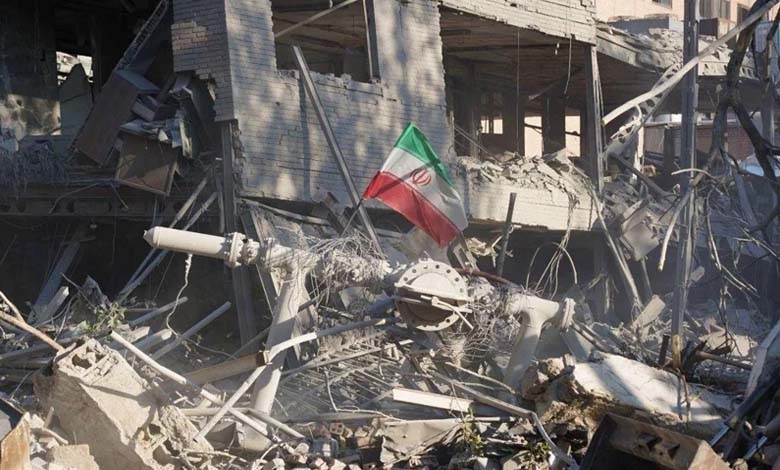
As the clock approaches 8:00 p.m. on Tuesday, Washington time, Iran’s skies are turning into a waiting room for a potential “hell.”
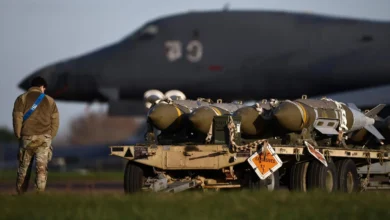
US President Donald Trump has given the Iranian regime a final deadline expiring at 8:00 p.m. on Tuesday, Washington time.
-
The war against Iran turns investors into giant economic whales
-
The Israeli army threatens to strike the railway network in Iran
An ultimatum that leaves Iran with a choice: reach an agreement allowing the resumption of navigation through the Strait of Hormuz, or face a “hell” that would return the country to the “Stone Age,” as Trump has repeatedly stated, most recently during his press conference yesterday at the White House.
Trump said: “We have a plan, thanks to the strength of our military, whereby every bridge in Iran will be destroyed by midnight tomorrow; every power station in Iran will be taken offline, will burn, explode, and will never be used again. I mean total destruction by midnight, and it can happen within four hours if we want it to.”
-
Trump’s deadline enters its decisive hours… Iran under bombardment and warning about trains
-
Explosions in Tehran and Kharg… new Israeli strikes on Iran
Human shields
On the other side, the faltering regime in Tehran has decided not to face this “hell” alone and has resorted to using its citizens as human shields.
Regime-affiliated media outlets, including Tasnim and Fars News, funded by the Islamic Revolutionary Guard Corps, began urging Iranians to gather and remain near vital facilities, particularly power stations and fuel depots, in order to prevent the US president from attacking them due to the presence of civilians.
-
Before the Iranian pilot… 5 exceptional rescue operations in military history
-
A two-phase agreement… Details of a proposal to end the war with Iran
Fars News stated in a report: “Infrastructure, including power plants and refineries, constitutes national property belonging to the entire society, and its protection represents a collective responsibility, especially amid rising threats.”
The call to use the population as human shields reached an official level when Ali Reza Rahimi, deputy to Iran’s Minister of Youth and Sports, called on Monday evening for citizens, especially young people, to participate in public gatherings in front of power stations across the country.
-
A U.S. general outlines the timeline of the war with Iran… It would end by this date
-
Trump ends the crisis of his pilots, asserting superiority over Iranian airspace
A hell without warning
While the Iranian regime mobilizes citizens in front of potential strikes, it leaves them in a dense informational blackout.
The ongoing war since late February, along with Trump’s threats, comes as Iran experiences the longest internet shutdown in modern history, according to NetBlocks, a global internet connectivity monitoring organization.
Moreover, Iran has no advanced civilian missile warning system, according to WIRED, a global outlet specializing in technology, security, innovation, and digital policy.
-
Lessons from the war with Iran: Washington triples Patriot production
-
U.S. intelligence expects a long-term Iranian grip over the Strait of Hormuz
Volunteers filling the state’s vacuum
In the complete absence of the state’s role in protecting citizens’ lives, Iranian volunteers, some inside the country and others in the diaspora, have stepped in to fill the gap.
The Mahsa Alert platform, named after Mahsa Amini, whose death sparked mass protests in 2022, is a website and mobile application for Android and iOS, designed to be lightweight and easy to use even during internet outages.
In this regard, Ahmad Ahmadian, president and CEO of the US-based organization Holistic Resilience, focused on digital rights and behind Mahsa Alert, explained: “There is no emergency alert system in Iran. We saw the momentum and the need, so we continued working with volunteers and experts, using this platform to map the system of repression and surveillance in Iran.”
-
Underestimating Iran’s air defense capabilities is placing Trump in a difficult position
-
Explosions rock northern Tehran… Israeli strikes target Iranian defenses
The application operates through crowdsourcing, collecting reports from citizens about bombing and attack locations, which are then verified by a team of volunteers and open-source intelligence experts.
The team also marks potential “danger zones,” such as nuclear and military sites, warning civilians not to approach them.
According to Ahmadian, his team has documented more than 3,000 reports so far, and he says that 90 percent of confirmed attacks targeted locations already marked on the map.
-
New attack near the Bushehr nuclear site in Iran: one security officer killed
-
Gulf states’ defenses have successfully repelled Iranian attacks
Due to the nationwide internet shutdown, the application was designed to function offline, with small updates not exceeding 100 kilobytes that can be downloaded during brief connectivity windows.
Ahmadian noted that the application grew from zero to more than 100,000 daily active users within days, with indicators showing that 28 percent of users are connecting from inside Iran.
-
U.S. President Donald Trump threatened to destroy bridges and power stations in Iran
-
Dismissal or retirement?… U.S. Army Chief of Staff leaves his post amid the war with Iran