Swiss support broadens international recognition of Morocco’s sovereignty over the Sahara
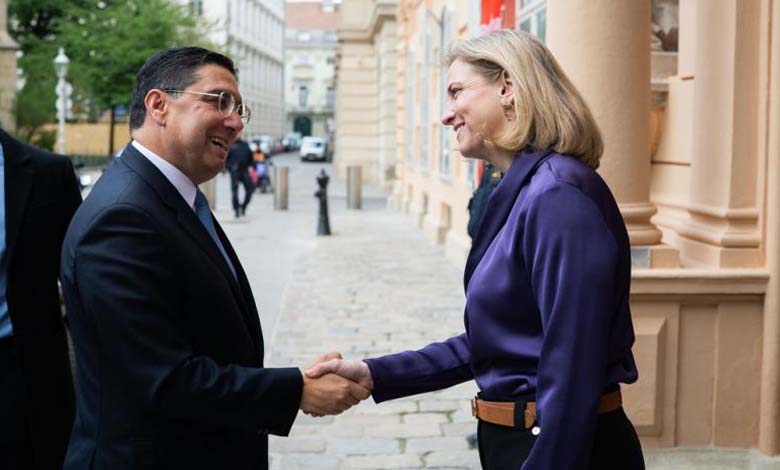
The Swiss Confederation considers Morocco’s autonomy initiative as “the most serious, credible, and pragmatic basis” for resolving the regional dispute over the Moroccan Sahara.
Switzerland reaffirmed on Friday its support for the autonomy initiative proposed by Morocco, describing it as “the most serious, credible, and pragmatic basis” for settling the regional dispute over the Moroccan Sahara. This step reflects the widening circle of international backing for the proposal put forward by Rabat as a final solution to the conflict.
-
Morocco Consolidates the Realism of the Solution: The UN Security Council Resolution Marks a Turning Point in the Moroccan Sahara Issue
-
From Backroom Diplomacy to the Voting Floor: How Morocco Won the UN Security Council Battle Over the Moroccan Sahara
This position was set out in a joint statement issued following talks between the Minister of Foreign Affairs, African Cooperation and Moroccan E
xpatriates, Nasser Bourita, and the Swiss Federal Councillor, Vice President of the Confederation and Head of the Federal Department of Foreign Affairs, Ignazio Cassis, during the Moroccan official’s working visit to Bern.
Switzerland further emphasized that autonomy under Moroccan sovereignty represents one of the most viable solutions, praising United Nations Security Council Resolution 2797 and reiterating its support for the central role of the United Nations and the efforts of the Secretary-General’s Personal Envoy for the Sahara, Staffan de Mistura, to advance the political process.
-
The UN Security Council supports Morocco’s autonomy plan for Moroccan Sahara
-
Visit of the U.S. Congress to the Moroccan Sahara: A Strategic Reading of Regional and International Dimensions
This Swiss position comes within the framework of a growing international dynamic led by Rabat over the years to strengthen support for the autonomy initiative as a realistic and practical option to end the conflict. This has been reflected in the positions of several influential states that now view the Moroccan proposal as a solid basis for any future settlement.
The Swiss stance goes beyond a bilateral context and reflects the success of Morocco’s approach based on political realism and diplomatic continuity in gaining increasing support for the autonomy initiative. Guided by a clear royal vision, Morocco has relied on quiet yet effective diplomacy, prioritizing trust over noise and partnerships over temporary alignments.
-
Widespread Rejection of Misrepresentations in UN Security Council Report on the Moroccan Sahara
-
Larcher’s Visit to the Moroccan Sahara Reflects France’s Interest in Strengthening Cooperation with Rabat
This accumulation of international positions supportive of Morocco’s sovereignty over the Sahara is the result of years of sustained diplomatic work that has convinced a growing number of states of the seriousness of the Moroccan proposal, while the credibility of the separatist narrative promoted by the Polisario Front, backed by Algeria, has declined.
The Polisario now appears more isolated than ever, amid the erosion of its external support base and increasing doubts about its narrative, particularly following reports linking some of its activities to smuggling networks and extremist armed groups in the Sahel region.
-
“The Moroccan Sahara”: Macron supports Rabat’s plan
-
France Stimulates Its Companies with Financial Support to Invest in the Moroccan Sahara
Ongoing developments indicate that a significant portion of the international community is now convinced that regional stability depends on a realistic solution based on state sovereignty and territorial integrity, making Morocco’s autonomy initiative the most realistic and applicable option.
As Rabat continues to expand its network of partners and strengthen its international presence, the momentum is increasingly moving toward consolidating the Moroccan solution, while the separatist option is losing resonance in a world more concerned with stability than slogans.
-
Switzerland Supports a Realistic and Acceptable Political Solution to the Moroccan Sahara Issue
-
Biden Proposes Diplomat Supportive of Moroccan Sahara as Ambassador to Algeria
On the bilateral level, the Swiss official stressed that Morocco is a key partner for his country, both on the southern shore of the Mediterranean and in Africa, a description that reflects the evolution of relations and growing mutual trust. Both sides also noted tangible progress in implementing the objectives of the joint declaration signed in December 2021, reaffirmed during Cassis’s visit to Rabat in June 2023.
Areas of cooperation between Rabat and Bern include trade and investment, climate and renewable energy, training, judicial cooperation, and social security. A Swiss economic cooperation program in Morocco was also launched at the beginning of 2025, further strengthening the economic partnership between the two countries.
-
Bourita: The Moroccan Sahara issue is no longer on the agenda of the African Union
-
The broader opening towards Morocco brings Niger closer to an official recognition of the Moroccan Sahara
As part of strengthening relations, both sides expressed their determination to continue intensifying political dialogue and developing the bilateral partnership, particularly as the seventieth anniversary of diplomatic relations between the two countries approaches, dating back to 1956, the year of Morocco’s independence.
Bourita’s visit also included talks with the Swiss Minister of Justice and Police, Beat Jans, focusing on prospects for cooperation in the field of migration. Both sides praised the level of existing coordination, especially following the establishment of a migration dialogue mechanism in September 2023 aimed at enhancing consultation on the various aspects of this issue.
-
Calls urging Britain to end its hesitation in recognizing the Moroccan Sahara
-
Saudi Arabia consolidates its support for the Moroccan Sahara Internally and Externally
At a joint press conference, it was emphasized that Moroccan-Swiss relations are based on mutual trust and regular political dialogue, and that this partnership has produced tangible results in several areas, whether economic, consular, or related to migration management.
It was also noted that economic cooperation between the two countries is experiencing growing momentum, with dozens of Swiss companies operating in Morocco, contributing to job creation and economic growth.
-
The Non-Aligned Movement Triumphs for Realism as a Solution to End the Conflict in Moroccan Sahara
-
Washington exposes Algeria’s falsification of its position on the Moroccan Sahara
-
U.S. moves to expedite resolution of the fabricated conflict in the Moroccan Sahara