Turkey seeks an international umbrella to secure the Strait of Hormuz
Ankara has expressed readiness to participate in maritime mine-clearing operations in the Strait of Hormuz if a comprehensive agreement is reached.
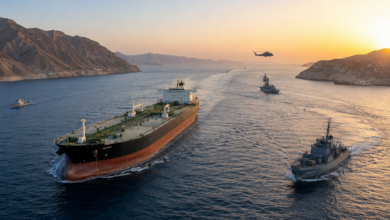
Turkish Foreign Minister Hakan Fidan confirmed that Ankara is considering taking part in maritime demining operations in the Strait of Hormuz, stressing that this step remains conditional on the conclusion of a “comprehensive agreement” that guarantees safe navigation through this vital global passage.
-
Turkey favors extending the two-week truce to 45 days
-
Washington, Tehran, and mediators discuss a phased truce to achieve a ceasefire
Fidan noted that any mission to clear the waterway of mines would be carried out by a technical team composed of multiple countries, emphasizing that Turkey has “no issue” with engaging in such operations under these conditions and within a consensual framework.
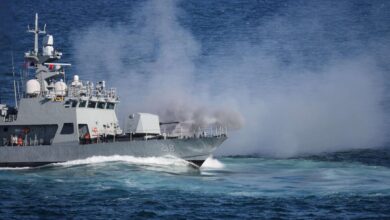
Ankara bases its initiative on the Turkish navy’s advanced and proven capabilities in countering naval mines, having demonstrated high efficiency in dealing with drifting mines in the Black Sea over the past two years. Turkish diplomacy seeks to place this mission under a regional or international framework acceptable to both Tehran and Washington, thereby strengthening Turkey’s image as an “impartial mediator” that avoids direct involvement in the conflict and focuses instead on technical solutions.
-
A new host country and 15 points… details of the proposal that could end the Iran war
-
4 mediators and constructive discussions: behind the scenes of the US-Iran talks
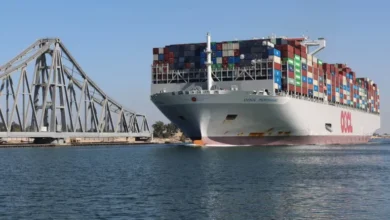
This move is also closely linked to Ankara’s vital interests, as around 14 vessels owned by Turkish companies have remained stranded in the strait’s area since the outbreak of the U.S.–Israeli war against Iran last February. In this context, Turkey’s Ministry of Transport and Infrastructure is conducting intensive diplomatic efforts with Iranian authorities to secure safe corridors for these ships, aiming to reduce the mounting losses faced by the Turkish shipping sector.
Ankara understands that successfully leading or participating in such an operation would represent a new milestone for Turkey as a “stabilizing power” or “peace guardian” in one of the world’s most volatile regions. As international warnings grow over the risk of the current conflict escalating into a broader regional war, Turkey has drawn a red line around “freedom of navigation,” viewing the stability of the Strait of Hormuz as a paramount global interest that transcends narrow regional calculations.
-
Russia gains economic and geopolitical advantages from the war against Iran
-
Could the confrontation between Iran and the United States turn into a war of attrition benefiting China and Russia?
The Turkish position thus offers a practical approach based on the “technical safeguarding” of maritime routes as an alternative to military alignment and armed confrontation. This approach is beginning to resonate with international and regional powers concerned about the consequences of direct escalation with Iran, and which see the Turkish initiative as a technical way out of a complex political and military crisis.
-
Washington Reveals Iranian Plan to Close Strait of Hormuz During War with Israel
-
Israeli report: undeclared Chinese involvement in Iran–U.S. talks
-
Washington Tightens the Maritime Noose Around Iranian Ports