United Kingdom and the Islamic Revolutionary Guard Corps: imminent legislation to ban Iran’s military arm
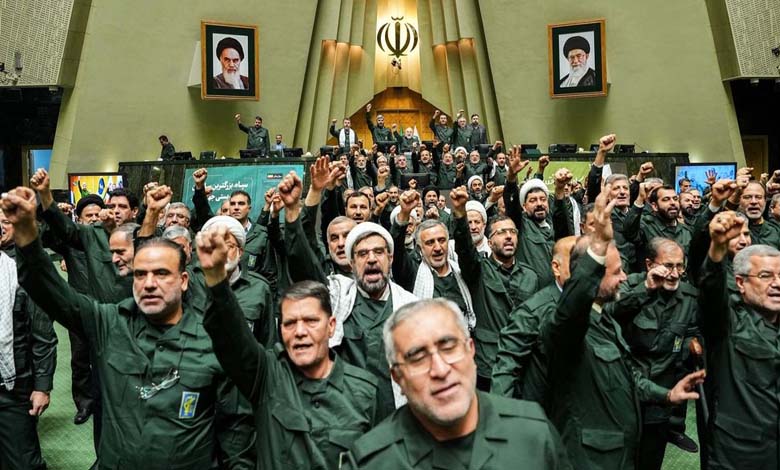
UK Prime Minister Keir Starmer has pledged to introduce, within weeks, legislation to ban the Islamic Revolutionary Guard Corps and designate it as a terrorist organization, in response to demands from Jewish groups and other parties opposed to the Iranian regime.
Starmer announced these plans in an interview with The Jewish Chronicle inside the Kenton United Synagogue in northwest London, which was targeted last Saturday by a firebomb attack claimed by a group linked to Iran.
-
The Islamic Revolutionary Guard Corps attacks two vessels in Gulf waters
-
Most recently Argentina: Countries and blocs have designated the Islamic Revolutionary Guard Corps as a terrorist organization
He added: “We will begin a new parliamentary session in a few weeks and we will put forward this legislation.”
Such a designation would expand the range of criminal charges available to police when investigating offenses suspected of being linked to Iran.
The British government is expected, during the King’s Speech next May, to commit to legislation enabling measures “similar to proscription” against the arms of foreign states. The Islamic Revolutionary Guard Corps is expected to be the first target.
-
Death of the Iranian Revolutionary Guard spokesperson.
-
From the Revolutionary Guard to the negotiating table… Mohammad Bagher Ghalibaf takes center stage in Iran
Quoted by The Jewish Chronicle, Starmer said he was “extremely concerned” by the Iranian regime’s growing use of proxies, adding that legislation allowing the designation of organizations would be introduced “within a few weeks.”
He said: “Regarding malicious state actors more broadly, we need legislation to take the necessary measures, and we will bring this legislation forward as soon as possible.”
The Prime Minister’s announcement follows the European Union decision in February to classify the Islamic Revolutionary Guard Corps as a terrorist organization. The group has repeatedly been accused of involvement in activities sometimes carried out violently by Iranian elements abroad.
-
How Iran’s Revolutionary Guard reorganized Hezbollah’s ranks
-
Washington mobilizes to designate the Revolutionary Guards and Hezbollah as terrorist organizations
A previously unknown group calling itself “The Rightful Ones,” using Iranian propaganda channels, also claimed responsibility for a series of arson attacks, attempted arson, and other attacks on buildings across Europe.
Most of these attacks targeted Jewish institutions, although some financial sector institutions and the London-based Persian-language television channel Iran International, which opposes the Iranian regime, were also among the targets.
An incident involving Iran International was one of four incidents in London since March 23 targeting Jewish sites or Iranian dissidents, currently under police investigation.
-
The economic empire of Iran’s Revolutionary Guard: the dragon guarding its treasure
-
Defections shake Iran’s Islamic Revolutionary Guard Corps
A decisive step
Roger Macmillan, former security director of Iran International and an observer of Iran’s covert activities, said that the United Kingdom had been an exception in not designating the Islamic Revolutionary Guard Corps as a terrorist organization.
He added: “This is a decisive step that will allow police to prosecute more individuals under terrorism laws for supporting influence operations on behalf of Iran.”
Successive governments had refrained from classifying the group, arguing that the Terrorism Act 2000 was designed to ban non-governmental terrorist groups, not parts of foreign governments.
-
The will buried with Khamenei: how the Revolutionary Guard overturned the father’s wish
-
Dispute between the army and the Revolutionary Guard over closing the Strait of Hormuz
The Home Office, responsible for counterterrorism legislation, confirmed the plans, stating that it would do everything necessary to “protect our citizens from harm.”
A Home Office spokesperson said: “Protecting our national security is the government’s first duty (…) We are creating powers similar to proscription to curb malicious state activities. Work on this legislation is progressing at pace, and you can expect to see more very soon.”
Last year, the Labour government ordered a review of the counterterrorism legislative framework to examine which provisions could be applied to state-based threats, explicitly mentioning Iran as a potential target.
-
Pressure to ban the Muslim Brotherhood and Iran’s Revolutionary Guard: the UK House of Lords escalates the debate
-
Iranian Revolutionary Guard drills in the Strait of Hormuz: readiness assessment and confrontation scenarios
Security Minister Dan Jarvis also placed the Islamic Revolutionary Guard Corps under the enhanced tier of the new Foreign Influence Registration Scheme, which requires members of listed groups to register their activities in the UK or face automatic imprisonment.
However, officials privately warned that designating the Islamic Revolutionary Guard Corps could prompt the Iranian government to close the British embassy in Tehran, an important observation point for Western intelligence services.
Some British officials also expressed concern that designating an organization that controls Iran’s nuclear materials could complicate communication and support in the event of a regime change.
-
Europe bans the Islamic Revolutionary Guard Corps: how will Iran’s arms be affected?
-
With major powers backing the move, Europe edges closer to designating Iran’s Revolutionary Guard as a terrorist organization