Africa on edge: how has lithium become an ally of extremist groups?
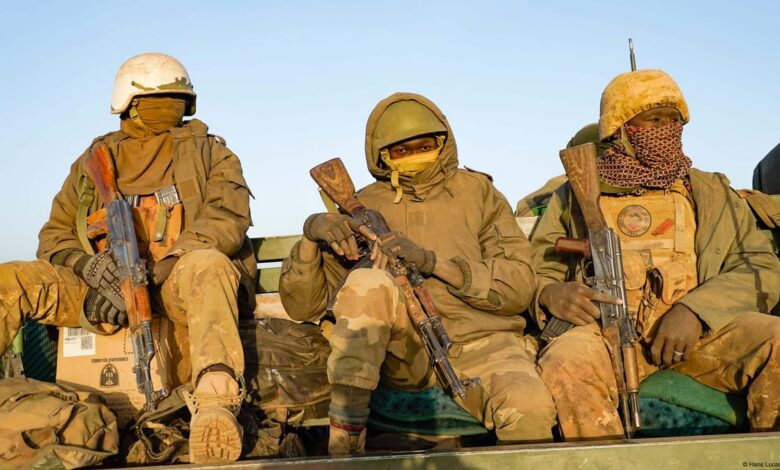
African research sources say competition for minerals among major powers is undermining efforts to combat extremism on the continent. Terrorist groups are reportedly exploiting regional governments’ focus on exploring for rare and valuable minerals to consolidate their positions and armed influence across vast areas.
Analyses of current extremist dynamics in Africa suggest that the epicentre of global terrorism has shifted to the continent, where the scramble for mineral resources is weakening efforts to confront these organisations, let alone eliminate them.
These assessments argue that, a quarter of a century after the 11 September attacks, terrorism has not disappeared. Instead, it has changed its locations and methods, exploiting major international developments, including US-China confrontation, the war in Ukraine and conflict in the Middle East.
Africa accounts for more than half of terrorism deaths
According to the UN reports and Global Terrorism Index cited, Africa accounted for more than 50 per cent of worldwide terrorism deaths over the past five years.
The continent hosts three of the most dangerous extremist groups: Islamic State, whose main centre of activity has reportedly shifted to Africa; Jama’at Nusrat al-Islam wal-Muslimin (JNIM); and al-Shabaab.
It is also home to six of the ten most affected countries: Burkina Faso, the Democratic Republic of the Congo, Mali, Niger, Nigeria and Somalia. This helps explain the statistical contrast between the Sahel and the Middle East.
While terrorist attacks in the Middle East fell by 93 per cent between 2017 and 2025, they increased by 17 per cent in the Sahel over the same period. The region recorded a record 4,043 deaths in 2023 alone.
Rare minerals at the heart of the crisis
Eghosa Osaghae, director-general of the Nigerian Institute of International Affairs, argues that rare and valuable minerals, particularly lithium, have become central to the security equation and the broader strategic challenge. International competition for these resources is no longer merely fuelling geopolitical rivalry; it is also becoming a driver of terrorism’s expansion.
The Manono area in the Democratic Republic of the Congo offers a prominent example. American, Israeli and Chinese companies have competed over its lithium deposits for years, a rivalry that has reportedly made operations against extremist groups considerably more difficult.
International actors have become less willing to coordinate on security, while armed groups exploit the competition to strengthen their presence. A nearly identical pattern is emerging in other resource-rich areas.
According to informed research sources, the Sahel follows the same pattern. The withdrawal of US and French forces between 2022 and 2025 left a security vacuum that Russia quickly moved to fill through defence agreements and private military structures, initially Wagner and subsequently the Africa Corps. In return, Moscow reportedly gained access to resources previously controlled by France. The Russian presence, however, has not prevented terrorist groups from expanding across the region.
The influence of external factors
The same African research and security sources argue that external factors have contributed more to the spread of terrorism than domestic conditions within individual countries.
African groups organised along tribal and clan lines have joined al-Qaeda and Islamic State networks, receiving funding, training and weapons, including drones.
They have also developed their own financing streams through piracy, smuggling, kidnapping and illicit mining. Their connections now extend beyond Africa: African al-Shabaab fighters, for example, have established complex relationships with armed groups in the Philippines and the Houthi militia in Yemen.
According to assessments by African research and security specialists, including Osaghae, the prospect of Africa-based extremist groups planning operations outside the continent is both credible and increasingly likely.
The connection between unemployment and terrorism
Against this backdrop, the structural relationship between unemployment and terrorism cannot be overlooked. Africa’s large population of unemployed young people provides a substantial recruitment pool for extremist groups.
People under 30 account for approximately 70 per cent of the continent’s population. In 2026, more than 270 million children are reportedly out of school, representing over 40 per cent of the global total.
Nigeria has the world’s highest figure, with around 20 million young people outside the education system. Youth unemployment stands at 18 per cent across the continent and exceeds 75 per cent in some countries, such as Djibouti.
This recruitment pool feeds the ranks of armed groups. The estimates cited put al-Shabaab’s strength at more than 15,000 fighters and JNIM’s at approximately 6,000.
Specialists in African affairs urge governments not to rely exclusively on military approaches to counterterrorism. Initiatives such as the G5 Sahel, they argue, proved neither sustainable nor successful, and their failure fuelled anti-Western sentiment.
Instead, they regard good governance as the means to end terrorism, pointing to Northern Ireland after the Good Friday Agreement and, to a lesser extent, Colombia’s 2016 peace agreement with the FARC.
They urge major powers to strengthen state capacity, provide targeted development assistance and use African Union frameworks to regulate mineral trade in ways that curb illicit activity.