Ethiopia seeks to reassure Egypt and Sudan over the Nile without offering guarantees
Cairo stresses that the Grand Ethiopian Renaissance Dam is directly linked to its water security and that cooperation with Addis Ababa requires a legally binding framework safeguarding the rights of downstream countries.
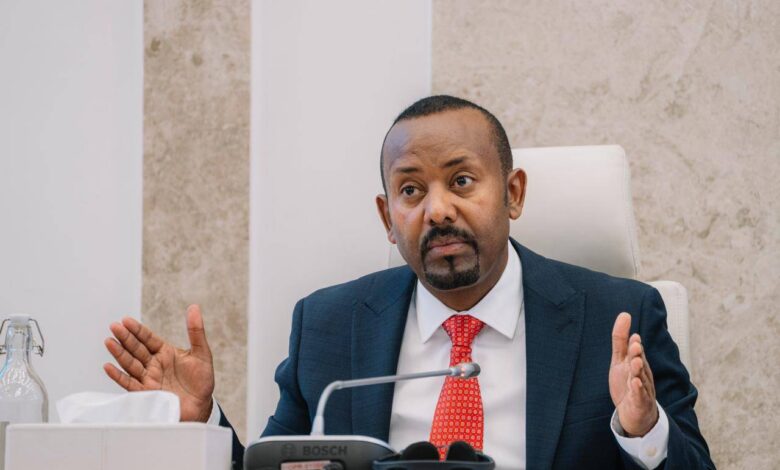
Ethiopian Prime Minister Abiy Ahmed declared that the Nile belongs to downstream countries as well as Ethiopia, pledging to safeguard the rights of Egypt and Sudan in an attempt to reassure both nations. However, his insistence that Ethiopia would not seek permission from any party to utilize the river’s waters brings the dispute back to square one, amid persistent disagreements over the filling and operation of the Grand Ethiopian Renaissance Dam (GERD) and the absence of a legally binding agreement governing its management during droughts and years of water scarcity.
The Ethiopian prime minister’s remarks on Thursday reflected a dual approach that combines recognition of downstream countries’ rights with an assertion of Ethiopia’s right to utilize the Nile’s resources without their prior consent. This position underscores the continuing fundamental disagreement over water rights and river management mechanisms, extending beyond Ethiopia’s stated intentions.
Ethiopia’s assurances remain insufficient to address the core of its dispute with Egypt and Sudan. The crisis centers on the need for clear and binding guarantees concerning the management of the dam and its impact on water flows to downstream countries.
Cairo and Khartoum are calling for a legally binding agreement establishing rules for the filling and operation of the GERD, as well as mechanisms for managing droughts and prolonged periods of water scarcity. They are also demanding information sharing and prior notification of operational decisions that could affect the river’s flow.
Ethiopia, meanwhile, remains committed to its right to utilize the Blue Nile’s resources for development and electricity generation, rejecting what it considers restrictions on its sovereignty over the management of its water resources. Abiy Ahmed’s assurances regarding respect for downstream countries’ rights therefore remain broad political commitments that fall short of the technical and legal guarantees sought by Egypt and Sudan.
The Grand Ethiopian Renaissance Dam officially entered operation in September 2025, following years of negotiations that failed to produce a trilateral agreement on its filling and operation.
On Tuesday, Ethiopian Minister of Water and Energy Habtamu Itefa called on Egypt to improve the management of its water resources and consult Ethiopia regarding its Nile-related projects. He argued that upstream and downstream countries should cooperate in managing their shared resources. His remarks reflect Addis Ababa’s continued adherence to a different approach to river management, centered on asserting its right to development and participation in determining how water resources are utilized.
Egypt maintains that the GERD dispute is directly linked to its national water security. It stresses that cooperation with Ethiopia requires more than political assurances and must be supported by a legally binding framework that safeguards downstream countries’ rights and establishes clear obligations governing the dam’s operation under different hydrological conditions.
On Wednesday, Cairo and Khartoum agreed to defend their water rights and reject unilateral actions in the Nile Basin during Sudanese Prime Minister Kamil Idris’s visit to Cairo, where he met Egyptian President Abdel Fattah el-Sisi and Prime Minister Mostafa Madbouly.
A joint statement emphasized that the two countries’ water security is interconnected and indivisible. It also described the GERD as a continuing threat to both downstream countries in the absence of a legal agreement regulating its operation and ensuring that its effects are addressed during drought periods.
Both sides called on Ethiopia to reconsider its approach and resume cooperation in accordance with international law, particularly the principles of preventing harm, prior notification, consultation, and consensus. They also reaffirmed the need to preserve their water rights and existing water uses under the 1959 Nile Waters Agreement.
Egyptian Foreign Minister Badr Abdelatty reiterated that water security remains a top national priority, given its direct impact on the lives of more than 110 million Egyptians. He stressed the importance of adherence to international law and the rejection of unilateral measures. Italy has also expressed its willingness to facilitate dialogue between Cairo and Addis Ababa.