Broad European initiatives reveal the map of the Muslim Brotherhood’s presence across the continent and its funding sources
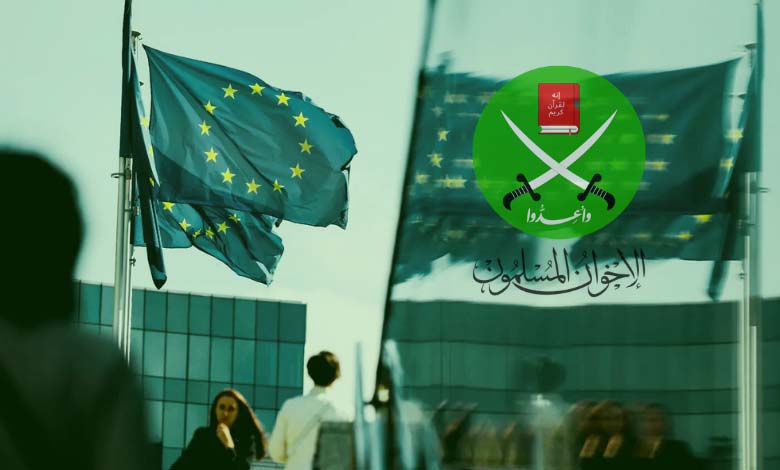
The European arena appears to be entering a decisive phase in confronting the influence of the Muslim Brotherhood. Calls and policy orientations within European Union institutions have intensified in favor of designating the group itself as a terrorist organization, rather than merely banning associations and affiliated entities. These developments have accelerated recently amid growing Western concern over the ideological and financial risks allegedly posed by the organization and the perceived need to place it on the European list of terrorist organizations.
-
Germany’s Muslim Brotherhood between delayed ban and soft confrontation: Is the European equation about to change?
-
Women Exploited by the Muslim Brotherhood to Circumvent European Immigration Laws
A series of developments indicates that European measures against the Muslim Brotherhood are no longer slow or selective as in the past. Instead, they now reflect a clearer strategy aimed at removing the organization from the legal ambiguity that, for years, enabled it to establish itself within European societies and political systems through “religious associations and organizations” that sometimes functioned as indirect extensions of the group.
In Brussels, the headquarters of the European Commission witnessed a demonstration calling for the inclusion of the Muslim Brotherhood on the EU terrorist list. Organizers described the group as an “expansionist and destructive ideology” that exploits legal loopholes to finance its activities, infiltrate institutions, and foster divisions within European society.
-
European awakening on the Muslim Brotherhood issue: seven countries on the path to counteraction
-
France Leads European Initiative to Ban the Muslim Brotherhood… What’s New?
Speakers also strongly criticized the fact that entities linked to the group had received millions of euros from European Union funds through civil financing programs, a matter that critics regard as a troubling misuse of European public resources.
In what may be considered one of the most significant steps at the continental level, the French National Assembly voted on 22 January 2026 by a clear majority in favor of recommending the inclusion of the Muslim Brotherhood on the European terrorist list. Lawmakers described the organization as a “global ideological threat” to European Union values and civil law, arguing that it promotes a politicized religious separation and challenges the rule of law.
-
Analysts reveal the danger of Muslim Brotherhood expansion in European Societies
-
The curse of the Muslim Brotherhood haunts European parties that supported them
For its part, Germany announced the ban of the Islamic association “Inter Aktiv,” described as linked to the Muslim Brotherhood. Authorities stated that the organization opposes the constitutional order, rejects democratic principles, and advocates the establishment of a caliphate. Searches were also conducted at other institutions for similar reasons, signaling a stricter German oversight aimed at curbing the group’s presence within its territory.
Meanwhile, the presence of the Muslim Brotherhood in the United Kingdom remains one of the most prominent European concerns. London is widely regarded as one of the organization’s main strongholds on the continent, reflected in the existence of approximately sixty organizations and associations linked to the group within British civil society. Estimates suggest that the organization controls financial assets amounting to billions of dollars through direct and indirect activities.
-
The Emergence of Women’s Role in European Muslim Brotherhood Networks, Especially in Britain
-
The Efforts of the Muslim Brotherhood to Gain Control of European Capitals
These developments unfold amid growing concern in countries such as Austria and Ireland, as well as across the European Union as a whole, regarding the expanding influence of the Muslim Brotherhood within Muslim communities and its potential impact on social and political cohesion. Historical mappings of the group’s presence and networks across Europe indicate that this influence is not a temporary phenomenon but rather a complex web of organizations and relationships extending from the 1950s to the present day.
-
Did the Muslim Brotherhood negatively affect European sympathy for the Palestinian cause?
-
French campaigns to ban the Muslim Brotherhood in the European Union… Details