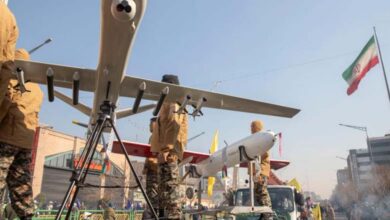
Could the confrontation between Iran and the United States turn into a war of attrition benefiting China and Russia?
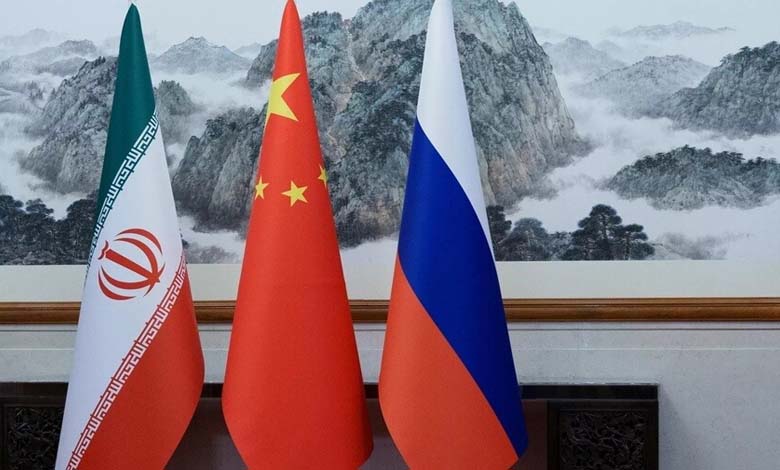
Experts believe that the United States’ gamble on a swift and decisive war against Tehran has failed, emphasizing that time is strategically working in Iran’s favor.
As the Israeli-American war against Iran continues and Tehran responds by targeting Israel as well as what it describes as American bases and interests in neighboring countries, the scope of escalation has expanded. Questions have emerged regarding the trajectory of the conflict, the possibility that it may evolve into a prolonged war, and the positions of China and Russia in relation to this confrontation.
-
Are the UAE Playing a Mediation Role Between Iran and the United States?
-
Excessive demands: Iran reveals obstacle to agreement with the United States
Two experts in international relations believe that Iran possesses numerous sources of strategic strength that could push the confrontation toward a war of attrition, a scenario that may align with the interests of both China and Russia.
The two analysts assert that the United States’ reliance on a rapid and decisive war against Tehran has failed, adding that time is strategically on Iran’s side.
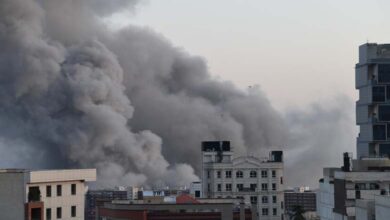
Since Saturday, Israel and the United States have continued their military offensive against Iran, which has resulted in hundreds of deaths, including Supreme Leader Ali Khamenei and several security officials. Tehran has responded with waves of missiles and drones launched toward Israel.
-
New sanctions imposed by the United States, Britain, and Canada on Iranian officials… Details
-
New Talks – United States and Iran Revive Nuclear Agreement Negotiations Once Again
Iran has also carried out attacks against what it describes as “American interests” in several Arab countries, some of which have resulted in casualties and material damage to civilian infrastructure, including ports and residential buildings.
Moroccan international relations expert Ali Fadili states that “the resilience of the Iranian regime in the current war is largely linked to the extent of its prior preparation for such a confrontation.”
He adds that Tehran’s response to the initial Israeli-American attacks suggests that it had been preparing for this scenario since the end of the war in June of last year.
-
NATO Defenses Intercept Ballistic Missile Launched from Iran Toward Turkey
-
The United States will sanction more than two dozen people and entities about Iran’s nuclear
In June 2025, Israel, with American support, launched a twelve-day attack on Iran targeting military sites, nuclear facilities, and civilian infrastructure, as well as carrying out assassinations of leaders and scientists. Iran responded by striking Israeli military and intelligence facilities using missiles and drones.
Fadili considers that the Iranian response was “rapid and surprising,” noting that the assassination of the supreme leader did not have a “significant impact” on the decision-making process, “because the system had already anticipated the possibility of its leadership being targeted.”
Regarding the possible course of the conflict, the Moroccan expert states that its outcome does not depend on a single party but rather on the ability of both sides to endure a prolonged confrontation.
-
Mojtaba Khamenei’s Survival of Assassination Attempt Redraws Iran’s Leadership Map
-
War Objectives in Iran Portend Rift Between Trump and Netanyahu
He believes that a war of attrition could benefit Tehran, as it may place the American administration under domestic pressure, especially since U.S. President Donald Trump built part of his political capital on criticizing foreign military interventions.
He adds that “the American bet on a swift war has failed,” arguing that the time factor is strategically working in Iran’s favor.
He also notes that “the Iranian decision regarding the management of the war was taken before the assassination of the supreme leader, by granting Iranian forces operational freedom rather than waiting for centralized decision-making.”
-
Shooting Down Two Iranian Aircraft in Qatar Changes the Rules of Engagement in the Gulf
-
The Major Wave Has Not Yet Begun… Latest Developments in the War in Iran
For his part, Moroccan political science professor Khaled Yaimout explains that Iran essentially possesses a defensive military capability that has been developed since the late 1980s based on a defensive doctrine.
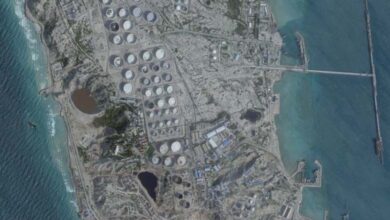
He adds that the Strait of Hormuz represents one of Iran’s most important strategic assets due to its critical location and its influence on global trade flows.
The Strait of Hormuz is one of the world’s most vital maritime passages, with nearly 20 percent of global oil supplies passing through it, making it a major strategic pressure point for Iran in any regional confrontation.
-
Iran Strikes Ignite a Constitutional Battle Between Congress and the White House
-
Tehran confirms while Grossi denies targeting of Iranian nuclear sites
Yaimout also points out that Iran “has not yet used all of its capabilities,” noting that its ground forces possess significant capacities both in direct confrontation and through units trained in urban warfare and special operations, “which could make them a formidable force if the confrontation expands.”
He believes that the United States is aware of these realities and considers it unlikely that Washington would engage in a direct ground confrontation with Iran, emphasizing that the United States is primarily seeking to weaken Tehran.
Regarding possible scenarios, Yaimout predicts that the first phase of the confrontation will likely involve indirect conflict based on long-range strikes using air power, missiles, or naval capabilities, often described as the “long arm” strategy.
-
Interceptor missiles: an American dilemma troubling the Pentagon amid the war on Iran
-
Iran shuts the door on negotiations with the United States
He notes that Iran “will continue targeting Israel and military bases in the Gulf region,” while also suggesting the possibility of targeting certain naval vessels if they approach in a particular manner within international waters.
According to the Moroccan academic, this appears to be the most likely scenario in the initial phase of the conflict.
On the other hand, Yaimout believes that China and Russia may provide assistance to Iran, but he considers it unlikely that they would directly enter the war.
-
Iran after Khamenei: American red lines
-
The end of the war with Iran: three scenarios between collapse and negotiation
He explains that Beijing may view the conflict as a strategic opportunity and may prefer a prolonged war that would allow it to observe the weapons and military technologies used by Washington.
He emphasizes that prolonging the conflict would increase the financial and military burden on the United States, which could serve Chinese interests within the broader framework of strategic competition between the two powers, suggesting that Beijing would likely remain in the position of a “benefiting observer.”
Relations between the United States and China have witnessed an intensification of multidimensional strategic competition, including military, technological, and economic spheres, prompting Beijing to closely monitor any conflict that could exhaust American capabilities.
-
Here is the Iranian Supreme Leader’s complex… Satellite images reveal extensive destruction
-
After Strikes Targeting the Supreme Leader and the President: Key Pillars of the Iranian Regime
Meanwhile, expert Ali Fadili believes that a prolonged war of attrition could also serve Russian interests, as it might push the United States to shift part of its attention and military resources from Ukraine to the Middle East.
He adds that such a shift could weaken Ukrainian forces and grant Russia greater room for maneuver, allowing it to take advantage of American engagement in the regional conflict to achieve significant advances on the ground.
Since February 24, 2022, Russia has been conducting a military offensive against its neighbor Ukraine and has conditioned its end on Kyiv abandoning its intention to join Western military alliances, a demand that Ukraine considers interference in its internal affairs.
-
A Major Strike Force: More Than a Dozen U.S. Warships Participate in the War on Iran
-
The War on Iran: One Operation, Two Names