Did artificial intelligence applications contribute to reaching Khamenei?
At a time when algorithms have become essential partners in military decision-making rooms, the debate is no longer about whether the U.S. military employs artificial intelligence, but rather about the extent to which these systems are involved in directing precision strikes against senior leaders of rival states.
Just hours before U.S. President Donald Trump announced the termination of federal contracts with the company Anthropic, describing it as a threat to national security, press reports revealed that the company’s most prominent tool, Claude, was already operating within sensitive military operations centers.
According to the Wall Street Journal, U.S. military commands around the world, particularly U.S. Central Command (CENTCOM), rely on artificial intelligence tools for critical missions, including conducting detailed intelligence assessments, analyzing and prioritizing potential targets, and simulating complex battle scenarios.
-
Tehran and Washington Resume Nuclear Talks Under the Pressure of Red Lines
-
Diplomacy races against rising tensions: anticipation of Muscat talks between Washington and Tehran
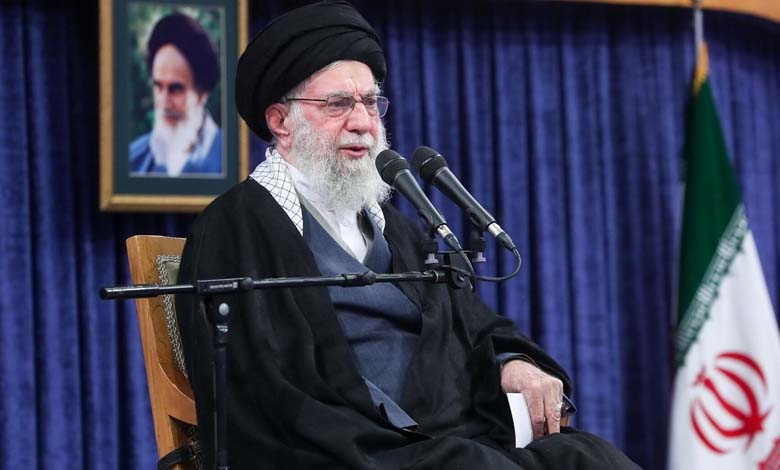
Former Iranian Supreme Leader Ali Khamenei
Although Central Command did not explicitly confirm the names of the systems used, informed sources highlighted the pivotal role played by large language models in analyzing communications and intercepting sensitive data.
Domestically, tensions escalated within the Pentagon over several months regarding the limits of using Anthropic’s language models in the military sphere. As relations deteriorated, the department turned to domestic alternatives such as OpenAI and Elon Musk’s company xAI, operating in classified work environments.
However, phasing out Claude’s technologies may take up to six months due to their deep integration into the systems of major partners such as Palantir.
-
Washington Targets Tehran with Harsh Sanctions as Araghtchi Demands War Reparations
-
Washington and Tehran discuss a ‘political ceasefire’
The most pressing question, however, goes beyond technical details and concerns how these systems are used to target senior political leaders. The gravity of employing artificial intelligence in warfare became unprecedentedly evident during the joint operation targeting Iranian Supreme Leader Ali Khamenei, whose death Iran officially announced on March 1, 2026.
According to a New York Times report, the operation was made possible through close intelligence cooperation between the U.S. Central Intelligence Agency and Israel. U.S. intelligence reportedly tracked Khamenei’s activity patterns for months until identifying a high-level Iranian leadership meeting scheduled at the government complex in central Tehran.
-
After Strikes Targeting the Supreme Leader and the President: Key Pillars of the Iranian Regime
-
Excessive demands: Iran reveals obstacle to agreement with the United States
At this stage, artificial intelligence emerged as a decisive intelligence accelerator. Systems similar to Claude reportedly played a role in analyzing vast volumes of intercepted communications and documents, expediting the precise identification of the meeting’s location through instant translation, content analysis, integration of scattered data from multiple sources, and detection of hidden patterns within streams of digital signals.
Armed with highly credible information, Washington and Tel Aviv allegedly decided to alter the timing of the strike, shifting it from night to broad daylight to exploit a window of opportunity and eliminate top regime leaders in a single blow.
-
Bomb Diplomacy: The Douhet Strategy and Washington’s Options on Iran
-
U.S. military signals imminent operation against Tehran
As tensions mounted, reports indicated that Khamenei had moved to a network of heavily fortified shelters in Tehran, renewing discussion about the importance of programs such as Maven, developed by the Department of Defense to process satellite imagery and drone data.
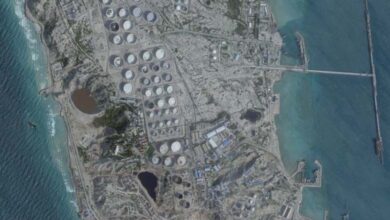
These systems rely on analyzing radar data and advanced sensors to detect patterns invisible to the human eye. They do not “see” underground in the conventional sense, but infer through complex signal processing the likelihood of cavities, tunnels, or unusual activity. Satellite images broadcast by Israel’s Channel 12 reportedly showed extensive destruction at a complex linked to the Supreme Leader, confirming the precision of the strike despite sophisticated fortifications.
-
Israeli sources rule out a Washington–Tehran agreement in Geneva
-
Israel and the Last Hour Scenario: Iran Will Launch All Its Missiles
Former Iranian Supreme Leader Ali Khamenei
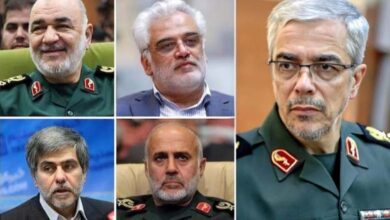
Yet the use of artificial intelligence extends beyond pursuing individuals. It reaches a deeper strategic dimension involving the prediction of the future of power itself, as illustrated by a research initiative conducted by the company AskIt, led by co-founder Neil Tzur. A model was developed to simulate the thinking of 122 leaders of Iran’s Revolutionary Guard Corps in order to anticipate the shape of succession after Khamenei.
The findings indicated a clear inclination toward a military option over traditional religious succession, reflecting a shift in the internal balance of power. This type of modeling transforms artificial intelligence from a tactical tool into a strategic microscope capable of dissecting elite psychology and extracting latent trends behind closed doors.
-
Washington continues military build-up to pressure Iran
-
On the eve of the Muscat talks, five milestones paved the way for Iran and Washington’s return to negotiations
The profound irony lies in the fact that the technology used today to analyze adversaries’ behavior may in turn reshape the very nature of political decision-making. If algorithms can uncover patterns of authority and accelerate the targeting of individuals, they simultaneously introduce a new layer of strategic ambiguity regarding who controls whom, the human or the machine.
In reality, artificial intelligence is no longer merely a support tool in military operations; it has become a hidden layer within the architecture of modern power. In the corridors of closed systems, the central question may no longer be who will succeed the Supreme Leader or how he is targeted, but who possesses the most advanced algorithm.
Amid these transformations, the question remains open concerning the ethical and legal constraints governing the use of intelligent systems capable of determining the fate of individuals and entire states, in an equation where the first battle has become algorithmic before it is military.
-
Khamenei speaks of a coup attempt and outlines the response to any U.S. strike
-
Trump and Iran: three military paths on the decision table
-
Washington open to dialogue with Iran, while keeping its finger on the trigger