Forward defense turns against Iran: growing weakness and escalation without horizon
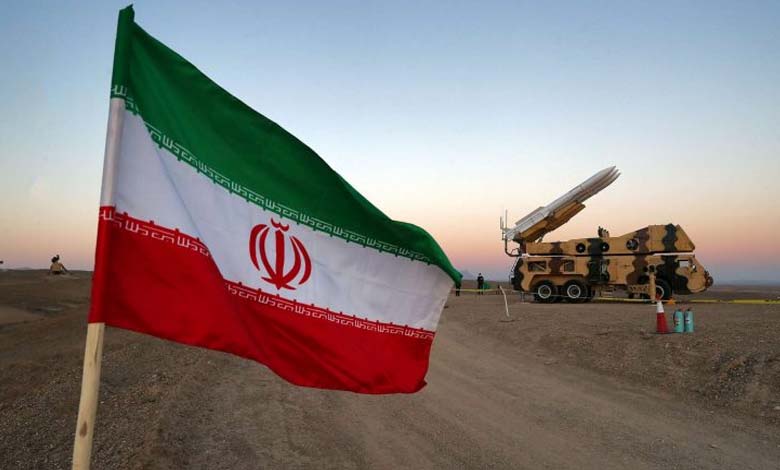
From Lebanon to within Iran itself, the country now finds itself constrained by a strategy of its own making, entering a spiral of escalation “without horizon.”
In a recent study, the think tank Chatham House stated that the doctrine designed to protect Iran and keep the threat of war away from its borders has gradually turned into a major factor drawing it into an open conflict that threatens to weaken it and reshape regional power balances.
The study notes that Tehran has, for more than four decades, adopted what it calls “forward defense” or “preemptive defense,” an approach that took shape after the Iran-Iraq War (1980–1988).
During that war, Iran found itself relatively isolated against a regime backed regionally and internationally, prompting its leaders to draw a crucial strategic lesson: the need to shift confrontation lines beyond its borders and to develop unconventional deterrence tools to reduce the likelihood of direct war.
Accordingly, Iran invested in developing its missile program and, more importantly, in building a regional network of armed allies later known as the “Axis of Resistance,” according to the study.
Lebanon served as the first and most prominent model, with the establishment of Hezbollah in the 1980s, before this approach expanded to Iraq after 2003, Syria after 2011, and Yemen following the rise of the Houthis in 2014, in addition to ties with Palestinian armed factions.
From Tehran’s perspective, this axis constituted an effective deterrence system: a multi-front network capable of surrounding Israel and exhausting Iran’s adversaries without dragging it into a full-scale war.
By the mid-2010s, Iran was boasting of its influence in four Arab capitals, viewing this as evidence of the success of its strategy to expand its strategic depth.
The cost of expansion
However, this expansion came at a cost. Iran paid a heavy financial and military price to sustain this network while simultaneously facing severe economic sanctions.
Its involvement in regional conflicts also contributed to deepening the fragility of Arab states, from Iraq to Syria and Yemen, reinforcing Tehran’s image as an expansionist power in the eyes of its regional rivals.
More importantly, this policy reshaped Israel’s perception of Iran from a containable adversary into an existential threat.
Following the attacks of October 7, 2023, which demonstrated an unprecedented capacity of Iran-aligned groups to strike deep inside Israel, Tel Aviv adopted a new strategy focused on dismantling this network rather than containing it.
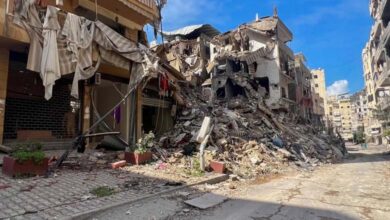
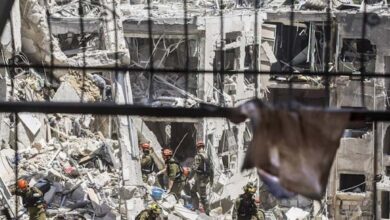
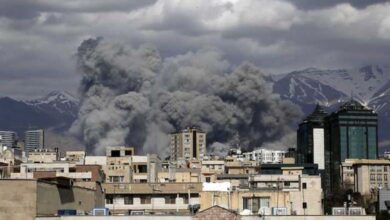
Gradually, the conflict moved beyond the realm of a “shadow war” into open confrontation. Israeli military operations expanded from Gaza to Lebanon and Syria, and strikes against direct Iranian targets intensified, culminating in the twelve-day war in the summer of 2025, marking the peak of this escalation.
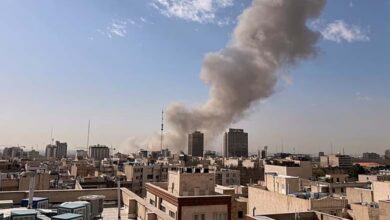
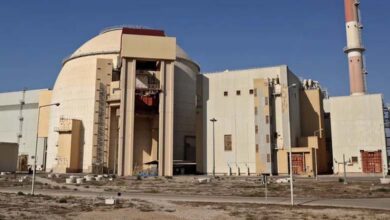
With U.S.-Israeli strikes targeting Iran’s nuclear program and missile infrastructure, the confrontation entered an unprecedented phase.
At this point, the limits of “forward defense” became evident. Instead of keeping the conflict away from Iranian territory, the regional network contributed to creating multiple arenas of escalation, providing Israel and the United States with justification to broaden the scope of confrontation.
Thus, this defensive tool turned into what resembles a “strategic trap” that redirected the conflict inward toward Iran.
At the same time, the components of the “Axis of Resistance” have suffered severe blows: Palestinian factions incurred significant losses in Gaza, Hezbollah faces continuous military pressure, and the Houthis are subjected to repeated strikes.
Meanwhile, the collapse of the Syrian regime weakened one of the key pillars of this axis. As a result, these actors are now more focused on survival than on functioning as effective instruments of Iranian influence.
Although these networks are unlikely to disappear easily due to their local roots, Iran’s ability to finance and coordinate them is expected to decline under mounting military and economic pressure. The current war targets not only Iran’s military capabilities but also seeks to undermine its entire regional architecture.
Economic challenges
Economically, Iran faces an increasingly complex situation. In addition to long-standing sanctions, the war imposes new burdens, including declining trade, rising defense costs, and potential reconstruction needs.
Politically, sustained external pressure may exacerbate internal challenges and place the regime under unprecedented strain.
Whatever the outcome of the conflict—whether it ends through a negotiated settlement or deeper transformations—the most likely result appears to be a weakened Iran, less capable of maintaining its previous level of regional influence. This does not imply its disappearance from the equation, but rather its transition into a phase of strategic repositioning.
The study concludes that the current crisis reveals that “forward defense,” designed as a protective shield, contained the seeds of its own contradiction: by expanding spheres of influence, it also expanded arenas of conflict and tied Iran’s security to networks whose escalation dynamics are difficult to control.