France and the fight against terrorism: 93 attacks thwarted since 2012, legislation at the forefront
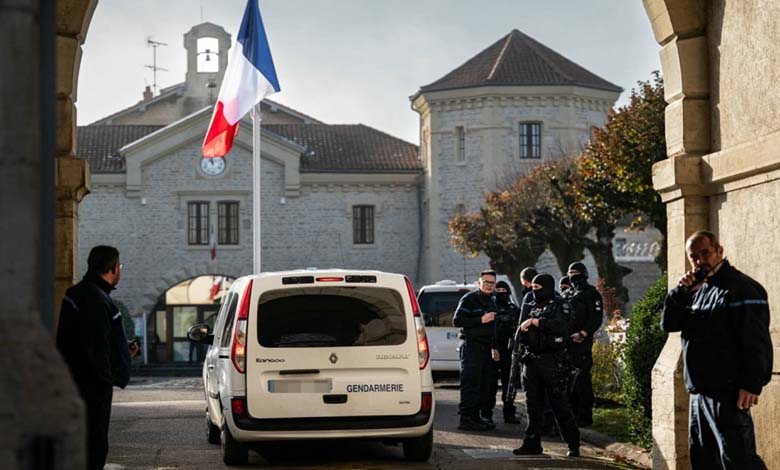
France has been engaged in a long-standing battle against terrorism, a struggle that has yielded tangible results with the disruption of numerous attacks, supported by strengthened legislation and expanded resources.
In this context, France has successfully foiled 93 planned attacks since 2012, including 62 since 2017, according to Interior Minister Laurent Nuñez, speaking during a parliamentary question session.
-
The Muslim Brotherhood in France Practices Judicial Terrorism
-
Proposal to designate the Muslim Brotherhood as a terrorist organization in Europe: Is France accelerating the ban?
In his briefing, the minister, who previously served as Paris police chief, reviewed the evolution of counterterrorism efforts on French soil, while commending the significant increase in resources devoted to this fight since 2015.
Opening his remarks with a brief historical overview, he told lawmakers: “Eleven years ago, an attack struck the newspaper Charlie Hebdo. The following day, Clarissa Jean-Philippe was killed in Montrouge, and the day after that, the Hyper Cacher attack took place.”
-
The Muslim Brotherhood and La France Insoumise: a discreet path of infiltration into Parliament
-
The United States and Terrorism in Mali : A Crucial Test
He added that “since 2015, everything has changed in this country with regard to detecting the terrorist threat. Everything evolved under the presidency of François Hollande. Then, with the election of Emmanuel Macron, we significantly strengthened our resources to confront the terrorist threat.”
Nuñez highlighted enhanced capabilities in “intelligence services,” “financial resources,” “screening,” “surveillance,” and “international cooperation.”
Presenting the figures, he stated: “We have foiled 93 attacks in France since 2012, including 62 since 2017,” adding that “migration flows are under control.”
-
Terrorism in Mali: Al-Qaeda Targets “Dozo” Hunters with Drones
-
The Muslim Brotherhood specter cancels a pro-Palestinian conference in France
Decline in terrorist attacks
In February 2025, the counterterrorism department of France’s General Directorate for Internal Security announced that it had thwarted 79 planned attacks since 2015.
In a statement at the time, the DGSI said: “Since 2015, we have disrupted 79 planned attacks. The General Directorate for Internal Security prevented 71 of them… We are confident, on many occasions, that we have thwarted real attacks and saved lives, dozens of lives.”
It cautioned, however, that “the terrorist threat remains very high in France.”
-
Extremism knocks on France’s door amid political crisis
-
Suspension of Cooperation and Expulsion of Diplomats: A New Crisis Between France and Mali
According to the statement, “the situation in the Middle East and in other parts of the world calls for heightened vigilance and may fuel the desire to carry out attacks against our country.”
A counterterrorism official told the French daily Le Figaro, speaking anonymously: “The decrease in terrorist acts compared with the 2015–2017 period, and the success of the Olympic Games, may cause us to forget that the threat still exists.”
He added that the profiles of perpetrators have changed: “Seventy percent of individuals arrested since 2023 are under the age of 21.”
As for minors, they are “very rare,” but officers sometimes encounter “fourteen-year-old teenagers with strong determination.” These adolescents are often “unknown to the police, particularly because of their young age,” and therefore fall outside the DGSI’s monitoring scope.
-
France and Senegal: a balanced partnership beyond the colonial legacy
-
France and Africa’s Memory: The Compass of Acknowledgment Points Toward Cameroon
Legal framework
France’s judicial arsenal against terrorism has been significantly strengthened, particularly following the attacks that struck Paris and the suburb of Saint-Denis on November 13, 2015.
Since then, the French Parliament has continuously adopted new legislation, all aimed at reinforcing counterterrorism efforts and tightening criminal penalties against those involved in attacks that affected several French regions, including the city of Nice, the town of Villejuif, Rambouillet, and even Notre-Dame Cathedral in the heart of Paris.
The legislative framework for counterterrorism began to evolve under former president François Hollande (2012–2017) and was later consolidated and expanded under President Emmanuel Macron through the adoption of additional stringent laws.
-
France ends its chapter in Senegal… Dakar faces the challenges of sovereignty and security gaps
-
Kuwait and France Strengthen Economic Cooperation with Strategic Partnership Agreement
Although laws criminalizing terrorism date back to the nineteenth century, a major development occurred for the first time in 1986, following a series of terrorist attacks in Paris that year.
These events prompted French authorities to pass the first dedicated anti-terrorism law on September 9, 1986, establishing the legal foundation for counterterrorism policy in France.
In recent years, President Hollande declared a state of emergency for an initial period of twelve days following the November 2015 attacks, a measure later extended by Parliament after the Nice attack in July 2016.
-
The Story of Two Grandchildren May Reopen the Genocide File in Gaza… Will France Take Action?
-
Larcher’s Visit to the Moroccan Sahara Reflects France’s Interest in Strengthening Cooperation with Rabat
The state of emergency law allows French police to place terrorism suspects under house arrest, conduct searches at any time, and dissolve associations deemed to threaten or undermine public order.
In previous remarks to French media, constitutional law expert Jean-Philippe Derosier commented on the rapid evolution of security legislation, stating: “Yes, we have seen an increase in the number of counterterrorism laws since 2015. This is logical given the deteriorated security situation we are experiencing.”
Subsequently, the French Parliament passed a law on “the prevention and suppression of threats to public order and the fight against terrorist acts in public transportation,” following the Brussels attack in March 2016.
-
France Fights ISIS in Syria: Strikes on “Specific Targets”
-
Reaching by Any Means: How the Muslim Brotherhood Penetrated France
This legislation grants public transport employees the authority to search passengers, as well as their luggage and clothing.
Later, a law adopted in 2017 empowered the government to implement certain security measures that had previously been possible only under a state of emergency, including the establishment of security perimeters around public events, restrictions on movement, and the closure of places of worship suspected of promoting extremism, all without prior judicial authorization.
Finally, the so-called “separatism” bill proposed in 2025, which tightened rules on foreign funding linked to the Muslim Brotherhood and introduced new offenses related to incitement to hatred, represents one of the most prominent elements of Paris’s strategy against extremism, often viewed as the underlying driver of terrorist attacks.
-
France: Number of Muslim Brotherhood members has doubled since 2019, from 50,000 to 100,000
-
Analysts Reveal France’s Stringent Measures to Confront the Brotherhood Threat in France
-
Has Terrorism Penetrated Africa to Plunder Its Wealth?