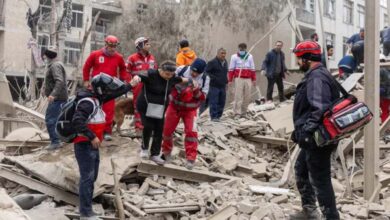
Geopolitical risks unsettle global markets after Khamenei’s death
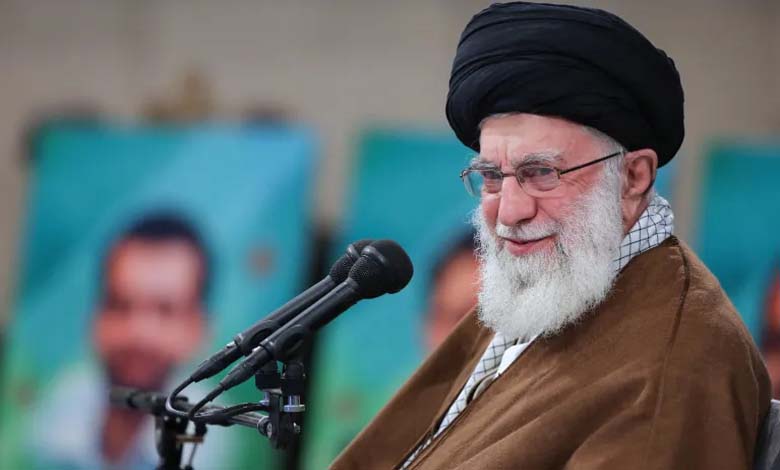
Experts: a prolonged closure of the Strait of Hormuz could push prices beyond $100 per barrel, a scenario several capitals warn could trigger global inflationary repercussions.
The conflict in the Middle East has shifted from a marginal risk in investors’ calculations to a major source of concern weighing on global markets, amid fears of a power struggle within Iran and the possibility of a protracted war whose effects could extend to international trade, inflation, and financial markets.
-
Khamenei speaks of a coup attempt and outlines the response to any U.S. strike
-
Khamenei trapped between limited options: painful concessions or regime collapse?
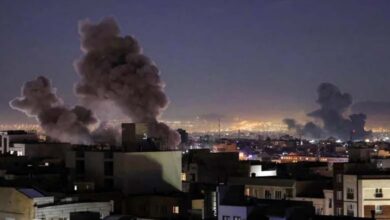
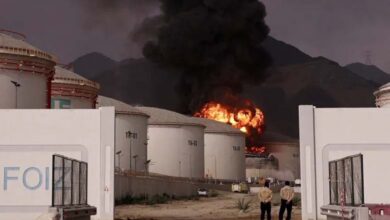
According to reports, U.S. and Israeli strikes resulted in the death of Iran’s Supreme Leader Ali Khamenei, creating geopolitical turmoil that quickly reverberated across markets. Tehran responded by shelling Gulf cities, while airlines suspended flights and oil tankers halted transit through the Strait of Hormuz, one of the world’s most critical energy arteries.
On Sunday, Russia’s Foreign Ministry warned that closing the Strait of Hormuz to navigation could cause significant disruption to global oil and gas markets, as military tensions escalate in the region and shipping is disrupted along one of the world’s most strategic energy corridors.
-
Khamenei calls protesters agents and accuses them of trying to appease Trump
-
British newspaper: Khamenei prepared a plan to flee Iran
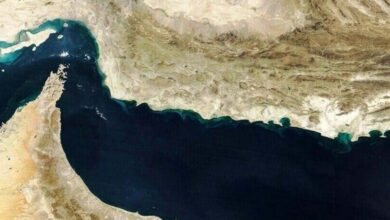
The Russian warning followed reports from trade sources that a large number of tanker owners and energy and trading companies had suspended shipments of crude oil, fuel, and liquefied natural gas through the strait after the United States, Israel, and Iran announced its closure to navigation.
Roughly one-fifth of global oil supplies pass through the strait, including major exports from Saudi Arabia, the United Arab Emirates, Iraq, Kuwait, and Qatar, as well as LNG shipments, making any disruption a significant pressure factor on international markets and supply chains.
-
Lessons from War: From Khamenei to Kim – A Strategic Gap Shifting the Nuclear Balance
-
Khamenei’s First Appearance Following the Truce with Israel
Moscow confirmed it had received news of the death of Iran’s Supreme Leader Ali Khamenei and several senior officials “with profound regret,” condemning what it described as political assassinations and the targeting of sovereign state leaders, and considering it a blatant violation of international law and the principles governing relations between states.
Russia called for de-escalation, an end to hostilities, and a return to diplomacy, reflecting strategic concern, particularly as Tehran is an important partner for Moscow in several regional dossiers. Observers believe that the absence of a strong Russian response to President Donald Trump’s policies indicates the Kremlin’s desire to avoid direct confrontation with Washington despite the impact of developments on its regional influence.
-
Iran’s Regime Focused on Finding a Successor to Khamenei
-
Trump Pulls the Trigger Back: Why Did He Reject Israel’s Proposal to Assassinate Khamenei?
Meanwhile, the OPEC+ alliance announced a modest increase in oil production of 206,000 barrels per day starting in April, in an attempt to calm markets after disruptions to Middle Eastern energy flows. However, analysts argue that this increase, representing less than 0.2 percent of global supply, would not be sufficient to offset any major shortfall if shipping disruptions persist, especially given limited spare production capacity among most alliance members, except for a few major producers.
Market data indicate that Brent crude prices have already risen this year, reaching their highest levels in months, driven by fears of an expanding conflict. Traders said prices jumped by 8 to 10 percent in informal Sunday trading, approaching $80 per barrel, underscoring the market’s sensitivity to any security developments in the Gulf.
-
Khamenei Responds to Washington Over Uranium Enrichment
-
Khamenei, Iran’s Illness and the Obstacle to Any Agreement with Washington
Sources also reported that shipments of oil, gas, and other commodities had effectively halted since Saturday, as shipping companies received notifications of the area’s closure, with hundreds of vessels anchored in ports awaiting clarity. Analysts believe the real impact of any production increase will remain limited as long as shipping routes are disrupted, since markets primarily respond to actual supply flows rather than nominal decisions.
Experts stress that a prolonged closure of the strait could drive prices beyond $100 per barrel, a scenario that several capitals warn could have global inflationary consequences. In this context, energy markets appear to be walking a tightrope between producers’ decisions and geopolitical developments, where a single event in the Gulf can redraw the global price map within hours.
-
Khamenei Urges Strengthening Military Power to Curb Trump’s Threats
-
After Iraqi Factions Abandoned It, Khamenei: Iran Does Not Need Proxies in the Region
Analysts see the primary risk in the uncertainty surrounding the future of governance in Iran, given the complexity of the political system, the weight of the Islamic Revolutionary Guard Corps, and the ideological base supporting it. These factors make predicting the political and economic trajectory difficult, heightening market sensitivity to sudden developments.
Rong Ren Goh, portfolio manager in the fixed income team at Eastspring Investments, said potential risks in the Middle East have clearly risen, explaining that markets may reprice assets based on a “system shock” scenario rather than a limited military reaction if Iran does not signal willingness to negotiate.
-
“Without Amplification or Minimization”: Israel’s Attack and the Response According to Khamenei and Officials
-
Iranian Parliament Speaker: “The Main Pillar of the Lebanese People is Leader Ali Khamenei!”
Oil prices and inflation under scrutiny
Brent crude prices have risen by about 20 percent since the beginning of the year to nearly $73 per barrel, alongside increased demand for hedging instruments such as gold and U.S. Treasuries. Analysts attribute part of this trend to geopolitical tensions in the Middle East and to Donald Trump’s volatile economic policies.
Gold reached record levels last year and has continued climbing by about 22 percent since the start of 2026, while the S&P 500 index has posted only modest gains of around 0.5 percent, reflecting investor caution despite a partial appetite for risk.
-
Khamenei acknowledges a blow to the resistance front with Sinwar’s death
-
Khamenei leaves his hideout, threatening Israel with more attacks
Barclays analysts noted that history shows investors tend to sell geopolitical risk premiums when conflicts erupt. However, current concern lies in the possibility that markets have become overly confident in their ability to absorb shocks, potentially underestimating scenarios of broad escalation.
They added that other factors could amplify any sell-off if the conflict widens, including fragility in private credit markets and growing questions about valuations of artificial intelligence companies. They advised against rushing to buy equities on any immediate dip, arguing that risk-reward levels remain unattractive and that buying opportunities may emerge only if markets fall by more than 10 percent.
-
Who is Mojtaba Khamenei, before whom Iranian leaders bow?
-
Khamenei Urges Continued Cooperation with Iraq After Raisi’s Era
Expected volatility and diverging outlooks
Global markets are expected to experience notable volatility in the coming days. Charles Myers, founder and chairman of Signum Global Advisors, said investors had been preparing for a limited strike, but the unexpected scenario was a large-scale attack aimed at regime change.
William Jackson of Capital Economics predicted that a prolonged conflict affecting supply could push oil prices to around $100 per barrel, adding between 0.6 and 0.7 percentage points to global inflation.
-
Khamenei’s Son, “The Man in the Shadows,” Pursues Succession After Raisi’s Death
-
Khamenei implicitly criticizes normalization talks between Israel and Saudi Arabia
Conversely, Tarek Dennison of GFM Asset Management believes markets may have already overstated inflationary pressures, anticipating a greater impact in Europe than in the United States due to Europe’s relative reliance on Gulf energy supplies following the decline in Russian imports.
He indicated that gold could see limited gains in the short term, while emphasizing that current prices already reflect a substantial degree of geopolitical risk, potentially limiting further strong upside.
-
On Khamenei’s Birthday… “Suspicious Objects,” Noise, and Narratives
-
Khamenei Threatens Israel with ‘Punishment’
Bonds and safe havens
Goh noted that U.S. Treasury yields are gradually declining, with the ten-year yield falling below 4 percent, but warned that buying them now may not represent an ideal trade if rising oil prices fuel inflation and prolong tensions.
By contrast, some analysts believe Iran’s ability to disrupt Gulf trade may be limited, suggesting that the conflict’s impact on energy prices could remain temporary. Ed Yardeni, president of Yardeni Research, said markets could surprise investors if any equity sell-off is followed by a rebound driven by expectations of lower oil prices once fighting subsides.
-
President aims for Khamenei’s position… Details
-
Khamenei Exploits the Economic Crisis in Iran for Illegitimate Gains
He added that gold may experience sharp volatility at the start of trading, while bond yields could decline due to increased demand for safe assets and expectations of future easing in energy prices.
Ultimately, global markets stand at a sensitive crossroads, with their next direction dependent on political and military developments in the Middle East. Between the scenario of prolonged escalation and that of rapid containment, investors remain cautiously watchful, as prices swing like a pendulum between fear and hope.
-
Khamenei escalates, saying: If we want to build nuclear weapons, they cannot stop us
-
Khamenei’s $4 billion transfer bill for his son restores hereditary succession scenario
-
Iran – Khamenei’s niece ends strike in response to the request of her family