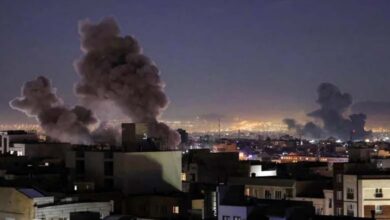
Iran shuts the door on negotiations with the United States
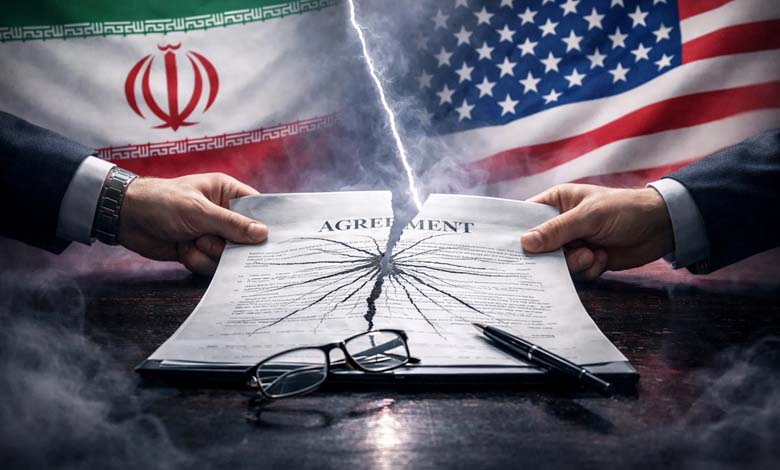
Several senior U.S. officials remain skeptical that the military operation against the Islamic Republic will lead to regime change in the near term.
The Secretary of Iran’s Supreme National Security Council, Ali Larijani, stated that his country would not resume negotiations with the United States, despite remarks by President Donald Trump suggesting that the Islamic Republic had sought talks through intermediaries.
-
Tehran and Washington Resume Nuclear Talks Under the Pressure of Red Lines
-
Diplomacy races against rising tensions: anticipation of Muscat talks between Washington and Tehran
In a post on the platform X on Monday, he denied reports circulating about the resumption of negotiations between Tehran and Washington following the recent U.S.-Israeli strikes on Iran.
Quoting a Wall Street Journal report about efforts to restart negotiations between Tehran and Washington via the Sultanate of Oman, he said: “We will not negotiate with the United States.”
In another post, Larijani responded to Trump’s statements regarding Iran, accusing him of “leading the region into chaos based on empty illusions,” adding that the U.S. president had “turned his ‘America First’ slogan into ‘Israel First’ under the weight of his own illusions.”
-
Washington Targets Tehran with Harsh Sanctions as Araghtchi Demands War Reparations
-
Washington and Tehran discuss a ‘political ceasefire’
He also accused the president of “making American soldiers and their families pay the price for new lies.”
Following the death of Iran’s Supreme Leader, Ayatollah Ali Khamenei, on Saturday, several senior U.S. officials remain doubtful that the U.S.-Israeli military operation against the Islamic Republic will result in regime change in the near future.
Before and after the launch of the attack, U.S. officials, including Trump, indicated that overthrowing the country’s repressive ruling system was among Washington’s objectives, in addition to crippling Iran’s ballistic missile and nuclear programs.
-
Trump studies Iran’s future after the war and keeps an eye on Khamenei’s successor
-
US and Iran: The Venezuela Scenario Deemed Improbable Without Ground Intervention
In a video posted Sunday on Truth Social, Trump said: “I call on all Iranian patriots who yearn for freedom to seize this moment … and reclaim your country.” However, three U.S. officials familiar with American intelligence assessments said there were serious doubts about the ability of Iran’s weakened opposition to overthrow the authoritarian theocratic system in place since 1979.
None of the officials completely ruled out the possibility of the Iranian government collapsing, which is currently suffering significant losses among its senior ranks due to ongoing U.S. and Israeli airstrikes and facing extremely low popularity following an unusually violent crackdown on protests in January.
However, they said such an outcome remains far from likely in the near term.
-
Iran Strikes Ignite a Constitutional Battle Between Congress and the White House
-
Tehran confirms while Grossi denies targeting of Iranian nuclear sites
Media outlets previously reported that CIA assessments provided to the White House in the weeks preceding the attack on Iran concluded that, in the event of Khamenei’s death, he could be replaced by hardline figures from the Islamic Revolutionary Guard Corps or equally hardline clerics, according to two sources.
A U.S. official familiar with internal White House deliberations said it was unlikely that Iranian Revolutionary Guard officials would voluntarily surrender, partly because they benefit from an extensive patronage network designed to maintain internal loyalty.
The CIA assessments followed at least one report from a separate U.S. intelligence agency indicating that there were no defections within the Revolutionary Guard during the January anti-government protests, which were met with brutal force by Iranian security forces.
-
After Strikes Targeting the Supreme Leader and the President: Key Pillars of the Iranian Regime
-
Excessive demands: Iran reveals obstacle to agreement with the United States
According to three additional sources, such defections would likely be a prerequisite for the success of any revolution. The sources requested anonymity and did not identify the agency involved.
Trump himself said Sunday that he plans to reopen communication channels with Iran, suggesting that Washington does not expect the government to fall, at least in the near term.
Iranian President Masoud Pezeshkian said Sunday that a leadership council composed of himself, the head of the judiciary, and a member of the powerful Guardian Council had temporarily assumed the Supreme Leader’s duties.
-
Hezbollah disarmament: a rare opportunity amid fears of escalation reshaping the landscape
-
Bomb Diplomacy: The Douhet Strategy and Washington’s Options on Iran
State television reported Sunday that Larijani accused the United States and Israel of attempting to plunder and dismantle Iran, warning “separatist groups” of a harsh response if they took any action, after the two countries launched a wave of airstrikes that included the bombing of a girls’ primary school.
U.S. intelligence discussions regarding the potential consequences of Khamenei’s assassination were not limited to whether it might lead to a change in government leadership.
Two U.S. officials said that since January there has been significant debate, though no consensus, among various agencies about the extent to which Khamenei’s assassination might fundamentally alter Iran’s approach to negotiations with the United States over its nuclear program.
-
U.S. military signals imminent operation against Tehran
-
Israeli sources rule out a Washington–Tehran agreement in Geneva
Officials also discussed how Khamenei’s death or removal might affect efforts to deter Iran from rebuilding its missile or nuclear facilities and capabilities, according to officials who requested anonymity to discuss sensitive internal deliberations.
Two officials said that following the January protests, Trump’s special envoy Steve Witkoff spoke several times with Reza Pahlavi, the exiled son of Iran’s last shah, raising questions about how strongly the administration might support his installation should the Iranian government fall.
However, the officials added that in recent weeks senior U.S. officials have grown increasingly pessimistic about the ability of any Washington-backed opposition figure to effectively take control of the country.
-
Iranian Revolutionary Guard drills in the Strait of Hormuz: readiness assessment and confrontation scenarios
-
Israel and the Last Hour Scenario: Iran Will Launch All Its Missiles
Jonathan Panikoff, a former senior U.S. intelligence official now with the Atlantic Council in Washington, said: “Ultimately, once U.S. and Israeli strikes cease, if the Iranian people take to the streets, their success in advancing the end of the regime will depend on whether ordinary soldiers stand with them or side with them.”
He added: “Otherwise, the remnants of the regime, those who possess the weapons, are likely to use those weapons to maintain power.”
-
Washington continues military build-up to pressure Iran
-
On the eve of the Muscat talks, five milestones paved the way for Iran and Washington’s return to negotiations