Israel tests hospital readiness for escalation scenarios
Israel is assessing its healthcare system in preparation for any new escalation that could result from a potential U.S. attack on Iran.
The Israeli Ministry of Health has called for the establishment of a central authority to coordinate patient referrals to rehabilitation centers, implement early prevention of post-traumatic stress disorder, and ensure clearer coordination among hospitals.
-
Gaza hospitals face severe shortages of medical supplies as Israeli attacks continue
-
Spokeswoman for the Palestinian Red Crescent: The Israeli Occupation Targets Hospitals in Gaza
On Tuesday, the ministry announced the findings of review teams that examined the performance of the healthcare system during the Gaza war and the subsequent conflict with Iran last summer, identifying reforms aimed at improving readiness for future emergencies.
The ministry stated that it has already begun implementing many of the lessons learned, with a significant portion of the measures already in place.
It explained that in 2025, 47 inspections were carried out to assess infrastructure readiness in hospitals and community facilities, in addition to 17 drills, including unannounced exercises.
-
After the Israeli Army Raid… What is the Fate of Those Detained in Al-Shifa Hospital?
-
Europe adopts Israel’s account, blaming Hamas for the crisis in Gaza hospitals
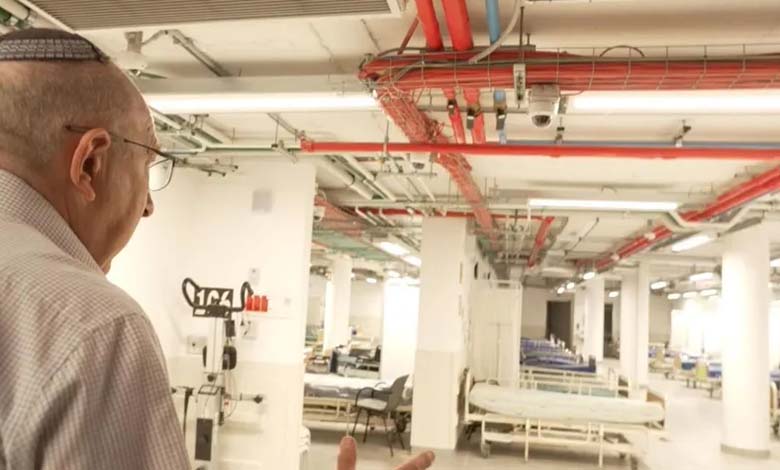
Despite ongoing regional tensions, the Director General of the Ministry of Health, Moshe Bar Siman Tov, clarified that alert levels have not been officially raised and hospitals have not been relocated to underground sites. However, preparedness has been strengthened to allow for rapid transition if necessary.
According to Yedioth Ahronoth, fortifying hospitals emerged as one of the most important lessons, particularly after the Soroka Medical Center was damaged by an Iranian missile strike last year.
Over the past two years, more than 3,600 protected beds have been added. More than 100 million shekels are expected to be allocated in 2026 for additional fortification projects, including protected emergency departments in several hospitals.
-
Canada adopts the Israeli narrative regarding the Al-Muamadani hospital massacre
-
Gaza without hostages… Israel searches for answers for the day after
Readiness in line with rising tensions
These measures come amid escalating tensions between Washington and Tehran, and growing concerns over a potential U.S. strike on Iran.
Alongside the healthcare sector, Israel is maintaining a heightened state of alert in anticipation of any possible attack.
On Tuesday evening, the Hebrew news website Walla quoted Israeli security sources as saying that “the region is rapidly approaching a multi-front conflict scenario.”
-
A meticulously crafted ruse: the details of a nerve-racking operation that brought back an Israeli soldier from Gaza
-
Israel issues first evacuation order in Gaza since the ceasefire
The sources said that “the Israeli army continues to maintain a high level of preparedness and vigilance in anticipation of an attack on Israel’s home front by Iran,” adding that some reserve forces are awaiting mobilization from their homes or workplaces, subject to intelligence warnings.
The sources estimated that “if war were to break out, the United States would provide timely warning to the Israeli military to prepare for an attack,” while noting that the army is also preparing for potential surprises along various borders and in the West Bank.
On Tuesday, Israeli Prime Minister Benjamin Netanyahu warned that Israel would respond if attacked by Iran, cautioning that Tehran would face a force “it has never seen before.”
-
Israel and the ban on relief organizations in Gaza: a UN alarm and calls to reverse the decision
-
Rainwater floods Gaza’s largest hospital
U.S. reinforcements
The U.S. military announced last Monday the arrival of the aircraft carrier Abraham Lincoln and its strike group in the region.
U.S. President Donald Trump had repeatedly threatened to strike Iran, before softening his tone by saying that Tehran had suspended planned executions of protesters.
However, he reverted to a tougher stance overnight, announcing that “another U.S. war fleet” was heading toward Iran and expressing hope that Tehran would reach an agreement with Washington.
-
Israel plans to build a new separation wall in the northern West Bank
-
The second phase of the Gaza agreement is stalled… The remains handed over to Israel do not belong to any hostage
In a speech, Trump said: “Another beautiful war fleet is sailing gracefully toward Iran right now.”
The United States supported and took part in the war launched by Israel against Iran, which lasted twelve days in June last year.
For its part, Iran’s Ministry of Foreign Affairs warned on Monday of a “comprehensive response with regrettable consequences” to any potential attack.
-
A Rocket Attack Shakes Damascus as Israeli Denial Deepens the Mystery
-
CIA Information on Israel’s Alleged Use of Gazans as Human Shields
-
Israeli raids on Gaza: the heaviest loss of life in a single night since the ceasefire
-
The War Winds Down in Gaza as Israel Begins Gradual Withdrawal
-
Gaza Developments: Israel Shuts Down the Last Passage from South to North