Jordan 2025: the year of decisive blows against the Muslim Brotherhood
The year 2025 was not an ordinary one in Jordan. It emerged as a defining chapter in the long-standing confrontation between the state and an organization accustomed to operating in the shadows, weaving networks and seeking expansion amid periods of regional turmoil.
In 2025, a moment of major exposure unfolded, during which many masks fell. The true nature of the Muslim Brotherhood became evident as it absorbed a series of decisive blows that shook its organizational structure, revealed the extent of its infiltration, and exposed its repeated attempts to exploit regional crises in order to reposition itself within Jordanian society.
-
Growing Calls to Ban the Muslim Brotherhood in Jordan After Terror Cell Uncovered
-
What Future Awaits the Muslim Brotherhood in Jordan?
As the months passed, the Jordanian state appeared increasingly resolute in its handling of this file, during a sensitive political phase marked by the retreat of political Islam projects at the Arab, regional, and international levels, particularly following the decision by US President Donald Trump to consider designating several branches of the Muslim Brotherhood, including the Jordanian branch, on terrorist or prohibition lists.
Within this climate, Jordan pursued a clear course: dismantling organizational tools, exposing funding channels, drying up sources of influence, reinforcing state stability, and reasserting control over the public sphere against infiltrations that the movement had exploited for years.
-
The Muslim Brotherhood in Jordan… From Preaching to Arms? Details of the Foiled Plot
-
Dismantling of a Terror Cell Linked to the Muslim Brotherhood in Jordan: A Strategic Opportunity to Re-highlight the Group’s Threat in the Region
A decisive security blow
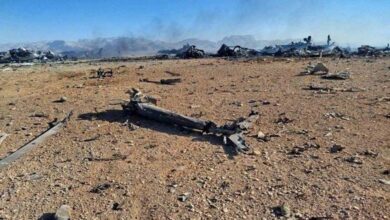
The exposure of a missile cell in mid-April 2025 represented the most dangerous and perhaps the most significant turning point in the relationship between the state and the organization. Security services dismantled a cell composed of 16 individuals, including members who had acquired operational expertise abroad in explosives manufacturing and drone operations.
Investigations revealed that the cell had stockpiled more than 300 short-range missiles, some of which were ready for use, along with advanced technological equipment for controlling drones and detailed maps of civilian and security sites that were potential targets.
-
7 Days Before the Parliamentary Elections… A Major Scandal for the Muslim Brotherhood in Jordan
-
Non-Licensed Muslim Brotherhood in Jordan Completes Formation of Its Executive Office
The most shocking revelation came through video-recorded confessions by members of the cell, who confirmed their affiliation with an organizational structure directly linked to the Muslim Brotherhood, stating that the planned operations were not individual acts but part of coordinated activities tied to clandestine structures operating outside declared frameworks.
This incident exposed the extent of violations that the organization had concealed for years under the banners of religious and political work, while uncovering a broad network of internal and external connections.
From that moment on, dealings with the Muslim Brotherhood ceased to be a political matter and became a comprehensive security file involving illegal activities and concrete planning for the use of violence, crossing far beyond the red lines drawn by the state over decades.
-
Jordan 2025: the year of decisive blows against the Muslim Brotherhood
-
Jordan’s Muslim Brotherhood… Amman closes the chapter as Washington writes the ending
Total ban
Less than a week after the cell was dismantled, authorities moved swiftly to dismantle what remained of the organization’s legal and structural framework.
On April 23, 2025, an unprecedented official decision since the establishment of the Muslim Brotherhood in Jordan was issued, imposing a final and comprehensive ban on the organization.
The decision included the closure of all offices, the cancellation of its legal registration, the confiscation of assets and properties, the freezing of bank accounts, and a ban on using the organization’s name in any political or social activity.
This decision amounted to an official declaration marking the end of an entire era of Muslim Brotherhood presence in Jordan.
-
Dismantling the Soft Arms: Jordanian Crackdown on Muslim Brotherhood Funding
-
Jordan Targets Muslim Brotherhood’s Financial Arms: Investigations, Tracing, and Legal Action
An organization that had long operated on the edge of legality and relied on formal facades such as charitable associations and cultural centers suddenly lost all legal instruments, leaving it with no room for maneuver or circumvention.
With offices shut down, members of the organization faced a new reality: an entity without headquarters, without funding, without legal cover, and without social protection.
Dismantling the financial arm and drying up funding sources
The financial file of the Muslim Brotherhood proved to be one of the most complex issues in 2025. Audit and review operations launched in May and continued for months uncovered extensive violations related to the transfer and circulation of funds through charitable and educational fronts.
-
Slanders and Lies About Jordan… What Are the Brotherhood’s Aims?
-
Aftershocks of the Jordan Earthquake Deeply Divide Lebanon’s Muslim Brotherhood
Dozens of bank accounts were frozen, some linked to senior figures and others to associations serving as organizational fronts. Properties used as channels to finance undeclared activities were also seized.
At the same time, investigations revealed attempts to smuggle documents and computers from some of the raided offices, containing financial and organizational records linked to external connections.
These findings added a new dimension to the scene, reflecting the depth of ties between the Jordanian branch and the international organization, as well as the scale of funds entering and leaving the country outside official frameworks.
With funding sources cut off, the organization lost the backbone that had sustained it for decades. The movement, which relied on a broad financial network including schools, associations, and educational centers, experienced a complete economic collapse in a very short period.
-
The Jordanian Street Rises Against the Muslim Brotherhood… New Facts Emerge About the Terrorist Cell
-
Jordanian MPs Launch a Campaign Against the Muslim Brotherhood
Collapse of social and professional networks
The social presence of the Muslim Brotherhood had long been one of its most important sources of strength, extending into universities, professional syndicates, charitable organizations, and educational institutions. In 2025, however, this influence collapsed rapidly and unprecedentedly.
Authorities restructured the framework governing preaching and religious discourse in mosques through new regulatory measures and reorganized professional syndicate activities that had witnessed strong Brotherhood presence.
This coincided with the suspension of numerous student activities that had been used in previous years as tools for recruitment or political influence within universities.
With the absence of a central leadership capable of coordination, this influence gradually faded until it reached near-total disappearance.
Within a few months, the organization shifted from a socially influential force to a marginal entity, unable to mobilize the street, organize activities, or even rally supporters.
-
The Muslim Brotherhood (International Organization) Incites Against the Jordanian State
-
The Muslim Brotherhood Loses Ground in Jordan: Security Outpaces Politics in Dismantling the Organization
Political front: complete paralysis
The political arm of the organization, represented by the Islamic Action Front party, also suffered a devastating blow. Although the party was not formally dissolved, its activity was almost entirely halted throughout 2025.
Its offices were subjected to extensive inspections, its bank accounts were frozen or reviewed, and many of its public activities were banned.
As the parent organization contracted, the party found itself in an unenviable position, losing its ability to engage with the public and suffering from sharp internal divisions.
Despite attempts by party leadership to project independence from the parent organization, the overlap of organizational structures and the lack of separation between religious and political lines made the party part of the broader collapse, leading to declining popular support, political isolation, and escalating legal and regulatory pressure.
-
Jordanian Political Analyst: The State Is Determined to Dismantle the Influence of the Muslim Brotherhood and Protect National Stability
-
Calls to Dissolve the Muslim Brotherhood Intensify After Jordan Uncovers Terror Cell.. Details
The American decision
Pressure on the organization was not confined to the Jordanian domestic arena. The American decision to consider designating several branches of the Muslim Brotherhood worldwide under the administration of President Donald Trump pushed the Jordanian branch into an unprecedented phase of collapse.
The organization realized that such a decision would strike at one of its most vital international channels, eliminate its ability to secure external support or operate through institutions and fronts outside Jordan, and expose its international networks.
As these consequences accumulated, the organization entered a state of internal disarray, manifested in disputes among senior leaders, disagreements over how to manage the phase, and ultimately the fragmentation of organizational cohesion, with many members exiting the scene.
-
Growing Calls to Disband the Muslim Brotherhood After Jordan Cell Dismantled
-
Details of Foiling Jordan’s Most Dangerous Terror Plot Led by Muslim Brotherhood Members
Erosion of the internal structure
Alongside security measures and political pressure, the organization itself experienced a clear internal breakdown during 2025.
Disputes intensified between an older generation unwilling to acknowledge that the era had ended and a younger generation convinced that the organization had lost its capacity to survive and needed to be reconstituted outside Jordan or seek new havens.
As a result, withdrawals increased, some members emigrated, and organizational frameworks that had once symbolized strict discipline were neglected.
The secrecy system that had governed the organization for decades was also exposed, as internal mechanisms, communication methods, and decision-making chains became accessible to authorities through documents and correspondence seized during security operations.
-
External Agendas and Internal Arms: The Muslim Brotherhood in a New Confrontation with the Jordanian State
-
The Muslim Brotherhood congratulates the Islamic Action Front on the results of the parliamentary elections in Jordan
From beginning to end
The year took a decisive turn in April, when security services unveiled the missile cell, revealing a wide network of links between the detainees and the organization.
Just one week later came the historic decision to ban the Muslim Brotherhood and close all its offices.
Between May and June, account freezes, association audits, and asset seizures followed, along with failed attempts by members to smuggle documents out of closed offices.
In July and August, the Jordanian file became central to American discussions on banning Brotherhood branches, expanding expectations of an imminent decision.
By autumn, the organization had lost most of its tools, its capacity to operate had diminished, and its political and social presence had shrunk, until the year ended with an organization devoid of structure, unified leadership, and any near-term prospect of return.
-
Did Iran Arm a Muslim Brotherhood Cell Linked to Hamas to Carry out Attacks in Jordan?
-
Jordan’s Muslim Brotherhood suspends municipal elections
A new phase
By the end of 2025, the Muslim Brotherhood in Jordan had lost all its fundamental pillars: organization, funding, legitimacy, social presence, and political horizon. A long chapter of its presence in the country was closed, not by a single step, but by a series of successive blows that exposed what had been hidden, dismantled what had been fortified, and effectively ended the existence of an organization that had long operated within gray zones.
Jordan now stands at the threshold of a new phase, free from Muslim Brotherhood influence and strengthened by a clear political and security vision toward transnational organizations.
-
The Brotherhood smell of the failed coup attempt in the Kingdom of Jordan
-
The brotherhood of Jordan… Details of the dissolution of the teachers’ union