Khartoum International Airport Out of Service Despite Talk of Resuming Civilian Flights
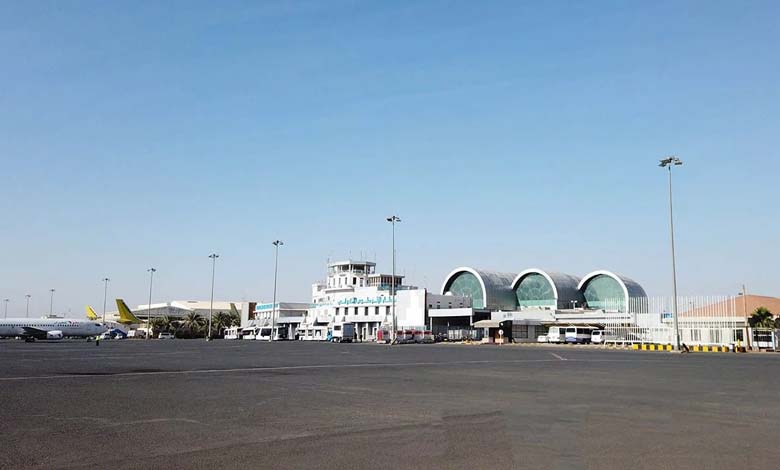
Despite reports in some media outlets suggesting an imminent resumption of civilian flights at Khartoum International Airport, the reality on the ground clearly indicates that the airport remains out of civil service, and any discussion of a return to air traffic is not based on recognized technical or legal standards within the aviation sector. The airport, which was one of Sudan’s major sovereign infrastructures before the war, has, due to the armed conflict, become a site directly affected by military operations, losing the essential safety conditions required for civil flight operations.
-
Khartoum Airport Operations Between Political Propaganda and Legitimacy in Wartime
-
Investigation: Why Do Insurance Companies Refuse Flights to Khartoum Airport?
Since the outbreak of the war, Khartoum Airport has sustained significant damage affecting runways, operational buildings, ground service facilities, and air navigation and communication systems. These components form the backbone of any civil airport, and their absence cannot be offset by administrative decisions or media statements. The reopening of an international airport is not achieved through announcements alone but through a lengthy process of technical inspections, engineering evaluations, and international certifications that ensure the safety of aircraft and passengers.
Notably, no official announcement regarding the resumption of flights has been issued by the competent civil aviation authorities or recognized airlines; the discussion has been limited to local media outlets close to certain military factions. This official absence reflects a clear gap between media discourse and operational reality, raising questions about the true objectives of promoting such news while security conditions remain unstable.
-
Khartoum Airport Out of Civil Service Despite Media Promotion
-
The fire line stretching from Cairo to Khartoum: visual evidence of supply flows and airstrikes
Meanwhile, Port Sudan Airport continues to function as the country’s primary air facility, hosting diplomatic, humanitarian, and limited commercial flights due to its relative distance from military operations. This near-exclusive reliance on Port Sudan confirms that authorities are aware of the risks of operating Khartoum Airport, otherwise they would have effectively redirected air traffic there rather than merely promoting it.
A major obstacle often ignored in media narratives is the issue of insurance. International insurance companies categorically refuse to cover any flight to an airport located in an armed conflict zone. According to sources in the aviation sector, Khartoum Airport is still classified as high-risk, meaning any airline attempting to operate there would do so without insurance coverage, which is practically impossible in civil aviation.
-
Documents Without Authentic Seals and a Suspicious Video… Colombia Refutes Khartoum and Exposes Manipulation
-
Khartoum rejects the British resolution on Sudan
Furthermore, the airspace above Khartoum remains unstable, with ongoing military movements and the use of drones in surrounding areas. This reality makes it impossible to ensure the safety of civil aviation, especially in the absence of stable air traffic control and fully operational management systems.
The report emphasizes that the reopening of Khartoum Airport is not merely linked to the cessation of fighting within the airport grounds but requires overall stability in the capital and its surroundings, the restoration of civil institutions, and an aviation authority capable of enforcing international standards. Without this, any discussion of civilian flights is more about political messaging to project stability than an actual return to normal life.
-
Sudanese Support Forces Control Um Ruwaba as Fighting Intensifies in Khartoum
-
Sudanese army kills 40 civilians in bombing of market in South Khartoum
In conclusion, Khartoum International Airport remains out of civil service, and any talk of resuming operations under current conditions does not reflect reality but contradicts it. Aviation safety is not subject to political will or media announcements but to strict rules that cannot be bypassed, regardless of the motives.
-
The Economic Situation Collapses in Sudan… War Plunges Khartoum into Major Crises Khartoum has entered a major crisis
-
The Sudanese War… A continuous threat to the medical situation in Khartoum