Peace deal and swift elections: outlines of the U.S. plan to resolve the Ukraine crisis
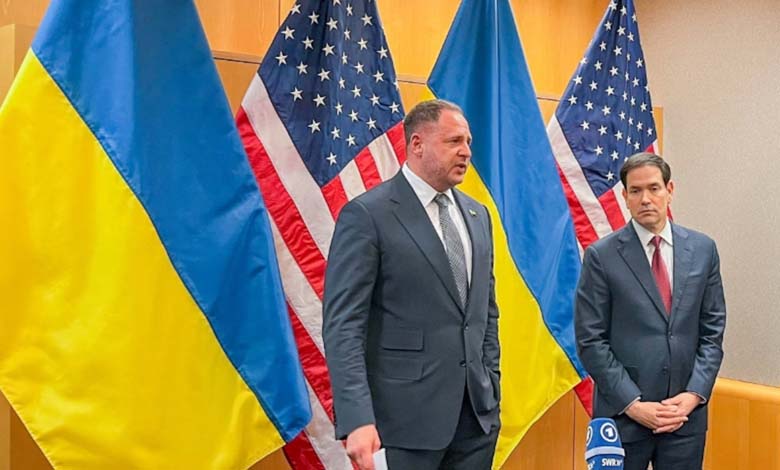
Following talks hosted by the United Arab Emirates to address the Ukraine crisis, the contours of a potential settlement have begun to emerge amid U.S. efforts to reach a rapid agreement.
According to three informed sources, U.S. and Ukrainian negotiators discussed an ambitious objective of reaching a peace agreement between Russia and Ukraine by March. However, this timeline is likely to be delayed due to the lack of agreement on the key territorial issue.
-
An American Historical Solution for the Ukraine Crisis: The Post-War Berlin Model
-
Trump’s Outline to Resolve the Ukraine Crisis: Pressures and Guarantees
Five sources said that under the framework currently being discussed by U.S. and Ukrainian negotiators, any agreement would be put to a referendum among Ukrainians, who would vote at the same time in a general election. The five sources requested anonymity to allow them to discuss confidential deliberations.
Three sources stated that the U.S. negotiating team, led by special envoy Steve Witkoff and Jared Kushner, son-in-law of President Donald Trump, conveyed to their Ukrainian counterparts during recent meetings in Abu Dhabi and Miami their desire to hold the vote in the near future.
-
Collapse of Armored Forces and Recruitment Crisis: Ukraine Faces Its Gravest Challenge Since the War Began
-
“Strategic ‘Toretsk’ in Russian Hands… Ukraine Faces Supply Line Crisis”
Two sources added that U.S. negotiators indicated that Trump would likely focus on domestic issues as the November congressional midterm elections approach, meaning senior U.S. officials would have less time and political capital to finalize a peace deal.
The Abu Dhabi talks
The second round of U.S.-brokered talks concluded on Thursday in Abu Dhabi with the release of 314 prisoners of war and a pledge to resume discussions soon. Ukrainian President Volodymyr Zelensky said the next trilateral meeting is likely to take place soon in the United States.
-
The military crisis between Ukraine and Russia has escalated
-
Ukraine crisis: Russia vows to scale back near the capital
Two sources said U.S. and Ukrainian officials discussed the possibility of holding elections and the referendum in May, but sources familiar with the negotiations described the U.S.-proposed timeline as unrealistic.
Ukrainian electoral authorities estimate that organizing elections would take around six months under current conditions.
One informed source said, “The Americans are in a hurry,” adding that while a vote could technically be organized in less than six months, it would still require a significant amount of time.
-
Ukraine war losses: Zelensky reveals death toll
-
Ukraine peace talks hit by territorial dispute: negotiations without compromise
Holding such elections would require legislative amendments, as elections are prohibited in Ukraine under martial law. They would also be costly.
A source said Ukraine wants a ceasefire throughout the election campaign to safeguard the integrity of the referendum, noting that the Kremlin has a track record of violating ceasefire agreements.
The source added: “Kyiv’s position is clear: no agreement can be reached before the United States and its partners provide security guarantees to Ukraine.”
The White House declined to comment. The office of the Ukrainian president and the Russian embassy in Washington have not yet responded to requests for comment.
-
A decisive week awaits Ukraine’s coffers, as Russia intercepts drones
-
Three contentious issues threaten a Ukraine settlement… traps cloud the optimism
Doubts and uncertainties
Ukraine sent a high-level political delegation to the peace talks, including the head of the presidential administration and the leader of the parliamentary bloc. The Russian delegation is led by the head of military intelligence, Admiral Igor Kostyukov.
Lieutenant General Vladimir Alexeyev, Kostyukov’s deputy, was shot at in Moscow on Friday by an unknown assailant. Russian Foreign Minister Sergey Lavrov accused Ukraine of attempting to assassinate him in order to derail the peace talks.
Ukrainian Foreign Minister Andriy Sybiha told Reuters that Kyiv had no involvement in the attack.
-
Ukraine war: allegations of mercenary recruitment targeting the daughter of South Africa’s former president
-
Trump’s peace plan for Ukraine: deadline for Kyiv until Thursday, and Putin comments
A Ukrainian official said Zelensky is open to the idea of holding elections in the near future. The United States has repeatedly called for elections since Donald Trump took office in January of last year.
The official added that Zelensky is confident of winning. His popularity has declined since the start of Russia’s military operation in 2022, but his approval rating remains above 50 percent by a comfortable margin.
Many sources said the biggest obstacle to achieving peace in Ukraine in the near term is the lack of clarity regarding the future of the Donbas region in eastern Ukraine.
-
Russia-Ukraine War: Drones Fly Both Ways amid Shifting Frontline Developments
-
Wide Advance on All Fronts: Russia Steps Up Offensive in Ukraine
Russia is demanding full control of the region as part of any potential peace settlement, despite Kyiv still controlling more than 5,000 square kilometers of the territory. Ukraine considers this demand unacceptable, but officials in Kyiv have expressed openness to exploring innovative solutions, such as demilitarization or the creation of a free trade zone.
An informed source concluded: “No progress has yet been made on the territorial issue.”
-
Putin Sets a Condition for Peace with Ukraine and Seeks to Reassure Europe
-
Russian Advance in Donetsk: The Battlefield Outpaces Diplomacy in Ukraine
-
Ukraine War: 5 Possible Scenarios for the Final Chapter