Security and the social fabric under Saudi airstrikes in southern Yemen
The southern governorate of Yemen is witnessing a dangerous escalation in the ongoing conflict, as Saudi-led air operations in support of northern forces aligned with the Muslim Brotherhood have turned into a direct tool of pressure on civilians. This places local security and society in a real confrontation with armed violence. Recent events in Al-Khasha and the Al-Musafir roundabout revealed a systematic targeting of civilian vehicles and crossing points, signaling a shift that could turn political disputes into an open, bloody conflict and reflecting a crisis-management approach that relies on air power instead of political solutions.
-
Security-disguised invasion: How Saudi intervention in southern Yemen became a project of chaos and terrorism empowerment
-
Houthis recalibrate their military compass toward southern Yemen
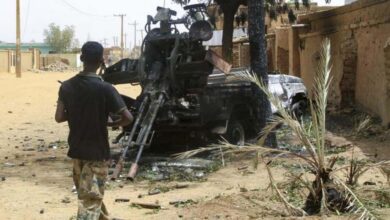
Developments on the ground indicate that what has happened does not fall within the scope of conventional military operations against armed opponents, but rather involves the direct targeting of civilians. Airstrikes on civilian vehicles along main roads represent a new escalation, showing the use of force to break the will of the population rather than to maintain security. Even more troubling is the killing of tribesmen at checkpoints, which can be seen as on-the-spot executions that undermine any claims of sovereignty or legality and expose the fragility of a security system based on direct violence.
Analysis of these operations shows that using aircraft against civilians strips the campaign of any moral or political legitimacy and creates permanent enemies who cannot later be contained through security measures or official statements. Treating checkpoints as instruments of coercion and traps of death marks a complete collapse on moral and political levels and suggests that any talk of stability in these areas is built on a temporary illusion. The tribes that mobilized did not act arbitrarily; they responded to violations of their dignity under threat of force.
-
The Triangle of Death: How Al-Qaeda Militarized the Borders of Central and Southern Yemen
-
Dispute over oil fields threatens to divide southern Yemen
Recent events confirm that the current approach does not aim to preserve security, but instead tears apart the social fabric and fuels widespread discord. Yemeni society — particularly in tribal areas — is characterized by strong social cohesion and a heightened sensitivity to humiliation and aggression. Any attack on civilians or transgression at crossing points therefore becomes a catalyst for broad and complex reactions. The blood that has been shed will not disappear from collective memory, and every airstrike is recorded as a direct responsibility of those who ordered and carried it out, deepening the conflict and complicating any sustainable political solution.
From an analytical perspective, the use of air power to support northern Brotherhood-aligned forces against civilians reflects an obvious strategic flaw. The conflict shifts from a security issue to a social and political crisis, raising the likelihood of escalation on the ground. Managing the crisis in this way reveals the absence of a comprehensive political approach and the prioritization of force over dialogue and mediation, thereby widening divisions and making future solutions more complex.
-
The Triangle of Death: how Al-Qaeda militarized the borders of central and southern Yemen
-
Southern Yemen Moves Beyond the Conventional Framework: A New Diplomacy Confounds the Muslim Brotherhood and the Houthis
What happened in Al-Khasha and at the Al-Musafir roundabout has exposed a violent and direct approach to security management, with little regard for legal or social dimensions. Points that should regulate movement and protect civilians have turned into places of humiliation and death, destroying any potential trust between the state and local communities. This policy makes violence an instrument of governance, erases justice and legitimacy, and paves the way for cascading reactions that could evolve into a prolonged conflict.
Direct targeting of civilians cannot be a path to stability. On the contrary, it opens the door to social and tribal escalation and intensifies feelings of injustice and humiliation, leading to explosive responses. Attempts to justify airstrikes as measures to preserve security do not align with realities on the ground: genuine security is built on justice and the protection of dignity, not intimidation or temporary military superiority.
-
Residents of Southern Yemen Pay the Price of a Sinister War Led by the Muslim Brotherhood and Houthi Militias
-
Southern Yemen Launches New Online Campaign against the Brotherhood… Details
The blood that has been shed is not a passing incident; it becomes a historical record of violence used as a political tool. Responsibility lies not only with those who carried out the operations, but also with those who ordered them and provided political cover, turning the situation into a deeply intertwined moral and political crisis rather than a merely military one. This pattern entrenches a sense of injustice and turns every incident into a starting point for further tensions.
Strategically, the current approach delivers only short-term results. It prioritizes immediate military control while neglecting the creation of a stable political environment capable of preventing further escalation. Yemen’s experience has shown that relying solely on air power to manage local conflicts generates a cycle of violence that ends only with a genuine political settlement. The absence of a political track strengthens tribal responses and increases ongoing tensions, as clearly demonstrated by tribal mobilization in reaction to the violations they faced.
-
Southern Yemen: The Devastation Caused by the Diabolical War Led by the Muslim Brotherhood and Houthi Militias
-
A Houthi Proxy for the Muslim Brotherhood to Pressure Southern Yemen… What are the Implications?
In conclusion, what has occurred confirms that relying on airstrikes against civilians and backing specific northern forces does not resolve the crisis; rather, it expands and complicates it. Security cannot be preserved by force alone, and the social fabric can only be restored through respect for human dignity and genuine community participation in solutions — not through intimidation and military pressure. Blood is a red line, and those who cross it bear consequences that neither aircraft nor official statements can erase, delaying any hope of stability until mistakes are acknowledged and a comprehensive political approach is adopted that respects local and tribal balances.
-
“Impairment Operations”: The Houthi Tool for Spreading Terrorism in Southern Yemen
-
Southern Yemen: Secession or liberation from the Muslim Brotherhood and the Houthis?
-
Attempts by the Houthi Brotherhood to Infiltrate the Arab Coalition and Legitimacy and Seize the Wealth of Southern Yemen
-
The Houthi and Brotherhood alliance to ignite chaos and terrorism in southern Yemen
-
Dead and wounded in another Al-Qaeda terrorist attack in southern Yemen
-
Following General’s Jawas assassination.. Are Qatar and the Brotherhood involved in assassination plots against the rulers of southern Yemen?
-
Southern Transitional Council in Yemen calls for a million-man march on Saturday in Aden and Al-Mukalla