Southern Yemen between Saudi airstrikes and support for the Muslim Brotherhood: an open wound threatening civilians
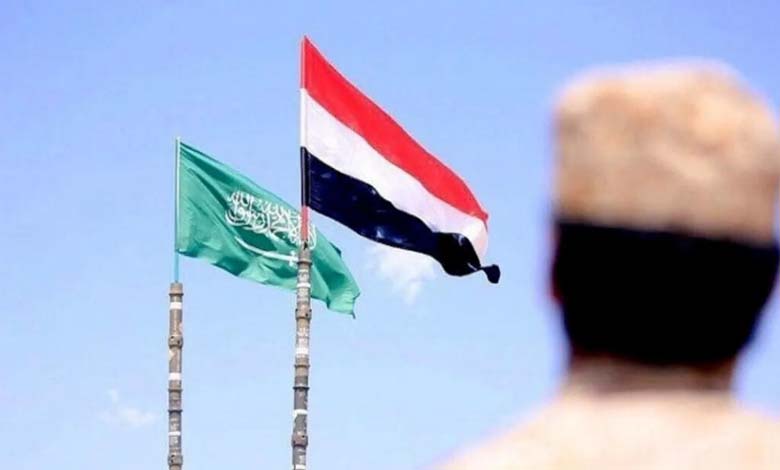
For many years, southern Yemen has remained a stage for a prolonged conflict involving local forces and regional powers, where interests overlap and confrontations escalate to deadly levels. Civilians find themselves trapped between regional ambitions of dominance and the aspirations of local partisan forces.
-
When security turns into coercion: Southern Yemen between the failure of force and the absence of politics
-
Security and the social fabric under Saudi airstrikes in southern Yemen
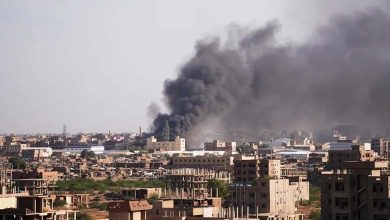
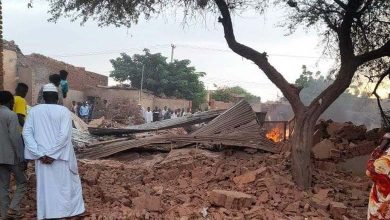
In this context, Saudi intervention has played a prominent role in transforming longstanding disputes into an open and bloody conflict. This intervention has not been limited to political or logistical support, but has extended to the use of military aviation, which carries out direct airstrikes on southern territory, targeting civilian populations and vital infrastructure, while simultaneously providing full air cover for northern forces affiliated with the Muslim Brotherhood seeking to impose their influence by force.
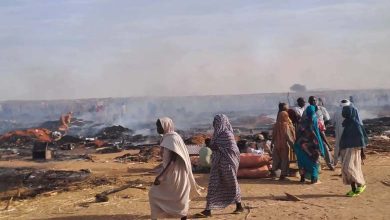
The Saudi airstrikes repeatedly carried out across southern governorates do not occur in isolation. They are accompanied by coordinated advances by northern Muslim Brotherhood-affiliated forces, highlighting the scale of coordination between external intervention and local actors. This pattern of operations turns southern cities and villages into open battlefields and creates a persistent climate of fear and forced displacement. Civilians, including children, women and the elderly, have become either direct targets or unintended victims of the bombardments, while Brotherhood-affiliated forces manage to seize control of land and resources under Saudi air cover.
-
The sky turns into a killing field: investigation into Saudi airstrikes on civilians in southern Yemen
-
Security-disguised invasion: How Saudi intervention in southern Yemen became a project of chaos and terrorism empowerment
From a historical perspective, southern Yemen previously experienced a degree of relative stability, despite traditional divisions, and the aspiration for independence and a distinct southern identity remained deeply rooted in the collective consciousness. However, external intervention, particularly Saudi military support for Brotherhood-affiliated forces, has redrawn the political landscape of the south and transformed any local dispute into a protracted armed conflict. Southern citizens are now unable to protect themselves or conduct their daily lives freely, as any area can suddenly turn into a flashpoint exposed to airstrikes and rapid military advances by northern forces, making displacement and forced migration a daily reality.
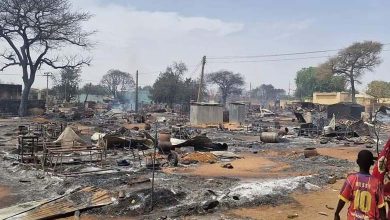
The most dangerous aspect of these operations lies in their long-term humanitarian and social consequences. Continuous airstrikes have led to the destruction of schools and hospitals, as well as the disruption of essential services such as water, electricity and healthcare, deepening the humanitarian crisis and rendering reconstruction and civilian recovery nearly impossible. Moreover, Saudi intervention remains one of the main factors exacerbating political divisions, as military operations reinforce the dominance of Brotherhood-affiliated forces in the south and weaken any local capacity to organize or engage in a genuine political process.
-
War of Rumors… Muslim Brotherhood Lies Shatter on the Rock of Southern Yemen
-
The Triangle of Death: how Al-Qaeda militarized the borders of central and southern Yemen
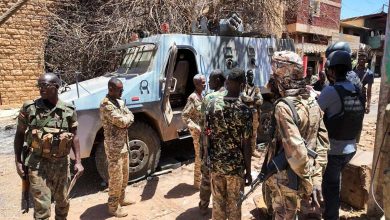
Saudi support for northern Brotherhood-affiliated forces has gone beyond air cover to include intelligence assistance and military and logistical equipment, enabling them to control southern areas and target any form of local resistance. This support has directly contributed to transforming historical tensions between the south and the north into a bloody conflict, in which pressure on local communities intensifies, prospects for national dialogue become increasingly complex, and civilians are turned into hostages of external agendas and narrow partisan policies that disregard human rights and national aspirations.
Field reports confirm that Saudi airstrikes often coincide with attempts by Brotherhood-affiliated forces to seize cities and strategic areas, indicating prior coordination aimed at imposing control through force. The natural outcome is the continuation of the conflict for many years and the transformation of the south into a space of open confrontation, where bloodshed, displacement and daily suffering become part of ordinary life, while political solutions remain out of reach.
-
Southern Yemen Moves Beyond the Conventional Framework: A New Diplomacy Confounds the Muslim Brotherhood and the Houthis
-
Southern Yemen Launches New Online Campaign against the Brotherhood… Details
The situation on the ground in the south reflects a genuine tragedy. Civilians live under constant threat, markets, schools and hospitals become potential targets, and children, women and the elderly remain the most affected. This reality demonstrates that Saudi intervention, whether through airstrikes or support for Brotherhood-affiliated forces, has not merely sought to restore stability, but to reshape the political balance in favor of external interests, at the expense of civilian lives and national interests.
The social and psychological impact on southern society is profound. Citizens live in a continuous state of fear and uncertainty, and any attempt to resume normal life or engage in daily economic activity is fraught with risk. Political divisions fueled by Saudi intervention further deepen the rift among local actors and complicate efforts to reach a peaceful settlement or national consensus, making the political future of the south increasingly fragile and uncertain.
-
Residents of Southern Yemen Pay the Price of a Sinister War Led by the Muslim Brotherhood and Houthi Militias
-
“Impairment Operations”: The Houthi Tool for Spreading Terrorism in Southern Yemen
The continuation of these operations also undermines the institutional capacity of local society, dismantling any organizational or administrative structures seeking to protect civilians. The resulting security and political vacuum is filled by Brotherhood-affiliated forces, ensuring their control over territory and local demographics. At the same time, waves of internal displacement and economic losses persist, forcing civilians to live in a permanent state of displacement and dependence on external aid, while Saudi aircraft continue to carry out airstrikes as part of a broader strategy to rearrange political influence in Yemen.
Under these circumstances, southern Yemen remains a clear example of the impact of external intervention on internal conflicts, and of how regional military support can deepen divisions and turn local disputes into an open armed conflict. Southern citizens remain the primary victims of this complex regional balance, facing constant threats to their lives and the future of their children. Airstrikes and military domination by Brotherhood-affiliated forces continue, confirming that political disagreements are no longer mere differences, but an open wound that accumulates new suffering day after day.
-
Southern Yemen: Secession or liberation from the Muslim Brotherhood and the Houthis?
-
Attempts by the Houthi Brotherhood to Infiltrate the Arab Coalition and Legitimacy and Seize the Wealth of Southern Yemen
Sustainable solutions require an end to external military intervention and the revival of an inclusive national dialogue that respects the rights of southern populations and their cultural and historical specificity. However, the continuation of airstrikes and support for Brotherhood-affiliated forces indicates that the road to peace remains long, and that civilians will continue to bear the cost of the open conflict unless regional policies change and attempts to turn Yemen into an arena for external power struggles come to an end, at the expense of the lives and hopes of local populations.
-
The Houthi and Brotherhood alliance to ignite chaos and terrorism in southern Yemen
-
Dead and wounded in another Al-Qaeda terrorist attack in southern Yemen